Unveiling the Temporal Dynamics of White Matter Hyperintensities Related to Alzheimer's Disease in Down Syndrome
Alejandra O. Morcillo‐Nieto, Mateus Rozalem Aranha, José Enrique Arriola‐Infante, Maria Franquesa‐Mullerat, Sara E Zsadanyi, Lídia Vaqué‐Alcázar, Jose Allende Parra, Zili Zhao, Javier Arranz, Íñigo Rodríguez‐Baz, Lucía Maure‐Blesa, Laura Videla, Isabel Barroeta, Laura Del Hoyo

TL;DR
This study explores how white matter hyperintensities change over time in people with Down syndrome and Alzheimer's disease, revealing patterns not seen in the general population.
Contribution
The study provides the first longitudinal analysis of white matter hyperintensities in Down syndrome across the Alzheimer's disease continuum.
Findings
WMH volume significantly decreased with age in DS but not in healthy controls.
Symptomatic DS individuals showed more pronounced WMH decreases than asymptomatic DS individuals.
CSF-pTau181 and NfL levels were associated with annual WMH changes in DS.
Abstract
Down syndrome (DS) is a genetically determined form of Alzheimer's disease (AD) characterized by a low prevalence of traditional age‐related vascular risk factors. Emerging evidence indicates that white matter hyperintensities (WMH) are frequent in DS and linked to small vessel disease and neurodegeneration. However, the temporal dynamics of WMH and their relationship with AD pathology remain unexplored in DS. Using an optimal longitudinal preprocessing pipeline, we aimed to determine the evolution of WMH across the AD continuum in DS and define their associations with baseline clinical and pathological characteristics. Longitudinal study including 47 euploid healthy controls (HC) from the SPIN cohort, and 86 individuals with DS from the DABNI cohort, who underwent 2 to 4 3T‐MRI visits (Table 1). The DS cohort included individuals with asymptomatic (aDS, n = 66) and symptomatic AD…
Genes, proteins, chemicals, diseases, species, mutations and cell lines named across the full text — each resolved to its canonical identifier and authoritative record.
Click any figure to enlarge with its caption.
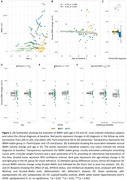 Figure 1
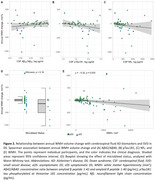 Figure 2
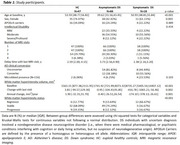 Figure 3
Peer Reviews
No public reviews on file for this paper yet. If you reviewed it on a platform where reviews are public (OpenReview, ICLR, NeurIPS, ICML), you can paste yours below so the community can read it here.
Videos
No videos yet. Explain this paper in a talk, walkthrough, or lecture? Add one.
Taxonomy
TopicsDown syndrome and intellectual disability research · Genetic Neurodegenerative Diseases · Dementia and Cognitive Impairment Research