Head‐to‐head in vivo Braak staging with MK6240 and Flortaucipir
Andreia Rocha, Bruna Bellaver, Emma Ruppert, Marina Scop Madeiros, Carolina Soares, Pamela C.L. Ferreira, Guilherme Povala, Livia Amaral, Guilherme Bauer‐Negrini, Firoza Z Lussier, Matheus Scarpatto Rodrigues, Joseph C. Masdeu, Dana L Tudorascu, David N. Soleimani‐Meigooni

TL;DR
This study compares two tau PET tracers, MK6240 and Flortaucipir, for in vivo Braak staging in Alzheimer's disease and finds that adjustments in cutoffs can improve consistency.
Contribution
The study introduces a head-to-head comparison of Braak staging using two tau PET tracers and evaluates harmonization methods to improve staging consistency.
Findings
Intra-tracer Braak staging concordance was highest using Gaussian mixture modeling cutoffs (94% for MK6240 and 89% for Flortaucipir).
Inter-tracer agreement improved to 86.5% when using a simplified four-class Braak staging system.
Most discrepancies between tracers occurred at Braak stages II–IV, but cognitive status distribution across stages was similar.
Abstract
In vivo Braak staging stratifies patients across the AD spectrum and has the potential to harmonize tau PET tracer staging. This study aims to compare and test harmonization procedures for Braak staging individuals using MK6240 and Flortaucipir tau PET tracers. We assessed 437 participants across the AD spectrum (245 cognitively unimpaired (CU) and 192 cognitively impaired; mean age 68.5 ± 8.6) using head‐to‐head MK6240 and Flortaucipir scans. We computed SUVRs in Braak regions of interest (ROIs) and assessed four cut‐off methods for Braak positivity: (a) mean + 2.5 SD of young controls (age <28 years), (b) mean + 2.5 SD of elderly CU Aβ−, (c) Gaussian mixture modeling (GMM), and (d) the Youden index. Braak stages were assigned using seven (0 to VI) or four (0, I–II, III–IV, V–VI) categories. We evaluated inter‐ and intra‐tracer concordance (intra‐tracer, i.e., whether it follows the…
Genes, proteins, chemicals, diseases, species, mutations and cell lines named across the full text — each resolved to its canonical identifier and authoritative record.
Click any figure to enlarge with its caption.
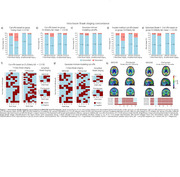 Figure 1
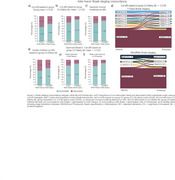 Figure 2
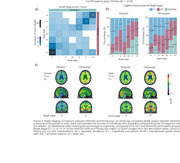 Figure 3
Peer Reviews
No public reviews on file for this paper yet. If you reviewed it on a platform where reviews are public (OpenReview, ICLR, NeurIPS, ICML), you can paste yours below so the community can read it here.
Videos
No videos yet. Explain this paper in a talk, walkthrough, or lecture? Add one.
Taxonomy
TopicsFunctional Brain Connectivity Studies · Dementia and Cognitive Impairment Research · Epilepsy research and treatment