Multi‐Modal Neuroimaging Fusion Reveals Predictive Patterns of Affective Symptoms and Hyperactivity in Alzheimer's Disease
You Cheng, Adrián Medina, Cole Harris Korponay, David G. Harper, Lisa D Nickerson

TL;DR
This study uses brain imaging data to find patterns linked to emotional and hyperactive symptoms in Alzheimer's disease.
Contribution
A novel semi-supervised fusion framework identifies multi-modal neuroimaging patterns predictive of affective and hyperactivity symptoms in Alzheimer's.
Findings
Affective symptoms are linked to disruptions in the default mode network involving amyloid and tau accumulation.
Hyperactivity correlates with amyloid elevation and reduced gray matter in key brain networks.
The model predicts age and cognitive decline with high accuracy, validating biological relevance.
Abstract
Neuropsychiatric symptoms (NPS) are prevalent in Alzheimer's disease (AD) and may reflect distinct pathophysiological pathways from cognitive decline. While pathological and structural factors relate to NPS, the interplay of amyloid‐ tau‐neurodegeneration remains understudied. Using semi‐supervised learning, we identified multi‐modal neuroimaging patterns predictive of affective symptoms and hyperactivity. Alzheimer's Disease Neuroimaging Initiative (ADNI‐3) data included amyloid PET (A), tau PET (T), and structural MRI (N: cortical thickness, surface area, gray matter volume). Affective symptoms (anxiety/depression) and hyperactivity (agitation, irritability, euphoria, aberrant motor behavior, disinhibition) subsyndromes were derived from Neuropsychiatric Inventory (NPI) composite scores (frequency × severity). SuperBigFlica (SBF), a semi‐supervised fusion framework, decomposed…
Genes, proteins, chemicals, diseases, species, mutations and cell lines named across the full text — each resolved to its canonical identifier and authoritative record.
Click any figure to enlarge with its caption.
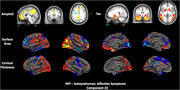 Figure 1
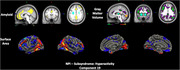 Figure 2
Peer Reviews
No public reviews on file for this paper yet. If you reviewed it on a platform where reviews are public (OpenReview, ICLR, NeurIPS, ICML), you can paste yours below so the community can read it here.
Videos
No videos yet. Explain this paper in a talk, walkthrough, or lecture? Add one.
Taxonomy
TopicsDementia and Cognitive Impairment Research · Emotion and Mood Recognition · Functional Brain Connectivity Studies