Sleep spindles and slow oscillations predict neurofilament‐light, neurogranin 36, Chitinase‐3‐like protein‐1 and cognition in mild to moderate Alzheimer's Disease
Arsenio Paez, Shahla Bakian Dogaheh, Sam O Gillman, Anna Carnes, Farida Dakterzada, Ferran Barbe, Gerard Piñol‐Ripoll, Thien Thanh Dang‐Vu

TL;DR
The study finds that specific sleep patterns predict brain health markers and cognitive decline in Alzheimer's patients.
Contribution
The study reports novel associations between sleep spindles and biomarkers like NfL and YKL-40 in Alzheimer's Disease.
Findings
Sleep spindles and slow oscillations correlate with NfL, YKL-40, and NG-36 levels in Alzheimer's patients.
Biomarkers like NfL/Aβ42 and YKL-40/Aβ42 predict cognitive decline and neuropsychiatric symptoms over three years.
Spindle activity influences cognitive performance through biomarker mediation in Alzheimer's Disease.
Abstract
Sleep is essential for brain‐health, including clearance of β‐amyloid (Aβ), tau, and otherpromising diagnostic markers of neurodegeneration and progression in Alzheimer's Disease (AD): cerebrospinal fluid neurofilament‐light chain (NfL), neurogranin‐36 (NG‐36), and Chitinase‐3‐like protein‐1 (YKL‐40). However, it remains unclear which sleep characteristics predict these biomarkers or whether the biomarkers predict cognitive or neuropsychiatric decline after AD onset. Using data from a prospective cohort study of mild‐to‐moderate AD (n = 60, 30‐female, mean age 74.7), we analysed non‐rapid eye‐movement sleep spindles and slow oscillations (SO) at baseline and their associations with baseline NfL, YKl‐40, NG‐36, NfL/Aβ42, YKl‐40/Aβ42, and whether these biomarkers predict cognition and mental health from baseline to three‐years follow‐up. Participants underwent baseline polysomnography…
Genes, proteins, chemicals, diseases, species, mutations and cell lines named across the full text — each resolved to its canonical identifier and authoritative record.
Click any figure to enlarge with its caption.
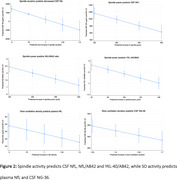 Figure 1
Peer Reviews
No public reviews on file for this paper yet. If you reviewed it on a platform where reviews are public (OpenReview, ICLR, NeurIPS, ICML), you can paste yours below so the community can read it here.
Videos
No videos yet. Explain this paper in a talk, walkthrough, or lecture? Add one.
Taxonomy
TopicsSleep and Wakefulness Research · Sleep and related disorders · Obstructive Sleep Apnea Research