A molecular inventory of the faecal microbiomes of 23 marsupial species
Kate L. Bowerman, Rochelle M. Soo, Pierre-Alain Chaumeil, Michaela D. J. Blyton, Mette Sørensen, Disan Gunbilig, Maika Malig, Moutusee Islam, Julian Zaugg, David L. A. Wood, Ivan Liachko, Benjamin Auch, Mark Morrison, Lutz Krause, Birger Lindberg Møller, Elizabeth H. J. Neilson

TL;DR
This study explores the faecal microbiomes of 23 marsupial species, revealing new microbial genomes and how diet and captivity influence microbiome composition.
Contribution
The study provides a novel molecular inventory of marsupial faecal microbiomes, including thousands of newly identified prokaryotic and viral genomes.
Findings
Host phylogeny is the main driver of microbiome composition in marsupials.
Koalas and southern greater gliders have distinct microbiomes adapted to their eucalypt diet.
Captive marsupials show higher prevalence of antimicrobial resistance genes compared to wild ones.
Abstract
Despite the recent expansion of culture-independent analyses of animal faecal microbiomes, many lineages remain understudied. Marsupials represent one such group, where, despite their iconic status, direct sequencing-based analyses remain limited. Here, we present a metagenomic and metabolomic exploration of the faecal microbiomes of 23 Diprotodontia marsupials, producing a reference set of 3,868 prokaryotic and 12,142 viral metagenome-assembled genomes, the majority (>80 %) of which represent novel species. As with other animals, host phylogeny is the primary driver of microbiome composition, including distinct profiles for two eucalypt folivore specialists (koalas and southern greater gliders), suggesting independent solutions to this challenging diet. Expansion of several bacterial and viral lineages was observed in these and other marsupial hosts that may provide adaptive benefits.…
Genes, proteins, chemicals, diseases, species, mutations and cell lines named across the full text — each resolved to its canonical identifier and authoritative record.
Click any figure to enlarge with its caption.
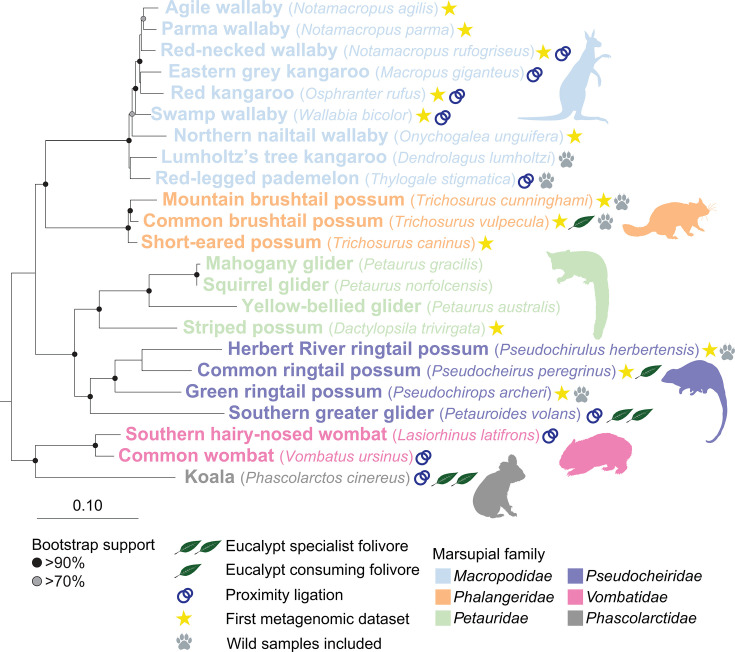 Fig. 1
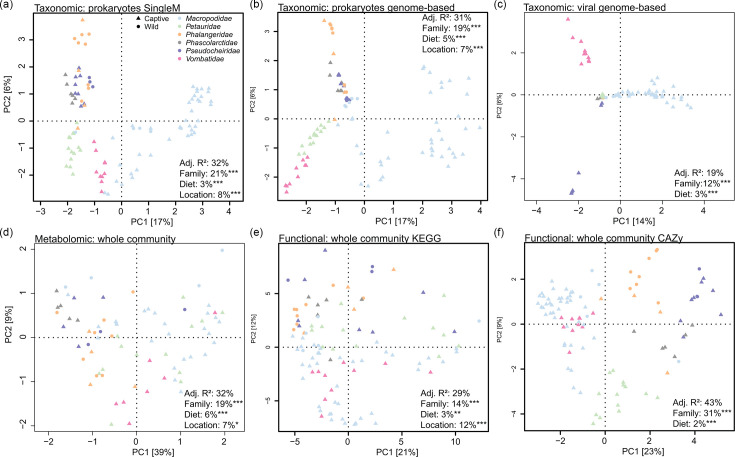 Fig. 2
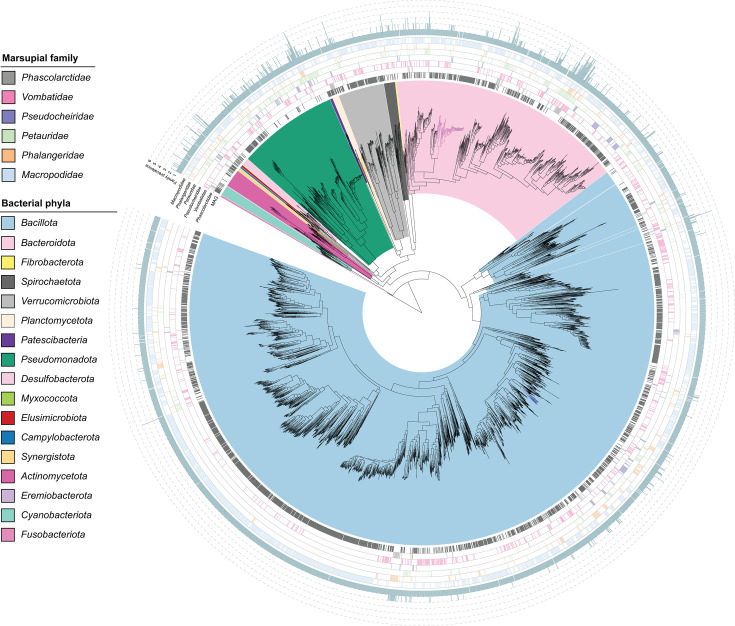 Fig. 3
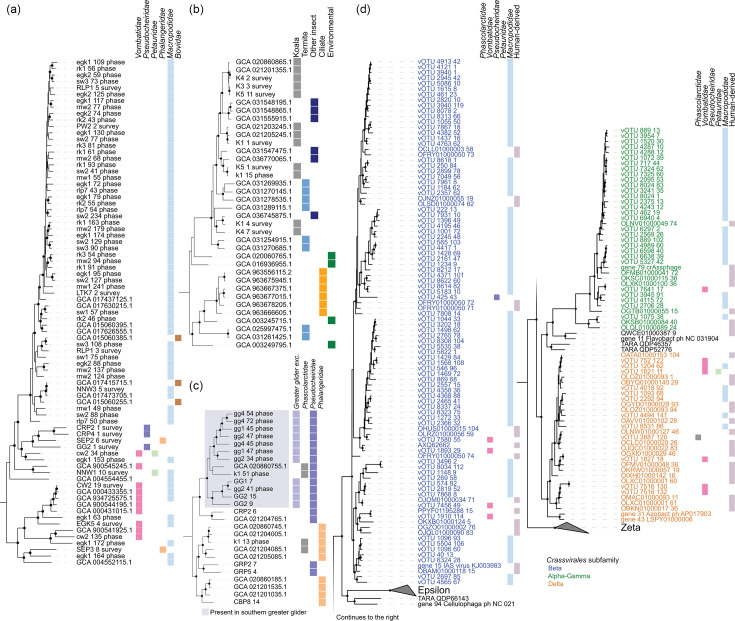 Fig. 4
- —http://dx.doi.org/10.13039/100008398 Villum Fonden
- —http://dx.doi.org/10.13039/100000865 Bill and Melinda Gates Foundation
- —http://dx.doi.org/10.13039/501100009708 Novo Nordisk Fonden
- —http://dx.doi.org/10.13039/100008398 Villum Fonden
- —http://dx.doi.org/10.13039/501100000923 Australian Research Council
- —http://dx.doi.org/10.13039/501100000923 Australian Research Council
Peer Reviews
No public reviews on file for this paper yet. If you reviewed it on a platform where reviews are public (OpenReview, ICLR, NeurIPS, ICML), you can paste yours below so the community can read it here.
Videos
No videos yet. Explain this paper in a talk, walkthrough, or lecture? Add one.
Taxonomy
TopicsGut microbiota and health · Genomics and Phylogenetic Studies · Zoonotic diseases and public health
Data Summary
Raw read data, prokaryotic metagenome-assembled genomes (MAGs) ≥50 % complete with ≤10% contamination are available via the European Nucleotide Archive under project PRJEB89408 (Table S3). The full set of viral genomes, clustered protein database and metabolite data (raw and processed) are available via https://doi.org/10.48610/14e37e9. Prokaryotic MAGs are also available via https://figshare.com/s/87443d80817f57aadc16.
Introduction
Marsupials are celebrated Australian fauna; however, their microbiomes remain underexplored. Marsupials comprise seven taxonomic orders, of which the Diprotodontia harbour the majority of iconic species, including koalas (Phascolarctus cinereus), wombats (e.g. Vombatus ursinus) and kangaroos (e.g. Osphranter rufus) [1]. However, only 27 of the 151 extant Diprotodontia species [2] have had their faecal microbiomes characterized using culture-independent methods, and only 12 of these have been analysed using metagenomics (Table S1, available in the online Supplementary Material) [329]. To our knowledge, no other omic techniques have been applied to marsupial gut microbiomes, and marsupial gut viruses remain largely unexplored [3031].
Here, we applied metagenomics and metabolomics to faecal samples from 23 Diprotodontia species, including two eucalypt folivore specialists, the koala and southern greater glider, to contribute to our knowledge of microbial species associated with marsupials. Eucalypt leaves are a challenging diet due to their low macronutrient availability and plethora of complex and often toxic natural products (specialized metabolites) that deter herbivores, including terpenes, tannins, cyanogenic glycosides, flavonoids and formylated phloroglucinol compounds [3234]. Furthermore, there is a high degree of biochemical variation between leaves of the estimated 150–200 eucalypt species that marsupials feed on and koalas and greater gliders have different feeding preferences [33,3537]. Here, we find this reflected in their faecal metagenomes and metabolomes, indicating independent solutions to mastering this challenging diet. Despite the evolutionary divergence and geographical isolation of marsupials from other mammals over most of their history [38], prokaryotic taxonomic novelty of the analysed faecal microbiomes was only observed at the genus and species level, suggesting that readily discoverable higher-level microbial diversity in the animal gut is reaching saturation.
Methods
Sample collection
Ninety-five faecal samples from 82 captive marsupials were collected from wildlife sanctuaries in South-East Queensland (Lone Pine Koala Sanctuary, Brisbane; David Fleay Wildlife Park, Burleigh Heads; and Currumbin Wildlife Sanctuary, Currumbin) and North Queensland (Wildlife Habitat, Port Douglas and Cairns Tropical Zoo) (Table S3, Fig. S8). Twenty-two samples from 16 wild marsupials were collected from areas surrounding Brisbane and Wongabel State Forest, Queensland. Samples were stored in Eppendorf tubes at −80 °C prior to downstream processing.
DNA extraction and sequencing of Illumina-only samples
For the 94 faecal samples sequenced using only Illumina sequencing, DNA extraction and sequencing methods are described in [28]. Briefly, ~50 mg of faecal sample was added to tubes with 0.7 mm garnet beads (MO BIO, Carlsbad, CA, USA) and suspended in 750 µl Tissue Lysis Buffer (Promega, Madison, WI, USA). Faecal material was taken from the centre of each pellet where possible to limit host contamination; due to their small size, greater glider samples were processed as whole pellets. Following 10 min of bead-beating at maximum speed, samples were pelleted by centrifugation. Finally, 200 µl of supernatant was used as the input for DNA extraction on a Maxwell 16 Research Instrument with the Maxwell 16 Tissue DNA Purification Kit (Promega, Madison, WI, USA) according to the manufacturer’s instructions. DNA was sequenced with the Nextera XT DNA Sample Prep Kit (Illumina, San Diego, CA, USA). Samples were sequenced on the Illumina NextSeq 2000 platform, producing 150 bp paired-end reads at the Australian Centre for Ecogenomics.
Proximity ligation sample preparation
For the 23 samples sequenced by Phase Genomics using proximity ligation sequencing, faecal pellets were cut in half with a sterile scalpel blade in a laminar flow hood, and the centre of the pellet was added to a sterile tube with PG Shield (Phase Genomics, Seattle, WA, USA). For southern greater glider samples, due to the limited amount of available samples, ~0.5 g of faeces was added to 5 ml of PG Shield. For the remainder of the samples, ~1 g of faeces was added to 10 ml of PG Shield. Tubes were shaken and sent to Phase Genomics for proximity ligation sequencing using the ProxiMeta Hi-C v4.0 Kit, which sequentially cross-links cells, mechanically lyses them, isolates and fragments chromatin and ligates spatially adjacent DNA ends. After reversing cross-links, the biotin-tagged Hi-C junctions were purified on streptavidin beads to yield DNA ready for paired-end sequencing [39]. Indexed Hi-C libraries were pooled and loaded onto an Illumina NovaSeq X with 2×150 bp chemistry.
Metagenome-assembled genome (MAG) recovery
For the Illumina-only samples, sequencing adaptors were removed with SeqPurge (v2018_11) [40], and the trimmed reads were assembled into contigs using MetaSpades (v3.15.3) using default settings [41]. The contigs were binned using CONCOCT v1.1.0 [42], MetaBAT 2 v2.17 [43], Rosella 0.4.1 (https://github.com/rhysnewell/rosella), SemiBin v1.0.3 [44] and VAMB v3.0.8 [45] implemented within Aviary (v.0.4.3) with aviary recover in default mode [46] from coverage profiles generated across all samples within each main animal group (kangaroo/wallaby, possum, koala and wombat).
For the proximity ligation samples, sequencing reads were processed as described [47], with assembly performed using MEGAHIT (v1.2.9) [48] and binning performed using the ProxiMeta platform [4950], incorporating both standard shotgun and Hi-C data.
Marsupial MAG database
MAG completeness and contamination were estimated using CheckM2 (v.1.0.1) [51]. MAGs with a completeness of ≥70 %, contamination of ≤5% and an N50 of ≥10 kb were chosen for downstream analysis supplemented with publicly available genomes. Public genomes for inclusion in the genome database were selected from species representative genomes in GTDB 08-RS214 [5253]. Selection was based on read mapping values generated using CoverM v0.6.1 [54], filtering for alignments exceeding 95% identity across 90% of the read length. Public genomes achieving ≥0.05 % relative abundance and recruiting reads to ≥10% of the genome length were included in the final database (n=1,201). The combined genome set (3,868 MAGs+1,201 public genomes) was dereplicated using CoverM v0.7.0 [54] with the ‘cluster’ command at 95% identity with an alignment fraction of 60%. The ‘Parks2020_reduced’ quality formula was used with genome statistics generated by CheckM2 v1.0.1 [51]. MAGs were classified with GTDB-Tk using GTDB release 09-RS220 [55]. A maximum likelihood tree was inferred using IQ-TREE v2.2.2.3 [56] based on the alignment generated by GTDB-Tk ‘de_novo_wf’, using ModelFinder for model selection within the LG model set. The ultrafast bootstrap approximation was generated from 10,000 replicates.
Escherichia coli multilocus sequence analysis
Genes used in the seven-gene Achtman [57] and eight-gene Pasteur [58] MLST schemes were identified and typed in the assembled E. coli genomes using the Center for Genomic Epidemiology web-service [59] (Table S21). Reference genomes of each phylogroup were downloaded from the National Center for Biotechnology Information (NCBI): GCF_000005845.2 (A), GCF_008868305.1 (B1), GCF_000714595.1 (B2), GCF_002079225.1 (C), NC_011751.1 (D), GCF_000008865.2 (E) and CP022164 (F). Genes were aligned independently using MAFFT (v7.505) [60], and alignments were concatenated using AMAS [61]. A maximum likelihood tree was inferred using IQ-TREE v2.2.2.3 [56] using ModelFinder for model selection on each gene region. Bootstrap support was derived from 1,000 replicates. Strain presence in each sample was determined based on read mapping with CoverM v0.7.0 [54] to the E. coli MAGs, requiring read alignment at 99% identity across 90% of the read length.
Marsupial host DNA contamination
As there were no genomes available for the majority of species in the dataset (genomes currently available for koala, eastern-grey kangaroo, yellow-bellied glider, common ringtail possum, green ringtail possum, common brushtail possum and common wombat), an estimate of host DNA contamination was established via read mapping to a marsupial genome database comprising available genomes and exome sequencing data from all genera in the dataset ([6264], Fig. S9 and Table S32). Read mapping was performed using CoverM v0.7.0 [54], filtering for alignments exceeding 95% identity across 90% of the read length.
Marsupial host phylogenetic analysis
Nine genes (apoB, brca1, irbp, vwf, cytb, coi, nadh2, 12S rRNA and 16S rRNA) from the 23 marsupial species used in this study were searched for in the NCBI database (Table S33) [65]. For the three marsupial species that were missing from the NCBI database, the missing genes were identified from the sample metagenome assemblies using blastx (v.2.9.0) [66]. The blast hit with the highest e-value was extracted from the assemblies using BEDTools (v2.27.1) [67], and the correct open reading frame was identified by translating the nucleotides to amino acids using https://web.expasy.org/translate/. An NCBI blastp search was conducted to determine if the correct gene had been identified. MAFFT (v7.505) [60] in auto mode was used to align the genes. The alignment was trimmed with trimAl (v1.4.1) [68] using the gappyout mode. A phylogenetic tree of the multiple sequence alignment was created using IQ-TREE (v1.6.12) [56] using ModelFinder automatic model selection to identify the best-fit model and 1,000 bootstrap replicates. The concatenated gene tree was visualized in arb (v6.0.6) [69] and rooted on the outgroup (Dromiciops gliroides) before being exported into Adobe Illustrator 2023.
Prokaryotic community composition
Reads were deduplicated using BBMap v39.01 (sourceforge.net/projects/bbmap/) (dedup.sh; absorbrc=f absorbmatch=t absorbcontainment=f) and quality trimmed using Trimmomatic v0.39 [70] (SLIDINGWINDOW:4 : 15 LEADING:3 TRAILING:3 MINLEN:50) prior to mapping to the compiled genome database (described above). Deduplicated, untrimmed reads were used for marker gene-based community analysis. Illumina reads generated by Phase Genomics were subsampled to 10% of their full depth using SeqKit v2.4.0 [71] to align with the read depth of other samples.
Genome-based community analysis was performed using relative abundance values generated from read mapping using CoverM v0.7.0 [54]. Read alignments were filtered to retain the subset that had ≥95% identity across ≥90% of the read length, excluding alignments to genomes with a minimum covered fraction of ≤10%. Marker gene-based community analysis was based on read classification using SingleM v0.16.0 [72]. Per-marker counts were combined using the ‘condense’ function. The bacterial and archaeal community fraction was estimated using SingleM Microbial Fraction [73]. Shannon diversity was calculated from SingleM coverage values using phyloseq v1.48.0 [74].
Functional profiling
Proteins within assembled contigs were identified using Prodigal v2.6.3 [75] and clustered at 90% identity across 80% of protein length using MMseqs2 v14-7e284 [76]. Representative protein sequences were functionally annotated using DRAM v1.5.0 [77] using the Kofam [78], Pfam [79] and dbCAN [80] databases accessed December 2022.
Sample reads (forward only) were aligned to the protein database using DIAMOND v2.1.0 [81] (settings e-value 0.00001, min-score 40, query-cover 80, id 70, max-hsps 1 and max-target-seqs 1), filtering for reads ≥140 bp with Seqkit v2.4.0 [71]. Reads were also aligned to the single-copy marker genes included within the SingleM GTDB release 08-RS214 metapackage [72] using the same settings. RPKM (reads per kilobase per million mapped reads) values were calculated for both the protein database and SingleM marker genes, with the mean RPKM value across all SingleM markers used to normalize protein database values on a per-sample basis. Normalized RPKM values per protein were summed across equivalent functional annotations and log_2_ transformed for PCA and differential abundance analysis.
Virus identification, filtering and taxonomic assignment
Viral contigs in the proximity ligation assemblies were identified using VIBRANT (v1.2.1) [82], with contigs carrying both bacterial and viral sequence annotated as prophage where viral sequence comprised ≥50% of the contig length. Viral binning was performed using the ProxiPhage algorithm as described [47]. Briefly, viral contigs are clustered into viral metagenome-assembled genomes (vMAGs) by merging proximity-ligation signal-based clusters and conventional binning results via a greedy network-collapse algorithm, yielding non-redundant vMAGs that meet minimum Hi-C linkage thresholds. Putative viral hosts were identified based on Hi-C linkage data [47]. To limit false positive interactions, only virus–host linkages supported by ≥2 Hi-C read links, a connectivity ratio of ≥0.1 and copy number meeting a threshold determined by a receiver operating characteristic (ROC) curve were used [47]. Connections with an average copy count of less than 80% of the highest copy count were also removed.
To minimize analysis of short viral fragments, we set a viral genome length threshold of ≥18 kb, which is the recommended minimum length of a member of the Caudoviricetes [83], the dominant viral class found in gut microbiomes [8486]. GeNomad v.1.8.1 [87] was used to assign taxonomy to the viruses using the end-to-end command in default mode. For the vMAGs (viruses with multiple contigs), the contigs were concatenated before running GeNomad. Viral novelty was assessed via blast alignment to the NCBI viral catalogue (downloaded August 2024) and the Unified Human Gut Virome Catalogue (UHGV, votus_full dataset, accessed February 2025, https://github.com/snayfach/UHGV), retaining hits with ≥95 % identity and ≥80 % alignment fraction (of query sequence).
Crassvirales validation
Candidate terminase (TerL), major capsid protein (MCP) and portal proteins were identified in Crassvirales genomes using HMM profiles generated from published multi-sequence alignments [88] using hmmer v3.3.2 [89]. Marsupial proteins of length ≥500 with HMM alignment e-value ≤1e-10 (TerL, portal) or 1e-06 (MCP) were combined with known Crassvirales and outgroup proteins of each type [90]. Sequences were aligned using Mafft v7.490 [60] and alignments trimmed using trimAl v1.5.0 [68] with the ‘gappyout’ option. Maximum likelihood trees were inferred using IQ-TREE v2.4.0 [56] with the ModelFinder option and bootstrap support approximated from 10,000 ultrafast bootstrap replicates.
Viral clustering and community profiling
An initial all-vs-all comparison of viral genomes was undertaken using skani (v0.2.2) [91]. The Marker k-mer compression factor parameter (-m) was set to 200 (recommended for viruses), and the --slow preset was applied to improve average nucleotide identity (ANI) accuracy, particularly for highly fragmented assemblies. Genome pairs with ANI ≥95% and alignment fraction (AF) ≥85% were selected, following the thresholds used in [92]. The selected genome pairs were combined into clusters of viruses with similar ANI. Each cluster was manually inspected to identify and resolve non-robust connections.
For each cluster, a representative genome was selected based on its connectivity within the cluster. The genome with the highest number of ANI connections was chosen as the representative. If multiple genomes had the same maximum number of connections, the genome with the highest average ANI across all its connections was selected as the representative.
The viral community across all samples was assessed based on a viral database containing all cluster representatives and singleton genomes. Read mapping of all samples to the compiled database was performed using CoverM v0.7.0 [54], filtering alignments ≥95% identity across ≥90% of the read length, with a minimum covered fraction of 30%.
Antimicrobial resistance
Potential antimicrobial resistance genes were identified across all assembled contigs with AMRFinderPlus (v3.12.8) [93] on proteins identified using Prodigal (v2.6.3) [75]. Hits were filtered for those ≥50% identity across ≥80% protein length. The sequence source of each AMR gene (viral, plasmid or chromosomal) was based on the prediction of plasmid/viral sequences for each contig using GeNomad v1.8.1 [87]. AMR class abundance was calculated as the sum of RPKM values of proteins within that class, generated as described above. Differential abundance of AMR classes between wild and captive animals was performed using MaAsLin2 [94] with marsupial species as a random effect. Marsupial family comparisons (captive animals only) included location as a random effect. In addition, due to the limited number of sample locations in the study, we performed a sensitivity analysis to assess the robustness of our findings, including location as a fixed effect and excluding samples from Currumbin Wildlife Sanctuary as only one family was sampled at this site. Data were log_2_-transformed prior to analysis. The hospitalized CBP3 was excluded from the differential abundance analysis as the high AMR gene abundance in this animal suggests treatment-related effects.
Metabolomic profiling
Metabolites were extracted from faecal and plant samples using hexane according to [95]. In brief, ~100 mg of frozen homogenized material was added to 1 ml of hexane, followed by incubation (1 h, 40 °C, gentle agitation). Debris was precipitated by centrifugation (5 min, 2,000 g). The resultant supernatant (1 µl) was analysed by GC–MS (GCMS-QP 2010 Plus, Shimadzu) using a stationary phase column (HP-5 ms Ultra Inert GC Column, 20 m × 0.18 mm, 0.18 µm, 7 inch cage, Agilent Technologies), with a purge flow of 4 ml min^−1^ and hydrogen as carrier gas. Injection temperature was 250 °C in splitless mode with a temperature gradient of 40 °C, 4 min hold; 2 °C min^−1^–120 °C; 30 °C min^−1^–280 °C; 3 min hold at 280 °C. Obtained chromatograms were analysed using PARADISe [96] using the remaining dried debris (dried overnight, 65 °C) to normalize for dry mass.
Chromatograms were processed using the PARAFAC2-based PARADISe dashboard [96] for simultaneous deconvolution and integration. Tentative identification of unknown constituents was accepted by comparison of their mass-spectral data with those of the NIST11 mass spectral library (NIST) data after comprehensive peak alignment, manual interval selections and feature detections. Further processing of peak areas was performed using the web portal of MetaboAnalyst (v5.0) [97]. Missing values were replaced with 20% of the minimum value for that compound, and compounds with ≥50% missing values were removed. Compounds with low repeatability (relative standard deviation ≥30%) and low variance (10% of total compounds) were also removed. The remaining data were median-normalized, log-transformed and auto-scaled prior to analysis in R.
Statistical methods and data visualization
SingleM coverage and read mapping-based data (genome-based prokaryotic and viral profiles) in relative abundance format were centred log-ratio transformed prior to PCA and differential abundance analysis. Prokaryotic genome-based profiles were filtered for taxa present in ≥2 samples. Alpha diversity metrics were calculated using vegan v2.6–4 (R v4.3.2) [98] from unfiltered SingleM coverage-based profiles. Differences amongst diet groups (browser, grazer, omnivore and fungivore, Table S2) were analysed using linear mixed-effects models implemented within lme4 v1.1–35.4 [99] and lmerTest 3.1–3 [100]. Shannon diversity was squared and observed species square-root transformed to achieve normality of residuals based on the Shapiro–Wilk normality test. Marsupial species was included as a random effect. RPKM data (KEGG, CAZy and AMR profiles) were log_2_-transformed prior to analysis. Metabolomic data preparation is described above. Where multiple samples were obtained from the same animal, only a single sample was retained for statistical analyses.
PCA and redundancy analyses were conducted using vegan v2.6–4 (R v4.3.2) [98]. To identify the most influential features in PCA, species scores were extracted, and the Euclidean magnitude of each feature across PC1 and PC2 was calculated. The top 20 features by magnitude were selected for display. Redundancy analysis included marsupial family, diet (grazer, browser, omnivore, fungivore), gut type (hindgut, foregut), location and captivity status as explanatory variables, and significance was determined using the ‘anova.cca’ function. Enrichment of functions between groups was assessed using EnrichM v0.6.1 (https://github.com/geronimp/enrichM). Plots were created using ggplot2 v3.5.1 [101]. Bacterial and viral phylogenetic tree figures were created using iTOL [102]. Location map was generated using rnaturalearth [103], sf [104] and ggspatial [105].
Results and discussion
Comparison of Diprotodontia marsupial faecal microbiomes
To extend our knowledge of the marsupial gastrointestinal microbiome, we characterized 94 faecal samples from 23 host animal species (and one subspecies Trichosurus vulpecula subsp. fuliginosus; golden brushtail possum) via metagenomic and metabolomic analyses (Tables S2 and S3). These 23 species represent 17 genera and 6 families in the marsupial order Diprotodontia. This study provides the first metagenomic data for 13 of these species, 9 of these genera and 1 of these families (Fig. 1). A further set of 23 faecal samples from 9 of these species was investigated using proximity-ligation sequencing to provide links between microbial hosts and their viruses and plasmids [47] (Table S3). This is a majority captive dataset, with wild samples only available for six species (22 of 117 faecal samples) (Fig. 1). Therefore, these microbiomes reflect a combination of both host characteristics and captivity-associated dietary and environmental conditions [106107].
A maximum likelihood phylogenetic tree of the 23 marsupial species included in this study. The subspecies T. vulpecula subsp. fuligonosus is not shown due to its close proximity to T. vulpecula. Dromiciops gliroides (microbiotheriid marsupial) was used as the outgroup. The tree is based on a concatenated alignment of nine genes (four chromosomal, three mitochondrial and two ribosomal) [65]. Leaf symbols indicate eucalypt-consuming generalist folivores (single leaf) and eucalypt specalist folivores (two leaves). Stars indicate hosts for which this study provides the first metagenomic data. Interlocked circles denote samples sequenced using both standard metagenomic and proximity ligation sequencing. Paw prints indicate species for which sequenced samples include a subset from wild individuals.
We compared marsupial faecal microbiomes at the family level based on their taxonomic (prokaryotic and viral), functional (Kyoto Encylopedia of Genes and Genomes (KEGG) and Carbohydrate Active Enzymes (CAZy)) and metabolomic profiles (Fig. 2). Host family was selected over host genus to provide increased group size and align with recognizable animal groups, e.g. wombats and macropods. In all cases, the host family was the primary contributor to variance, ranging from 12% (viral taxa) to 31% (CAZymes), based on redundancy analysis. This is consistent with previous reports of host phylogeny contributing the most variance to faecal profiles in animals, indicative of phylosymbiosis between animals and their microbiomes [106108109]. Sample location (wildlife sanctuary or region where samples were obtained) and diet (grass-dominant grazers, foliage-dominant browsers, omnivores, fungivores) also contributed significantly to microbiome variance (Fig. 2), consistent with other mammals [108110]. Wild/captive status was not significantly correlated with faecal profiles, despite known differences in some marsupial species, such as a higher incidence of the bacterial family Muribaculaceae in captive vs wild koalas [10]. This may reflect sampling bias as fewer scat samples were obtained from wild animals in our study (19% wild vs 81% captive). Macropod microbiomes were taxonomically distinct from those of other marsupial species, forming a primary divide using principal component analysis (Fig. 2a–c), driven by differences in the classes Clostridia and Bacteroidia, or their associated phages (Fig. S1A–C, Tables S4–S6). This may be in part due to macropods being the sole foregut-fermenting family in the dataset. However, gut morphology (foregut vs hindgut) did not explain additional variance in the faecal profiles beyond that captured by the host family (Fig. 2), and the distinction was less apparent in functional and metabolomic PCA plots (Fig. 2d–f, Tables S7–S9). The functional profiles of the grazing families Macropodidae and Vombatidae overlapped, particularly evident in the CAZyme profiles where they were separated from other families along the primary component axis (Fig. 2f). Multiple xylan (most notably GH11 and GH43) and mannan-degrading (most notably GH5) CAZymes were amongst the top contributors to this separation, likely used for digestion of hemicelluloses that are more abundant in grasses compared to leaves and other browse (Fig. S1F, Table S9). The prominence of these enzyme classes is consistent with the faecal microbiomes of other grass-feeding animals, although the specific xylanases and mannanases can differ (e.g. cows [111], sheep [112], horses [113] and capybara [114]). Macropodidae and Vombatidae also harboured the highest faecal microbial diversity based on marker gene-based prokaryotic profiles, with browsing animals significantly lower (Fig. S2), as seen previously in African herbivores [115].
Taxonomic and functional relationships of scat microbiome communities. Principal component analysis based on (a) marker gene-based prokaryotic community, (b) genome-based prokaryotic community, (c) genome-based viral community, (d) metabolomic, (e) KEGG-based functional and (f) CAZy-based functional profiles. Taxonomic relative abundances were centred log-ratio transformed, and functional RPKM values were log2 transformed prior to PCA. Metabolomic data as described in the methods. Samples are coloured based on their marsupial host family. Results of redundancy analysis incorporating host family, diet (grazer, browser, omnivore, fungivore), gut type (hindgut, foregut), location and captivity status displayed per dataset. Analysis includes a single sample per animal (n=98), indicated in Table S3.
We then compared the faecal profiles of specialist (koala, southern greater glider) and generalist eucalypt feeders (common and golden brushtail and common ringtail possums) to look for signs of shared adaptations to this challenging diet. Despite similarities in the context of all marsupials investigated (Fig. 2), analysis in isolation revealed taxonomic, functional and metabolomic differences between these groups based on principal component analysis (Fig. S3, Tables S10–S17). Multiple eucalypt-derived terpenes were positively associated with the specialist feeders (Fig. S3B, Table S11), indicative of the high rates of eucalypt ingestion in these hosts. However, the profiles of the two specialist hosts were distinct. For example, koala faeces were higher in essential oil metabolites and greater glider faeces in wax-derived compounds (Fig. S3E, Table S15) likely reflecting feeding preferences. Koalas favour leaves of the subgenus Symphyomyrtus that are often rich in complex oils, and greater gliders prefer the leaves of the subgenus Monocalyptus that have thick wax layers [116118]. These feeding distinctions suggest that the gut microbiomes of koalas and greater gliders have not converged on solutions to a single problem (digestion of a recalcitrant food source) because eucalypt leaves are so biochemically diverse [33,3537].
Prokaryotic communities of the diprotodont marsupial gut
We individually assembled and binned the 94 standard Illumina shotgun metagenomes (averaging ~3.2 Gbp per sample) obtaining a total of 908 medium to high quality (≥70% complete, <5 % contaminated, N50 >10 kb; 595≥90% complete) prokaryotic MAGs (Table S18). An additional 2,960 medium to high-quality prokaryotic MAGs (1,623≥90% complete) were obtained from the 23 proximity ligation metagenomes (averaging ~56 Gbp per sample). The combined set of 3,868 MAGs (3,828 bacterial and 40 archaeal) represents 2,425 species, 659 genera, 134 families, 59 orders, 27 classes and 19 phyla, of which 1,951 species (80%) and 58 genera (9%) are new to GTDB (release 09-RS220) (Table S18) [52]. The lack of higher taxonomic rank novelty (family and above) is notable, especially as this study represents the first metagenomic data for many marsupial species (Table S1), suggesting that microbial diversity recoverable from animal faeces as MAGs is beginning to saturate above the level of species. This is consistent with a recent extensive faecal microbiome survey of goats and sheep that found only 3.7% novelty at the genus level for their MAG dataset, but 84.5% novelty at the species level [119]. This saturation of readily discoverable diversity likely reflects both ecological constraints dictating which higher-level lineages can colonize mammalian guts and the breadth of previous sampling efforts across diverse host species and geographies. The continued discovery of novel species within established lineages suggests that while the framework of mammalian gut microbiome diversity is now well-mapped, the fine-scale diversity that encodes host-specific adaptations and functional specialization remains incompletely characterized.
Read mapping analysis against the 3,868 marsupial MAG dataset and 85,205 GTDB 09-RS220 species representatives (see the ‘Methods’ section) [52] revealed that a substantial amount of microbial diversity was not captured in the MAG or reference genome sequences for most marsupial hosts, with a median read mapping percentage of 40% (ranging from 5 to 70%, Fig. S4). This is comparable to a previous animal faecal microbiome study in which a large proportion of metagenomic reads did not map to reference genomes (21%) [120], suggesting that total diversity in the gut is still far from saturation. Consistent with this inference, a marker gene analysis of the marsupial scat reads using SingleM indicates substantially more prokaryotic microbial diversity remains to be described, including 2 novel phyla, 27 novel classes, 59 novel orders and 132 novel families (Table S19). Differences in read recruitment observed between marsupial hosts partly reflect prior metagenomic studies, with the koala and wombat [91028] having amongst the highest levels of read recruitment (Fig. S4).
Broad marsupial host range species
Only 10.8% of marsupial gut prokaryotic species represented by genome sequences were found in two or more marsupial families (Table S20). The most ubiquitous species in our study, found in 35 individual scat samples across all six marsupial families, was E. coli. This well-studied microbial species is a facultative anaerobe and common in the lower intestine of mammals, although it typically constitutes only a small percentage of the total prokaryotic community. E. coli is also found widely in the environment [121], suggesting that it likely moves between marsupial hosts, which is supported by its presence in cohabiting individuals at Port Douglas Wildlife Habitat and low incidence at other animal sanctuaries (Table S20). Multilocus sequence typing-based analysis of the E. coli MAGs and sample read mapping indicated that, where detected, captive animals often carry strains from multiple E. coli phylogroups (Fig. S5, Table S21). Wild and captive possums more commonly carried only phylogroup B2-like strains (Fig. S5), consistent with previous reports of dominance of B2 in wild mountain brushtail possums (Trichosurus cunninghami) [122]. Although E. coli is a ubiquitous species, the majority of strains assembled from the Diprotodontia were novel sequence types, suggesting that they are marsupial-associated strains and not recently acquired from humans or livestock (Table S21). The data also confirm a strong location effect with multiple E. coli phylogroups shared between co-located animals, suggesting transfer between both closely and distantly related marsupial hosts (Fig. S5).
Other broad-range species include Phascolarctobacterium faecium and Akkermansia muciniphila, detected in five of the six marsupial families investigated (Table S20). P. faecium was originally isolated from koala faeces [123], but has since been found in a wide range of animal hosts, including human [124], rat [125] and cow [126]. It uses succinate as a primary carbon substrate, likely to be provided by Bacteroides thetaiotaomicron [127] or other Bacteroides species that are also commonly found in marsupials (Table S20). A. muciniphila is a specialist mucin (glycoprotein) degrader common to many animal species [128] and is likely to play the same role in marsupials.
Marsupial host-specific taxa
The majority of microbial species with genomic representation were lineage specific (89.2%, Table S20), consistent with the separation of host marsupial families by their taxonomic profiles (Fig. 2a and b). Cryptobacteroides species are conspicuous constituents of marsupial grazers, particularly in kangaroos, which harbour 48 novel species (Table S20), including a radiation of 37 species, indicating a macropod-specific expansion of this genus (Figs 3 and 4a). Cryptobacteroides are recognized for their importance in the rumen where they contribute to the degradation of lignocellulose and starch via polysaccharide utilization loci [129] and may play a similar role in kangaroos. Relative to other marsupial Bacteroidota, the Cryptobacteroides species are enriched in starch-, xylan-, β-glucan- and β-mannan-degrading enzymes, indicating their likely importance in grass digestion in kangaroos and wombats (Table S22).
Distribution of bacterial species in the 117 profiled marsupial scat samples. Maximum likelihood phylogenetic tree of dereplicated bacterial MAGs supplemented with public genomes identified as present in marsupials based on read mapping to the GTDB or profiling with SingleM. Rings indicate (from inside) the MAGs from the current study, the presence in marsupial families based on read mapping and the count of marsupial families in which a bacterial species is present. Dark orange branches indicate the class SZUA-567, dark pink the genus Cryptobacteroides and dark blue the genus Eubacterium_I (see Fig. 4 for more detail).
Lineage-specific evolutionary expansions in marsupial faecal microbiomes. Maximum likelihood phylogenetic trees of (a) Cryptobacteroides, (b) family SZUA-567, (c) Eubacterium_I and (d) Crassvirales. Trees in panels (a)–(c) incorporate dereplicated bacterial MAGs and public genomes and are inferred from an alignment of GTDB marker proteins [52]. Shaded species in (c) are those present in southern greater glider samples. Panel (d) tree incorporates vOTU representatives and public Crassvirales genomes used in [90] and is based on the alignment of TerL proteins. Boxes to the right of each tree indicate the presence of each species in marsupial families based on read mapping or origin of public genomes.
Consistent with a previous report [9], an as-yet-uncultured basal Planctomycetota lineage, SZUA-567, was identified in koala scat. This family-level lineage is represented by two genera and nine species in our survey and was found solely in koalas (Table S20), suggesting that it was introduced into the koala microbiome after divergence from wombats ~35–40 Mya [130] (Fig. 1). Currently, the closest relatives of koala SZUA-567 MAGs have been identified in termite gut microbiomes [131]. Koalas are known to feed on termite nests [132], and SZUA-567 species from koalas and insects are interleaved phylogenetically, based on a species-level genome tree (Fig. 4b), leading us to hypothesize that ingested termites are the source of this lineage in the koala. The specific role of these bacteria and how they managed to colonize the koala gut remains to be determined.
An expansion of the Lachnospiraceae genus Eubacterium_I was identified in southern greater gliders with 13 species identified, of which 11 were found exclusively in this host (Fig. 4c) and the other two were also found in koala scat (Table S20) [28]. The only characterized representative of this genus, Eubacterium ramulus, isolated from human faeces, is recognized for its ability to degrade flavonoids [133134]. Since flavonoids are prominent phenolic metabolites in eucalypt leaves, including catechins, isorhamnetin, phloretin, kaempferol and luteolin [135136], we hypothesize that the role of Eubacterium_I in the greater glider and koala is to metabolize these compounds. This is supported by enrichment of flavonoid-modifying enzymes in marsupial Eubacterium_I species relative to other marsupial Lachnospiraceae, including flavone/flavonol reductase (flr, which initiates flavone and flavonol catabolism in the gut [137], flavanone/flavanol-cleaving reductase (fcr) and chalcone isomerase (chi) (Table S23).
DNA viruses of the diprotodont marsupial gut
To assess marsupial gut viromes, we focused our analysis on the subset of 23 host samples sequenced using proximity ligation due to greater sequencing depth (Table S3) and the ability to connect non-integrated viruses to their hosts. A total of 12,142 DNA viral genomes were obtained, ranging in size from 18 to 231 kbp (average 48.6 kbp) (Table S24). These represent 8,928 viral species (vOTUs) according to a recommended ANI-based definition [138] (Table S24). Most of these species were represented by a single genome (82%); however, 21 vOTUs comprised 10 or more genomes each (Table S24). The great majority (99%) of the vOTUs had no close (species-level) matches in public databases (Table S25). However, at a higher taxonomic level, 98% of the marsupial viral species belong to the class Caudoviricetes (Table S24), consistent with DNA viruses found in many other animal faecal microbiomes [8486] and morphological identification of a great variety of Caudoviricetes (Myoviridae, Siphoviridae and Podoviridae) in the gastrointestinal tracts of kangaroos [139].
Prokaryote and marsupial host range
Almost a third of the marsupial vOTUs (2,713) could be linked to one or more prokaryotic host species either via proximity ligation (as evidenced by interlinkage reads) and/or by host genome sequences flanking the viral genome (Table S26). Most of these vOTUs (2,405; 89%) were associated with a single host species (Table S26), consistent with the typically narrow host range of cultured phages [140]. Further, culture-independent evidence from human faecal samples using single-cell viral tagging found that 98% of the phages targeted only one host species [141]. Together, these findings suggest that phages are not significant vectors of gene exchange between different bacterial species in the marsupial gut microbiome and animal gut more generally. Of the 308 vOTUs with links to >1 prokaryotic host species, 42% (129) were genus specific, 31% (96) family specific, 16% (51) order specific, 8 % (25) class specific, 2% (5) phylum specific and 1% (2) domain specific (Table S26). The most promiscuous viral species, vOTU_2 a, was linked to nine host species belonging to five genera of the family CAG-272 in the order Oscillospirales (Table S26). Another viral species, vOTU_14, appears to be capable of targeting monoderms (a member of the spore-forming Bacillales genus Pradoshia) and diderms (Prevotella sp017410365), a rarely observed trait amongst phages [142]. The carriage of multiple genes encoding phage tail lysozyme domains in vOTU_14 genomes may assist this virus in breaching different cell envelope types (Table S27) [143].
The marsupial host range of faecal viral species reflected in large part prokaryotic populations, in that most were restricted to single host lineages; 59% (5,282) to a single marsupial host species, 67% (6,001) to a single genus and 96% (8,584) to a single family (Table S28). Indeed, a substantial portion of vOTUs (3,692, 41.4%) were identified in a single faecal sample, suggesting that many are specific to individual animals, consistent with the observed individuality of human gut viral communities [144145] (Table S28). Some of these localized viral populations were linked to bacterial species found in multiple marsupial families (e.g. vOTU_1974 to Bacteroides xylanisolvens and vOTU_7758 to Parabacteroides distasonis, Tables S20 & S26), suggesting that they have not been transferred between marsupial species via their prokaryotic hosts. This is similar to an observation in human faeces where the same bacterial species was targeted by different viruses in different faecal samples [141]. The converse was also found, however, where the broad marsupial host range of a bacterial host was mirrored by its viruses. For example, the only viral species identified in representatives of five marsupial families (vOTU_1924, Table S28) was linked to P. faecium detected in the same marsupial families (Table S20), suggesting that this virus has been successfully dispersed between marsupial species with its host.
Crassvirales are prevalent in macropods
Crassvirales are a recently discovered lineage of dsDNA viruses that have gained attention due to their prevalence in the faecal microbiomes of humans and other primates [146148]. However, their presence in other animal hosts appears to be sporadic, except in chickens [149]. Notably, 151 (1.7 %) of the marsupial vOTUs were classified as Crassvirales, most of which (91%, 137 vOTUs) belong to macropod clades (Fig. 4d, Table S28). Consistent with previous reports of a strictly lytic lifestyle, marsupial Crassvirales were not found to be integrated into their prokaryotic hosts (with one potential exception; rk1_vMAG_90 was predicted to be a provirus; however, no host MAG was identified) and lack identifiable integrases and recombinases necessary for lysogenic infection (Table S27) [150]. Only five Crassvirales genomes were linked to identifiable host MAGs, three members of the Bacteroidota (in the genera Alistipes, Barnesiella and Prevotella) and two Bacillota (both members of the genus Candidatus Coprovivens). This appears to extend the known host range of these viruses, which are thought to exclusively target members of the phylum Bacteroidota [148149], although clustered regularly interspaced short palindromic repeat (CRISPR) spacers suggest broader associations, including with members of the Bacillota [90]. Ca. Coprovivens belongs to the as-yet-uncultured Bacilli order RF39, all members of which are predicted to be host-associated [151]. Therefore, it is possible that Bacteroidota cells simply co-host Ca. Coprovivens and Crassvirales.
Antimicrobial resistance potential in diprotodont marsupials
As captive animals comprise a large portion of marsupials in this study, we assessed the antimicrobial resistance (AMR) potential of their scat microbiomes across the dataset to understand whether this was influenced by captivity, as is seen in other species [152153]. We identified 188 types of recognized AMR genes across all 117 marsupial scat samples (3,907 total genes), representing 24 classes of antimicrobial resistance genes (Table S29). Approximately half (47%) of these gene types were identified on potentially mobilizable elements (plasmid or viral contigs), with plasmids carrying ~20 to 40-fold more AMR genes (1 in ~1,500 genes) than viral (1 in ~60,000 genes) or chromosomal sequences (1 in ~33,000 genes, Fig. S6), consistent with the primary role of plasmids in AMR transfer [154]. Plasmid-encoded AMR genes were also more diverse than viral-encoded genes, comprising 17 AMR classes vs 10 for viral sequences (Table S29).
The most prevalent classes of resistance genes found in marsupial faeces target glycopeptides (93% of captive animals, 86% wild) and β-lactams (87% captive, 45% wild) (Table S30), broadly reflective of the widespread distribution of these AMR classes [155]. Glycopeptides were significantly enriched in captive vs wild animals, as were lower prevalence classes targeting macrolides (80 % vs 5 %), tetracyclines (79 % vs 32 %) and lincosamides (75 % vs 5 %) (Table S30). While captive animals harboured a significantly higher abundance of many AMR classes overall, this effect was host-dependent (Fig. S7, Table S30). Captive possums, southern greater gliders and koalas (families Phalangeridae, Pseudocheiridae and Phascolarctidae) typically displayed lower AMR gene abundance than macropods, wombats and small gliding species (families Macropodidae, Vombatidae and Petauridae), except one hospitalized common brushtail possum (CBP3) (Fig. S7, Table S31). Human intervention via antibiotic treatment is, therefore, likely driving differences in the prevalence of AMR gene classes between captive and wild animals and between different marsupial families. For example, in macropods, clindamycin (a lincosamide) is used to treat necrobacillosis and co-trimoxazole (a combination of sulphonamide and trimethoprim) to treat wounds and urinary tract infections [156157]. However, other antibiotics such as macrolides are not commonly used to treat marsupials [158] and increased macrolide resistance in captive animals may be due to other factors, such as transfer of antibiotic-resistant bacteria from humans and other animals or environmental sources [159160]. These results may also reflect host-specific differences in typical antibiotic administration routes, e.g. oral administration is generally avoided for possums and koalas due to reduced effectiveness via this route (MDJ Blyton and Dr Michael Pyne, Head of Vet Science and Research, Currumbin Wildlife Sanctuary, personal communication).
Concluding remarks
In this study, we present a metagenomic (including proximity ligation data) and metabolomic molecular inventory of the faecal microbiomes of 23 marsupial species, the first such data for 13 of these species and the first metabolomic and proximity ligation data for any marsupial. The 3,868 assembled medium-to-high quality MAGs include representative genomes for 1,951 prokaryotic species (80%) and 58 genera (9%) new to GTDB 09-RS220. In addition, we present a marsupial viral genome catalogue of 12,142 genomes (8,928 vOTUs), with prokaryotic host links for ~30% of viral species. Combined, these data confirm host family as the primary driver of marsupial faecal taxonomic, functional and metabolomic profiles. Host specificity extends to species with highly specialized, eucalypt-dominant diets (koalas and southern greater gliders), where their distinct taxonomic and functional profiles support alternative solutions to eucalypt digestion. We observe host lineage-specific bacterial expansions, including Cryptobacteroides species in kangaroos, the Planctomycetota family SZUA-567 in koalas and Eubacterium_I in greater gliders and an expanded repertoire of Crassvirales phage in macropod hosts. We expect these data will provide a valuable reference for comparative analyses of other animal faecal and gut microbiome datasets. While this resource expands our knowledge of the marsupial microbiome, many species remain entirely unexplored (124/151 Diprotodontia species), indicating the need for ongoing work in this area.
Supplementary material
10.1099/mgen.0.001601Uncited Supplementary Material 1.
10.1099/mgen.0.001601Uncited Supplementary Material 2.
The reference list from the paper itself. Each links out to its DOI / PubMed record.
- 1Beck RMD Diversity and phylogeny of marsupials and their stem relatives (Metatheria) Cáceres NC Dickman CR American and Australasian Marsupials: An Evolutionary, Biogeographical, and Ecological Approach Cham Springer International Publishing 202216610.1007/978-3-030-88800-8_35-1 · doi ↗
- 2Burgin CJ Colella JP Kahn PL Upham NS How many species of mammals are there?J Mammal 20189911410.1093/jmammal/gyx 147 · doi ↗
- 3Alfano N Courtiol A Vielgrader H Timms P Roca AL et al Variation in koala microbiomes within and between individuals: effect of body region and captivity status Sci Rep 201551018910.1038/srep 1018925960327 PMC 4426690 · doi ↗ · pubmed ↗
- 4Barker CJ Gillett A Polkinghorne A Timms P Investigation of the koala (Phascolarctos cinereus) hindgut microbiome via 16S pyrosequencing Vet Microbiol 201316755456410.1016/j.vetmic.2013.08.02524095569 · doi ↗ · pubmed ↗
- 5Bowerman KL Lu Y Mc Rae H Volmer JG Zaugg J et al Metagenomic analysis of marsupial gut microbiomes provides a genetic basis for the low methane economy Microbiology 2024202410.1101/2024.12.04.626884 · doi ↗
- 6Brice KL Trivedi P Jeffries TC Blyton MDJ Mitchell C et al The Koala (Phascolarctos cinereus) faecal microbiome differs with diet in a wild population Peer J 20197 e 653410.7717/peerj.653430972242 PMC 6448554 · doi ↗ · pubmed ↗
- 7Blyton MDJ Soo RM Whisson D Marsh KJ Pascoe J et al Faecal inoculations alter the gastrointestinal microbiome and allow dietary expansion in a wild specialist herbivore, the koala Anim Microbiome 20191610.1186/s 42523-019-0008-033499955 PMC 7803123 · doi ↗ · pubmed ↗
- 8Blyton MDJ Pascoe J Hynes E Soo RM Hugenholtz P et al The koala gut microbiome is largely unaffected by host translocation but rather influences host diet Front Microbiol 202314108509010.3389/fmicb.2023.108509036937253 PMC 10018171 · doi ↗ · pubmed ↗