Study of brain perfusion in adults with Down Syndrome along the Alzheimer's Disease continuum
Maria Franquesa‐Mullerat, Alejandra O. Morcillo‐Nieto, José Enrique Arriola‐Infante, Sara E Zsadanyi, Lídia Vaqué‐Alcázar, Mateus Rozalem Aranha, Javier Arranz, Íñigo Rodríguez‐Baz, Lucía Maure‐Blesa, Laura Videla, Isabel Barroeta, Laura Del Hoyo, Bessy Benejam, Susana Fernandez

TL;DR
This study finds that brain blood flow changes in people with Down Syndrome resemble those in Alzheimer's disease, even before symptoms appear.
Contribution
The study reveals early cerebral blood flow alterations in Down Syndrome along the Alzheimer's continuum using pCASL MRI.
Findings
CBF decreases in prefrontal regions in eCU, parietal structures in DS, and temporal lobes in sAD.
Symptomatic DS shows reduced CBF in temporal-parietal regions, similar to sAD patterns.
Parietal CBF differentiates asymptomatic from symptomatic DS and correlates with AD biomarkers.
Abstract
Down Syndrome (DS) represents a high‐risk group for Alzheimer's disease (AD) due to chromosome 21 triplication, which drives amyloid precursor protein overproduction. While brain atrophy in DS has been widely studied, the underlying brain perfusion changes remain poorly understood. This study leverages MRI pseudo‐continuous arterial spin labeling (pCASL) to explore early cerebral blood flow (CBF) alterations along the AD continuum in DS and compares these changes to the perfusion patterns seen in sporadic AD (sAD) We performed a cross‐sectional analysis including 32 euploid cognitively unimpaired individuals (eCU, age= 56.8yo, 68.7% female), 37 adults with DS (age= 42.64y; females= 37.83%, 40.5% symptomatic including n = 8 prodromal AD and n = 7 dementia) and 24 sAD patients (age 74.2yo, 50% female, 16 MCI and 8 in dementia stage) from the SPIN and DABNI cohorts that underwent 3T‐MRI.…
Genes, proteins, chemicals, diseases, species, mutations and cell lines named across the full text — each resolved to its canonical identifier and authoritative record.
Click any figure to enlarge with its caption.
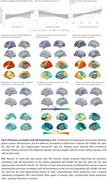 Figure 1
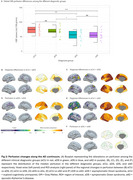 Figure 2
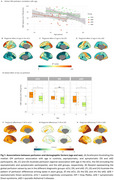 Figure 3
Peer Reviews
No public reviews on file for this paper yet. If you reviewed it on a platform where reviews are public (OpenReview, ICLR, NeurIPS, ICML), you can paste yours below so the community can read it here.
Videos
No videos yet. Explain this paper in a talk, walkthrough, or lecture? Add one.
Taxonomy
TopicsDown syndrome and intellectual disability research · Dementia and Cognitive Impairment Research · Digital Image Processing Techniques