The Conservation Status of the Sphagnum Species in Romania
Miruna-Maria Ștefănuț, Sorin Ștefănuț, Ana-Maria Moroșanu

TL;DR
This paper assesses the conservation status of Sphagnum moss species in Romania, confirming 35 species and identifying new records and threatened species.
Contribution
The study provides updated conservation assessments and new species records for Sphagnum in Romania.
Findings
35 Sphagnum species are confirmed in Romania, representing 59.32% of European Sphagnum species.
Seven Sphagnum species are now classified as threatened, fewer than previously reported.
New records for 17 Sphagnum species are documented in Romania.
Abstract
The article presents the Sphagnum species of Romania and assesses their conservation status, based on the latest IUCN criteria. Based on the analyzed data, 35 Sphagnum species are confirmed for Romania (59.32% of Sphagnum Europe species) and 5 species are rejected. Over the past two years, three Sphagnum species have been confirmed as being new to Romania. The re-evaluation of the conservation status of Sphagnum species in Romania has led to the assessment of seven threatened species (20%), fewer than in the previous assessments (nine species). In the field, we have confirmed all 35 Sphagnum species of Romania. We present new records for Sphagnum affine, S. balticum, S. cuspidatum, S. denticulatum, S. divinum, S. fimbriatum, S. inundatum, S. jensenii, S. majus, S. medium, S. obtusum, S. papillosum, S. platyphyllum, S. riparium, S. subfulvum, S. tenellum, and S. wulfianum.
Genes, proteins, chemicals, diseases, species, mutations and cell lines named across the full text — each resolved to its canonical identifier and authoritative record.
Click any figure to enlarge with its caption.
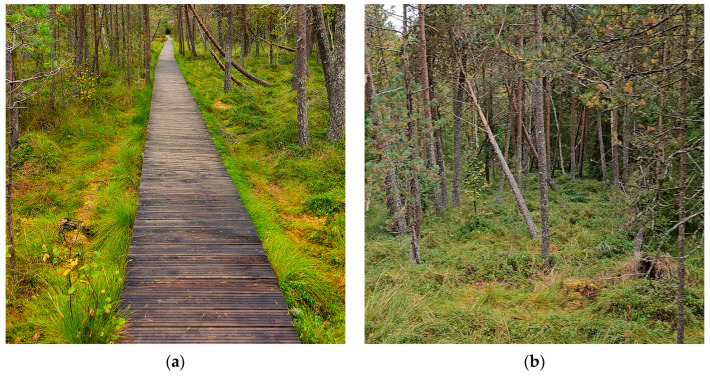 Figure 1
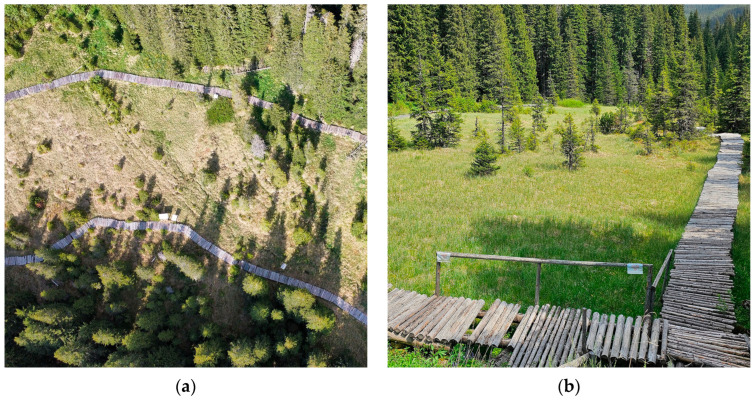 Figure 2
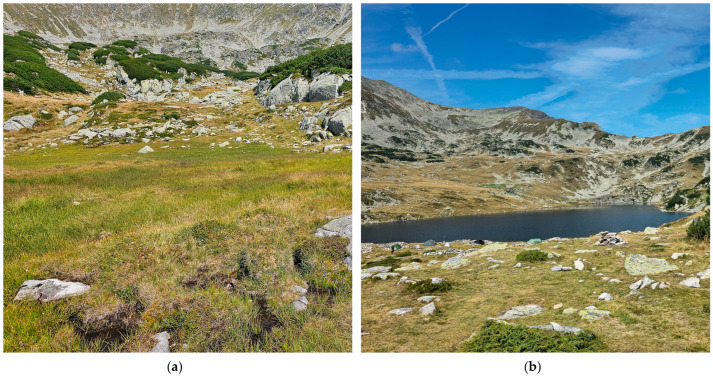 Figure 3
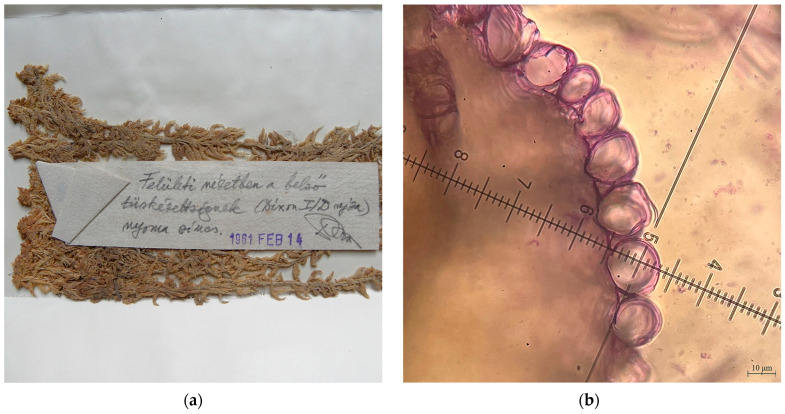 Figure 4
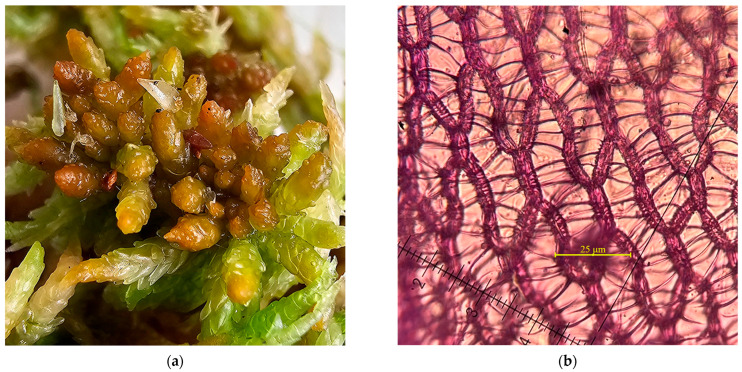 Figure 5
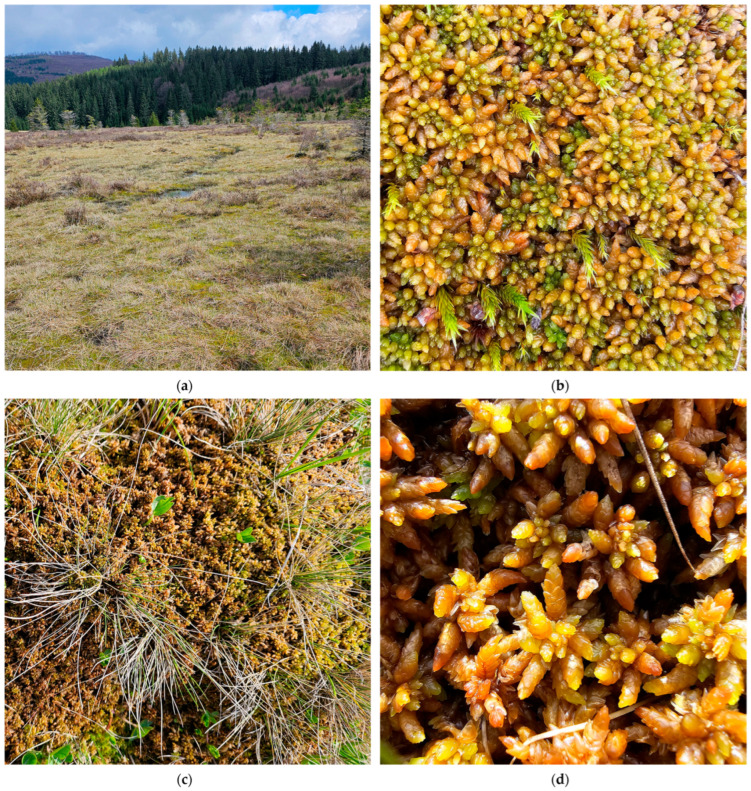 Figure 6
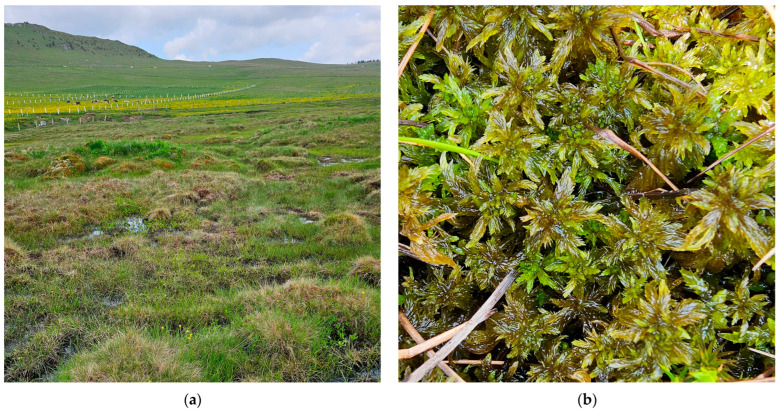 Figure 7
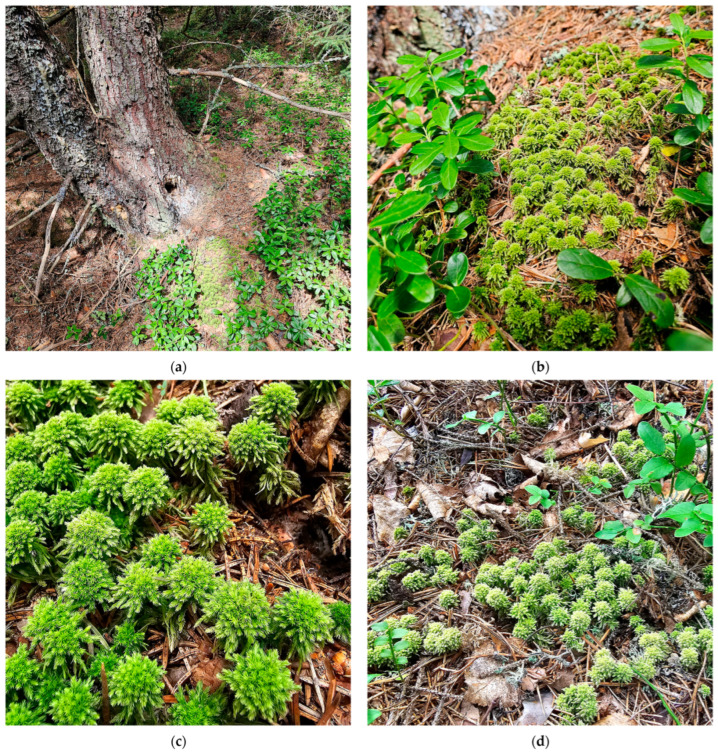 Figure 8
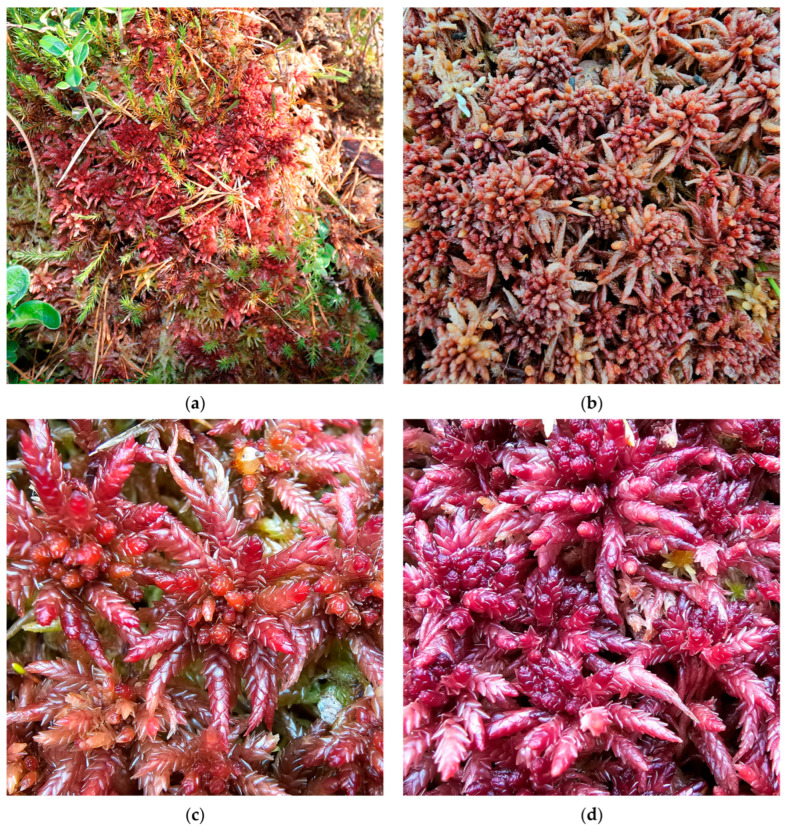 Figure 9
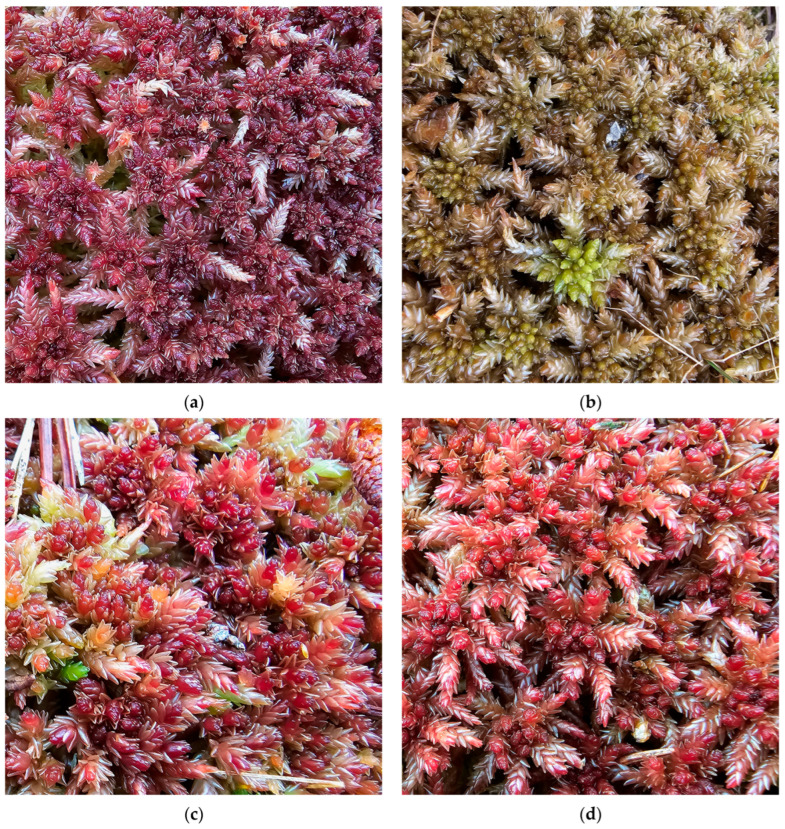 Figure 10
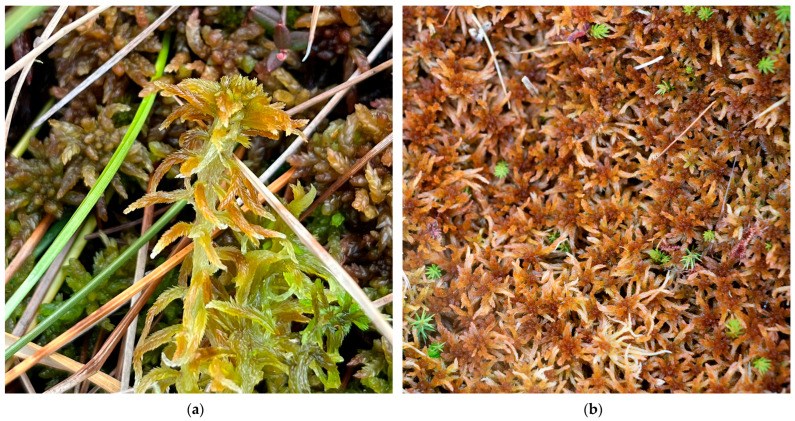 Figure 11
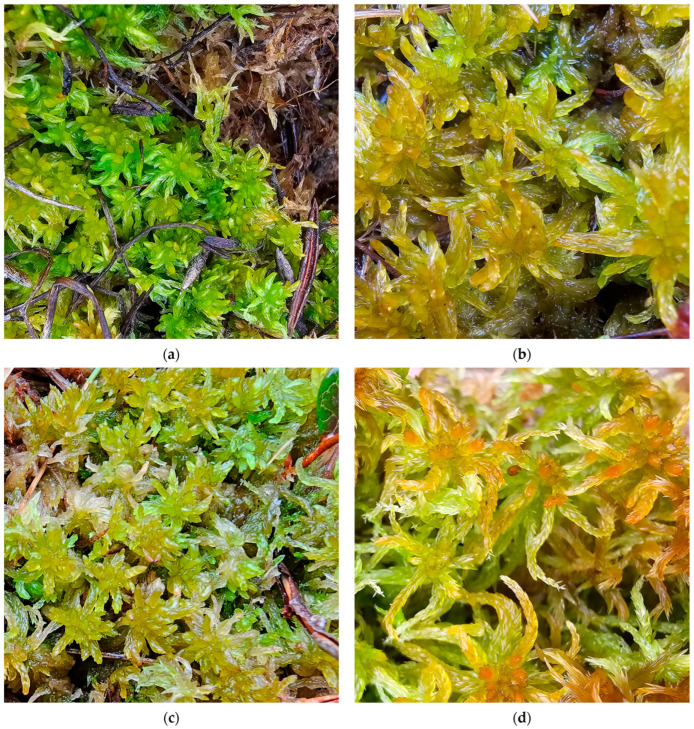 Figure 12
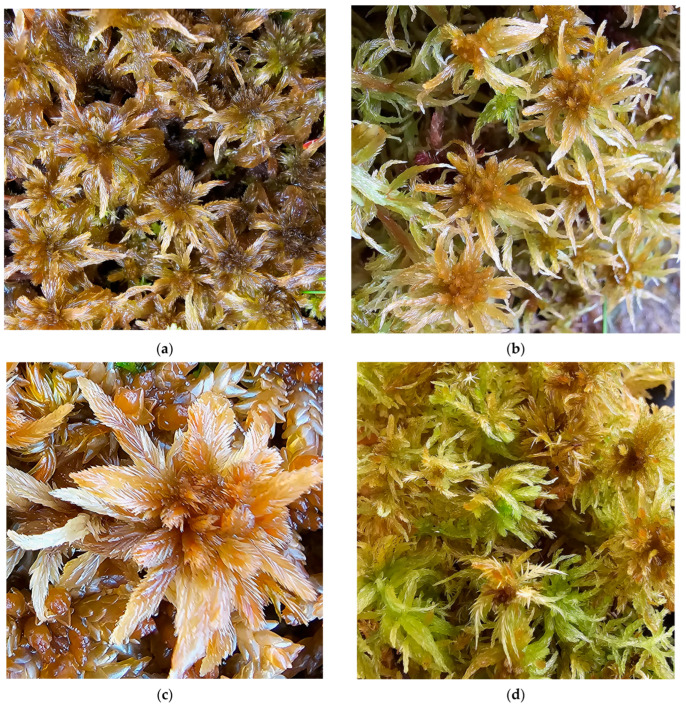 Figure 13
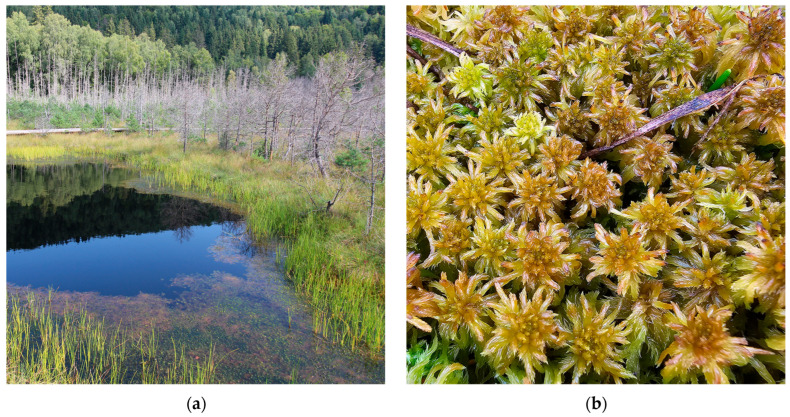 Figure 14
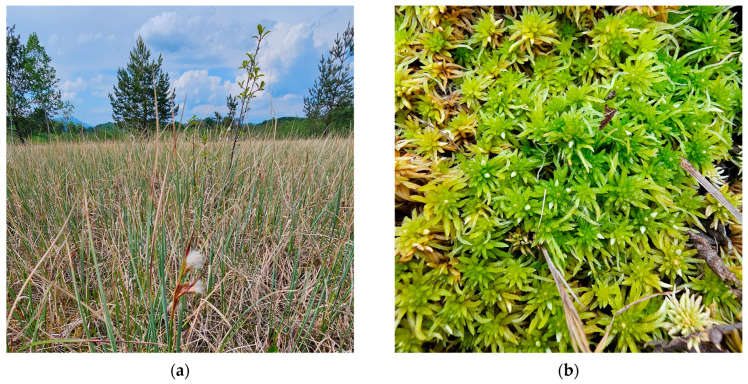 Figure 15
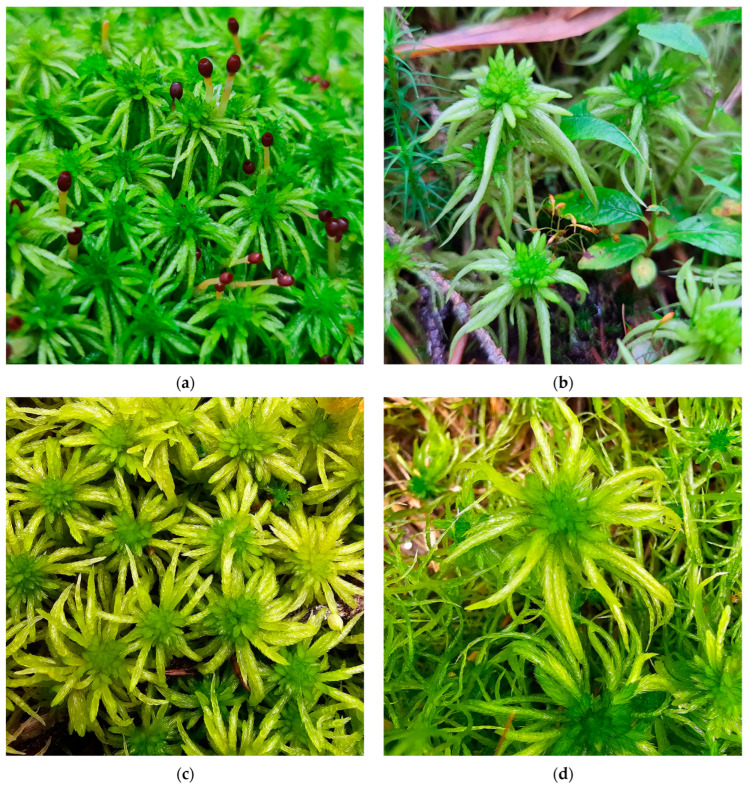 Figure 16
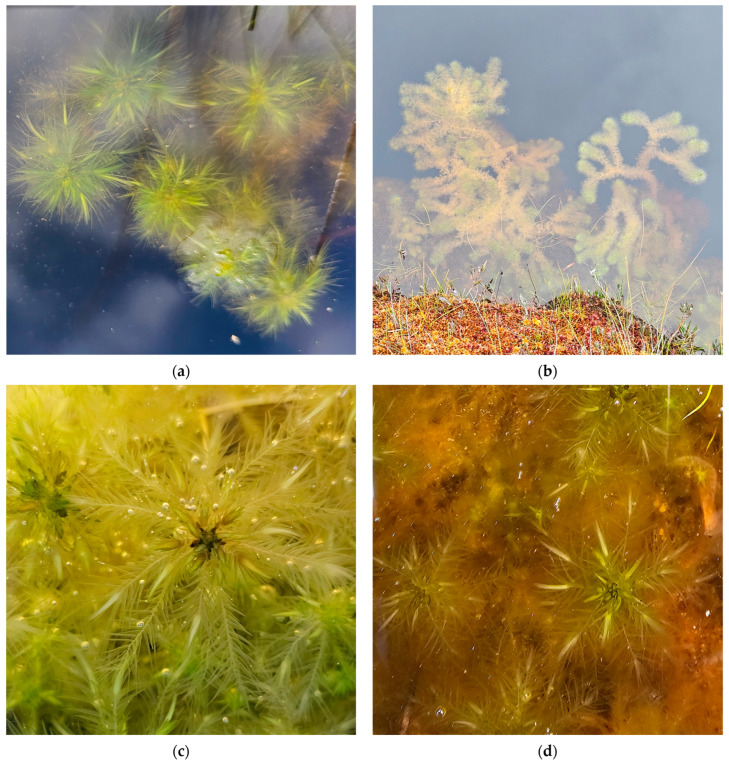 Figure 17
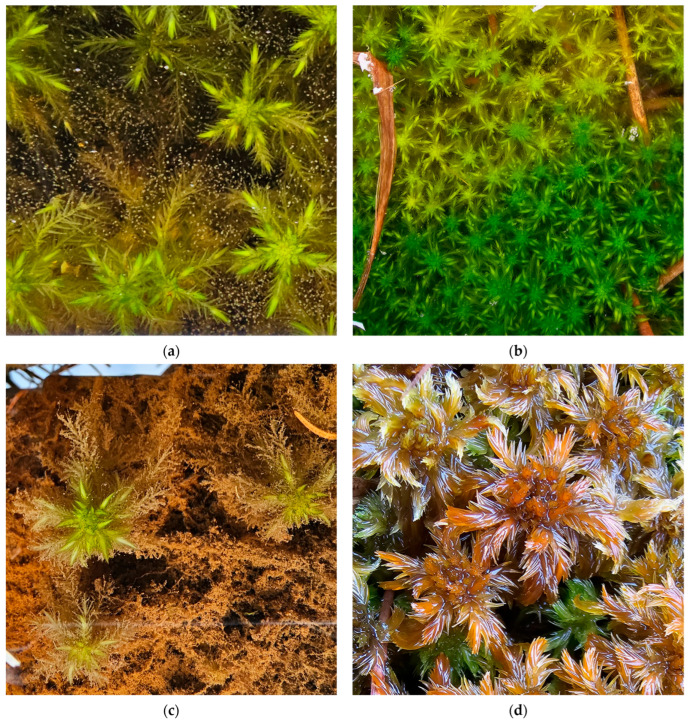 Figure 18
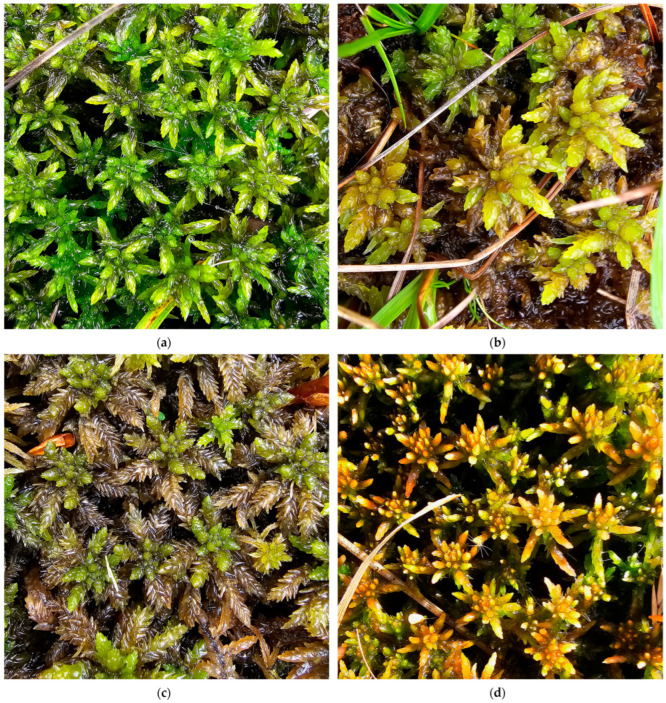 Figure 19
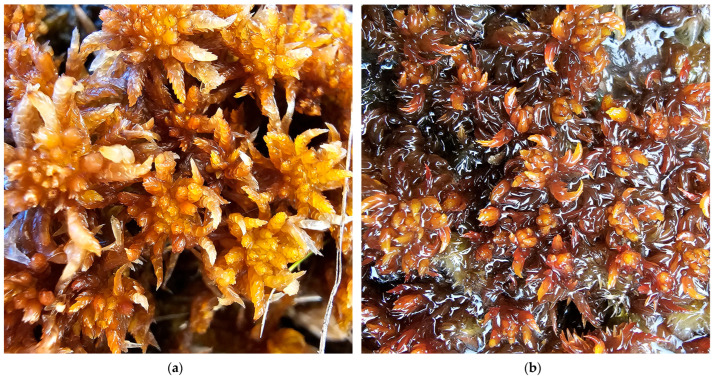 Figure 20
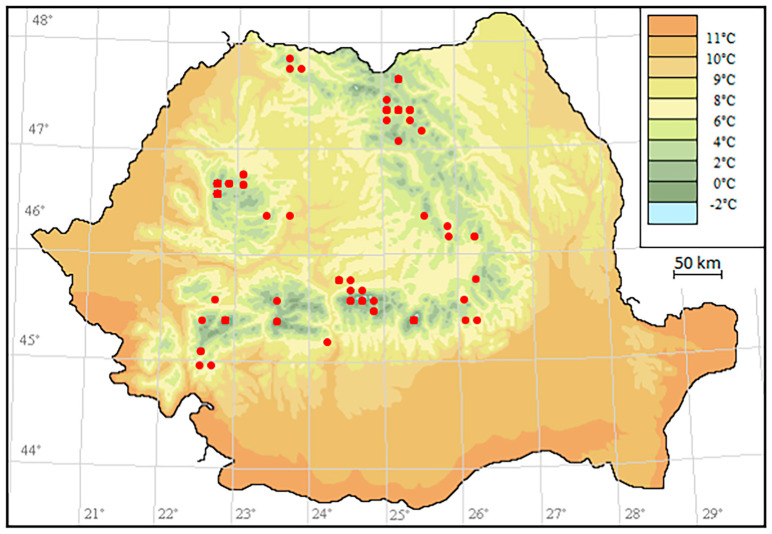 Figure 21
- —Institute of Biology Bucharest of Romanian Academy
- —PDD project
- —PeatRO2
- —PeatRO3
- —PeatRO4
- —Romanian Academy
- —Institute of Biology Bucharest of Romanian Academy
Peer Reviews
No public reviews on file for this paper yet. If you reviewed it on a platform where reviews are public (OpenReview, ICLR, NeurIPS, ICML), you can paste yours below so the community can read it here.
Videos
No videos yet. Explain this paper in a talk, walkthrough, or lecture? Add one.
Taxonomy
TopicsBryophyte Studies and Records · Peatlands and Wetlands Ecology · Botany and Plant Ecology Studies
1. Introduction
The genus Sphagnum has attracted the attention not only of bryologists, but also of botanists, ecologists, conservationists, palynologists, and climate change researchers. Sphagnum L. species are included in the EU Habitats Directive, Annex V, except for S. pylaesii Brid., which is listed in Annex II (Directive 92/43/CEE) [1].
Comprising over 300 species worldwide, the genus Sphagnum represents one of the most significant moss groups in wetland ecosystems and is crucial to the creation and upkeep of peatbogs because it retains water and acidifies the environment, which prevents organic matter from decomposing and encourages the buildup of peat [2,3,4]. Peatlands store significant amounts of carbon (covering about 3% of the land surface), provide refuge for numerous rare species, and are considered priority ecosystems at the European level [5,6]. However, these habitats face significant threats from drainage, peat extraction, and climate change, all of which adversely impact biodiversity and the ecosystem services they provide. Consequently, as habitat builders, species of the genus Sphagnum have aroused major interest in attempts to combat the effects of climate change through large-scale restoration and reconstruction actions.
The Institute of Biology Bucharest has participated in the restoration of 23 peatbogs in the last ten years, an activity financed by four EEA grants. An additional 23 peatbogs have been restored in Romania by other institutions participating in the national peatbog restoration program, financed by the Ministry of Environment, Waters and Forests through the EEA—Environment Program.
The International Union for Conservation of Nature’s (IUCN) criteria, which incorporate variables such as population size, demographic trends, distribution region, and particular threats, are used to conduct the conservation assessments of Sphagnum species [7,8]. The re-evaluation of the conservation status of these species and their habitats has become crucial in recent years due to growing anthropogenic pressures, habitat degradation, and the availability of new dispersion data. This reassessment is critical to ensuring the long-term persistence of Sphagnum species within Romania and to inform efficient conservation strategies.
Bryological research in Romania began over 200 years ago, reflecting the long-standing scientific interest in the country`s bryophyte flora. The first book in which Sphagnum species were reported was published in 1846 [9], where Baumgarten J.C.G. cites five species: Sphagnum capillifolium (Ehrh.) Hedw., S. compactum Lam. & DC., S. cuspidatum Ehrh. ex Hoffm., S. palustre L., and S. squarrosum Crome. Since then, over 2000 articles on bryophyte species in Romania have been published, several hundred of which focus on Sphagnum species. The most comprehensive work appeared in 1998 and describes 32 Sphagnum species from Romania [10] (pp. 30–89).
Over time, 40 Sphagnum species have been published for Romania, of which 5 have been rejected. The conservation status of Romania’s bryophytes was assessed in 2012 [11], 2019 [7], and 2020 [12], reflecting changes in distribution patterns, habitat conditions, and emerging threats.
In Romania, Sphagnum species are dominant in the following habitats: active raised bogs (NATURA 2000 code: 7110), transition mires and quaking bogs (NATURA 2000 code: 7140), and bog woodland (NATURA 2000 code: 91D0); they are frequently found in depressions on peat substrates of the Rhynchosporion habitat (NATURA 2000 code: 7150); and they are pioneer species in degraded raised bogs still capable of natural regeneration (NATURA 2000 code: 7120) [1]. Additionally, Sphagnum species are frequently found in mountain forests, especially in spruce fir forests, in subalpine bushes, in subalpine meadows or on mountain wet rocks, up to 2500 m a.s.l. The Sphagnum species have been reported in blanket bogs (NATURA 2000 code: 7130) [1], but this type of habitat does not occur in Romania.
In this study, we present the updated list of Sphagnum species recorded in Romania, accompanied by a reassessment of their conservation status based on the latest IUCN criteria and recent field data, aiming to support ongoing conservation efforts.
2. Results
2.1. Sphagnum Species Rejected to Romania
Five Sphagnum species published for Romania have been rejected: S. annulatum H. Lindb. ex Warnst., S. molle Sull., S. pulchrum (Lindb. ex Braithw.) Warnst., S. pylaesii Brid. [10,13] and S. magellanicum Brid. [14].
Sphagnum annulatum was reported from Poiana Stampei Peatbog, Romania, 25 May 1925, leg. & det. Papp C., and Dofteana Valley, Târgu Ocna, Romania, 6 August 1951, leg. & det. Papp C. [15], rev. Plămadă E., as. S. fallax (H. Klinggr.) H. Klinggr. [10]; from Poiana Stampei Peatbog, 11.05.1957, leg. & det. Papp C. [15], rev. Plămadă E., as. S. flexuosum Dozy & Molk. [10]; and from Poiana Stampei Peatbog, 20 May 1957, 15 May 1959, leg. & det. Papp C. [15], rev. Plămadă E., as. S. angustifolium (C.E.O. Jensen ex Russow) C.E.O. Jensen [10]. In the BUCA—Romanian Academy Herbarium, we found Sphagnum annulatum samples from Poiana Stampei Peatbog, Romania, 25 July 1925, leg. & det. Papp C., and there are S. angustifolium, rev. Ștefănuț M.-M., 29.02.2025, BUCA B6875.
Sphagnum molle was reported from Poiana Stampei Peatbog, Romania, 23 July 1925, 20 May 1956, 15 May 1959, leg. & det. Papp C. [15], rev. Plămadă E., as. S. fuscum (Schimp.) H. Klinggr. [10]. However, we have not found samples of S. molle by Papp C. in the BUCA Herbarium.
Between 2021 and 2024, we visited the Poiana Stampei Peatbog multiple times (Figure 1), but did not find the two species reported by Papp C., Sphagnum annulatum or S. molle.
Sphagnum pulchrum was reported from the Lăptici Peatbog, Bucegi Mountains, Southern Carpathians, Romania, 13 July 1940, leg. Cretzoiu P., det. Papp C., rev. Plămadă E., as S. quinquefarium (Braithw.) Warnst., FRE (Flora Romaniae Exssicata) 2393 [10]. The samples of S. pulchrum from the BUCA herbarium are all S. quinquefarium, rev. Ștefănuț M.-M., 20 May 2025, BUCA B6982-B6985.
We visited the Lăptici Peatbog, Bucegi Mountains, in 2022 and 2025 (Figure 2), but we did not find Sphagnum pulchrum.
Sphagnum pylaesii was reported in 1972 by Debreczy Z. from the Retezat Mountains at Lia Lake, Ana Lake and Bucura Lake [16]. The samples were revised by Lange B. as S. platyphyllum (Lindb. ex Braithw.) Warnst. [17]. In 1999, Jakab G. reported S. pylaesii from the Tăul lui Dumitru Peatbog, Maramureș County, Romania, leg. Jakab G., det. E. Szurdoki [18], later revised by E. Szurdoki as S. platyphyllum.
We visited the peatlands near Lia Lake and Bucura Lake, Retezat Mountains, in August 2024 (Figure 3), but we did not find Sphagnum pylaesii.
Sphagnum magellanicum was previously reported as a common species in Europe but it proved to be restricted only to South America; in Europe, only S. medium Limpr. and S. divinum Flatberg & K. Hassel are present [14].
2.2. Sphagnum Species Confirmed to Romania
Sphagnum affine Renauld & Cardot was reported from the Molhașul de la Râșca Peatbog, Cluj County, Romania, 920–940 m a.s.l., 25 October 1915, leg. & det. Győrffy I., Péterfi M., as S. imbricatum Hornsch. var. cristatum Warnst. fo. fuscescens Warnst. BP (Budapest Herbarium) 7450/S, 7451/S [19], rev. Ștefănuț M.-M. [20] (Figure 4a,b). This was the first confirmed report of S. affine to Romania. S. imbricatum was reported also from the Mohoș Peatbog, Harghita County [21], but we did not find herbarium samples for verification. In the old reports of S. imbricatum in Europe were included S. affine and S. austinii Sull.
After almost 100 years, S. affine was found in the Molhașul de la Râșca Peatbog, 46.70849° N, 23.05224° E, 1070 m a.s.l., 26 July 2013, leg. Sass-Gyarmati A., Jakab G., det. Sass-Gyarmati A., 2014, EGR (Eger Herbarium), CL (Cluj-Napoca Herbarium), published on 30 June 2025 [22], BUCA B12946, conf. Ștefănuț M.-M., 23 June 2025.
Our study confirms the presence of S. affine at Molhașul de la Râșca—Dealul Negru Peatbog, Cluj County, 46.709174° N, 23.049022° E, 1053 m a.s.l., 6 October 2025, leg. Ștefănuț M.-M., Moroșanu A.-M., Ștefănuț S., det. Ștefănuț M.-M., conf. Ștefănuț S., BUCA B12617 (Figure 5a,b).
Sphagnum papillosum Lindb. was recently reported from the Vlășchinescu Peatbog, Maramureș County, Romania, 885 m a.s.l., 19 April 2024, leg. & det. Ștefănuț M.-M., BUCA B12295, B12311, B12312, B12325 (Figure 6a,b). Moreover, the species were reported from Molhașul de la Călățele, Cluj County, 916 m a.s.l., 25 October 1915, conf. Ștefănuț M-M., BP 7427, Tăul Obcioarei Peatbog, Maramureș County, 1046–1047 m a.s.l., and Poiana Călineasa, Cluj County, 46.56278° N, 22.81636° E, 1367 m a.s.l., 1 October 2017, leg. & det. Hájková P. [20].
We found S. papillosum in Bucegi Massif, Vâlcelul Clinului Bog, in low hummocks, 45.356535° N, 25.463018° E, 1781 m a.s.l., 12 June 2025, leg. Moroșanu A.-M., Ștefănuț M.-M., Ștefănuț S., det. Ștefănuț M.-M., conf. Ștefănuț S., BUCA B12525-B12529 (Figure 6c,d), alongside other bryophytes such as S. capillifolium, S. compactum, S. palustre, S. rubellum Wilson, S. subnitens Russow & Warnst., Aulacomnium palustre (Hedw.) Schwägr., and Polytrichum strictum Menzies ex Brid.
Additionally, we found S. papillosum in the Bihor Mountains, Tăul fără fund Peatbog, Padiș, Bihor County, 46.598770° N, 22.700088° E, 1231 m a.s.l., 9 October 2025, leg. Ștefănuț M.-M., Moroșanu A.-M., Ștefănuț S., det. Ștefănuț M.-M., conf. Ștefănuț S., BUCA B12648, B12649.
Sphagnum jensenii H. Lindb. was reported for the first time in 1959 in a small peatbog on Sărăcinul Mic Valley, Lotru Mountains, Southern Carpathians, 1260 m a.s.l., leg. Ștefureac T., Lungu L. & Popescu A., 1955–1956, det. Ștefureac T. [23]. Currently, the habitat is covered by water from the Vidra hydropower Lake. For this reason, we can say that this site of S. jensenii is extinct in Romania.
The second report of S. jensenii was in 1973 from Cristișor-Neagra Broștenilor Peatbog, Suceava County, leg. & det. Lungu L. [24].
Other S. jensenii reports have been included as synonyms of S. annulatum, which were later neither confirmed nor rejected.
We confirmed the presence of the species S. jensenii in Romania from Bucegi Massif, Vâlcelul Clinului Bog, 45.356726° N, 25.462956° E, 1781 m a.s.l., 12 June 2025, leg. Ștefănuț M.-M., Ștefănuț S., det. Ștefănuț M.-M., conf. Ștefănuț S., BUCA B12553 (Figure 7). This is the first report of S. jensenii in Romania in the last 50 years.
In Bucegi Massif, S. jensenii was found in the Transition mires and quaking bogs habitat (NATURA 2000 code: 7140), along with other bryophytes such as Sphagnum angustifolium, S. contortum Schultz, S. fallax, S. girgensohnii Russow, S. inundatum Russow, S. majus (Russow) C.E.O. Jensen subsp. majus, S. platyphyllum, S. teres (Schimp.) Ångstr., and Hamatocaulis vernicosus (Mitt.) Hedenäs. This bog was investigated by Ștefureac T. [25] and recently by Mountford J.O. and Onete M. [26].
Sphagnum wulfianum Girg. has not been found in the last 49 years, but recently, we rediscovered this species in Apa Roșie Peatbog, Covasna County, 20 August 2025, in two locations: 46.173667° N, 26.255000° E, 1002 m a.s.l., leg. Moroșanu A.-M., Ștefănuț M.-M., Ștefănuț S., det. Ștefănuț M.-M., conf. Ștefănuț S., BUCA B12600 (Figure 8a–c), 46.174390° N, 26.255057° E, 1002 m a.s.l., leg. Ștefănuț M.-M., Moroșanu A.-M., Ștefănuț S., det. Ștefănuț M.-M., conf. Ștefănuț S., BUCA B12601 (Figure 8d). S. wulfianum grows in forested peatland, with S. capillifolium, S. divinum, S. girgensohnii, and S. medium, on the bottom of Picea abies (L.) H. Karst., Vaccinium vitis-idaea L., and V. myrtifolium Michx.
Sphagnum wulfianum was reported for the first time in Romania in 1890 from Coșna Peatbog, Suceava County, and the Teșna Românești Peatbog, leg. Dörfler I., det. Breidler I. [27]. In 1925, this species was reported from the same site and from Poiana Stampei Peatbog, leg. & det. Mühldorf A. [28]. Moreover, S. wulfianum was reported from Drăgoiasa Peatbog, 19 August 1959, 12 August 1960, leg. & det. Ștefureac T., Suceava County [29], Valea Stânii Peatbog, Suceava County, 21 August 1969, leg. & det. Ștefureac T., Grădinița Peatbog, Suceava County, 25 August 1963, 9 August 1973, leg. & det. Ștefureac T. [30]. The last record of S. wulfianum in Romania is from the Apa Roșie Peatbog, Covasna County, 25 July 1975, leg. & det. Ștefureac T., Barabaș V., 15 July 1976, leg. & det. Ștefureac T. [31].
2.3. New Sphagnum Species Recently Published for Romania
Sphagnum divinum Flatberg & K. Hassel was reported as new to Romania in 2024 from the Tinovul de lângă drum Peatbog, Lucina, Suceava County, 1159 m a.s.l., 19 October 2023, leg. & det. Ștefănuț M.-M., BUCA B12274, B12275 [32] (Figure 9a).
This species was also found in other peatbogs: Tăul Obcioarei Peatbog, Maramureș Mountains, 47.684861° N, 24.536667° E, 1043 m a.s.l., 2014, leg. Goia I., det. Flatberg K.I., TRH (Trondheim Herbarium) B96689/1; Găina-Lucina Peatbogs, Suceava County, 47.647309° N, 25.195054° E, 1164 m a.s.l., 2014, leg. Goia I., det. Flatberg K.I., TRH B96691/1; Corund, Hargita County, 46.504176° N, 25.254747° E, 954 m a.s.l. 7 August 2024, leg. Nagy Z., det. Czołczyński B. [33]; Padiș-molidiș Peatbog, Molhașul Mare de la Izbuc Peatbog, Molhașul de la Călățele, Mluha Peatbog [22]; Avrig Peatbog, Avrig, Sibiu County, 405 m a.s.l. [34]; Pilugani Peatbog, Suceava County, 47.341472°N, 25.167588°E, 872 m a.s.l., 10 April 2024, leg. & det. Ștefănuț M.-M., BUCA B12308 [35]; Iezerul Șureanu Peatbog, Șureanu Mountains, 45.580971° N, 23.508663° E, 1735 m a.s.l., 29 July 2021, leg. & det. Ștefănuț S., BUCA B12331; Șaru Dornei Peatbog, Suceava County, 47.258928° N, 25.356447° E, 902 m a.s.l., 4 September 2023, leg. & det. Ștefănuț M.-M., BUCA B12294; Teșna Românești Peatbog, Suceava County, 47.365580° N, 25.137234° E, 868 m a.s.l., 5 September 2023, leg. & det. Ștefănuț M.-M., BUCA B12292; Coșna Peatbogs, Suceava County [36], 47.374197° N, 25.167738° E, 858 m a.s.l., 20 October 2023, leg. & det. Ștefănuț M.-M., BUCA B12282, 19 September 2024, leg. Ștefănuț S., det. Ștefănuț M.-M., BUCA B12326, B12327; Hărnicești Peatbog, Maramureș County, 47.808603° N, 23.826399° E, 1007 m a.s.l., 21 April 2024, leg. & det. Ștefănuț M.-M., BUCA B12289, B12390, B12391; Peșteana Peatbog, Hunedoara County, 45.543508°N, 22.806266°E, 518 m a.s.l., 24 August 2024, leg. Ștefănuț S., det. Ștefănuț M.-M., BUCA B12357, B12358, B12366, B12368- B12372, 08 May 2025, leg. & det. Ștefănuț M.-M., BUCA B12481; Mlaca Tătarilor Peatbog, Sibiu County, 45.715082° N, 24.650163° E, 541 m a.s.l., 12 March 2025, leg. Moroșanu A.-M., Ștefănuț M.-M., det. Ștefănuț M.-M., BUCA B12347 (Figure 9b); Tăul fără fund de la Poiana Mare-Obârșia Peatbog, Mehedinți County, 45.048267° N, 22.663262° E, 1035 m a.s.l., 06 May 2025, leg. Moroșanu A.-M., Ștefănuț M.-M., det. Ștefănuț M.-M., BUCA B12483-B12486; Bâlbâitoarea Peatbog, Prahova County, 45.389099° N, 26.104811° E, 863 m a.s.l., 26 June 2025, leg. Moroșanu A.-M., Ștefănuț S., det. Ștefănuț M.-M., BUCA B12490; Apa Roșie Peatbog, Covasna County, 46.174255° N, 26.250930° E, 1008 m a.s.l., 5 August 2025, leg. Ștefănuț M.-M., Moroșanu A.-M., Ștefănuț S., det. Ștefănuț M.-M., BUCA B12576; Apa Lină Peatbog, Covasna County, 46.151849° N, 26.203271° E, 972 m a.s.l., 6 August 2025, leg. Ștefănuț M.-M., Moroșanu A.-M., Ștefănuț S., det. Ștefănuț M.-M., BUCA B12577- B12579; Comandău Peatbog, Covasna County, 45.767559° N, 26.246558° E, 1020 m a.s.l., 7 August 2025, leg. Ștefănuț M.-M., Moroșanu A.-M., Ștefănuț S., det. Ștefănuț M.-M., BUCA B12582; Mohoș Peatbog, Harghita County, 46.135493° N, 25.900060° E, 1051 m a.s.l., 8 August 2025, leg. Ștefănuț M.-M., Moroșanu A.-M., Ștefănuț S., det. Ștefănuț M.-M., BUCA B12584; Între Șimone Peatbog, Cluj County, 46.645460° N, 22.846134° E, 1016 m a.s.l., 7 October 2025, leg. & det. Ștefănuț M.-M., conf. Ștefănuț S., BUCA B12633 (Figure 9c); Tinovul de la Ic Ponor, Bihor County, 46.634990° N, 22.813090° E, 1037 m a.s.l., 7 October 2025, leg. & det. Ștefănuț M.-M., conf. Ștefănuț S., BUCA B12632 (Figure 9d).
Sphagnum medium Limpr. was reported as new to Romania in 2024 from Avrig Peatbog, Avrig, Sibiu County, 405 m a.s.l., 12 March 2024, leg. & det. Ștefănuț M.-M., BUCA B12280 (Figure 10a) [37]; Tinovul de lângă drum Peatbog, Lucina, Suceava County, 1160 m a.s.l., 19 October 2023, leg. & det. Ștefănuț M.-M., BUCA B12283 [37]; Tăul de la Gutâi Peatbog, Gutâi Mountains, Maramureș County, 1057 m a.s.l., 9 October 2023, leg. Moroșanu A.-M., det. Ștefănuț M.-M., BUCA B12293 [37]; Coșna Peatbogs, Suceava County [36]; Vlășchinescu Peatbog, Maramureș County, Romania, 885 m a.s.l., 19 April 2024, leg. & det. Ștefănuț M.-M. [20]; Molhașurile Căpățînii, Mluha Peatbog [22]; Pilugani Peatbog, Suceava County, 47.341555° N, 25.167579° E, 872 m a.s.l., 10 April 2024, leg. & det. Ștefănuț M.-M., BUCA B12418-B12422 (Figure 10b) [35]; This species was also found in Mohoș Peatbog, Harghita County, 46.136389° N, 25.902778° E, 1051 m a.s.l., 2014, leg. Goia I., det. Flatberg K.I., TRH B96689/1 [33]; Mlaca Tătarilor Peatbog, Sibiu County, 45.715082° N, 24.650163° E, 541 m a.s.l., 29 April 2011, leg. & det. Ștefănuț S., BUCA B4364; Tăurile Chendroaiei Peatbog, Gutâi Mountains, 47.709897° N, 23.835694° E, 1057 m a.s.l., 20 April 2024, leg. & det. M-M. Ștefănuț, BUCA B12487; Peșteana Peatbog, Hunedoara County, 45.543156° N, 22.806419° E, 517 m a.s.l., 24 August 2024, leg. Ștefănuț S., det. Ștefănuț M.-M., BUCA B12373- B12375, B12417, 8 May 2025, leg. Moroșanu A.-M., Ștefănuț M.-M., det. Ștefănuț M.-M., BUCA B12488; Bâlbâitoarea Peatbog, Prahova County, 45.389376° N, 26.105351° E, 863 m a.s.l., 26 June 2025, leg. Moroșanu A.-M., Ștefănuț S., det. Ștefănuț M.-M., BUCA B12491; Apa Roșie Peatbog, Covasna County, 46.176062° N, 26.251273° E, 1005 m a.s.l., 4 August 2025, leg. Ștefănuț M.-M., Moroșanu A.-M., Ștefănuț S., det. Ștefănuț M.-M., BUCA B12575; Apa Lină Peatbog, Covasna County, 46.151846° N, 26.203885° E, 972 m a.s.l., 6 August 2025, leg. Ștefănuț M.-M., Moroșanu A.-M., Ștefănuț S., det. Ștefănuț M.-M., BUCA B12580; Comandău Peatbog, Covasna County, 45.767594° N, 26.246503° E, 1021 m a.s.l., 7 August 2025, leg. Ștefănuț M.-M., Moroșanu A.-M., Ștefănuț S., det. Ștefănuț M.-M., BUCA B12581; Mohoș Peatbog, Harghita County, 46.135427° N, 25.899771° E, 1052 m a.s.l., 8 August 2025, leg. Ștefănuț M.-M., Moroșanu A.-M., Ștefănuț S., det. Ștefănuț M.-M., BUCA B12585; Între Șimone Peatbog, Cluj County, 46.645460° N, 22.846134° E, 1016 m a.s.l., 7 October 2025, leg. & det. Ștefănuț M.-M., conf. Ștefănuț S., BUCA B12634; Molhașul Mare de la Izbuc, Bihor County, 46.591455° N, 22.762728° E, 1209 m a.s.l., 8 October 2025, leg. & det. Ștefănuț M.-M., conf. Ștefănuț S., BUCA B12636 (Figure 10c); Padiș Bălileasa Peatbog, Bihor County, 46.597889° N, 22.698577° E, 1233 m a.s.l., 9 October 2025, leg. & det. Ștefănuț M.-M., conf. Ștefănuț S., BUCA B12637 (Figure 10d).
Sphagnum subfulvum Sjörs subsp. subfulvum was reported as new to Romania in 2025 from the Tăurile Chendroaiei Peatbog, Gutâi Mountains, Eastern Carpathians, 47.709897° N, 23.835694° E, 1057 m a.s.l., 20 April 2024, leg. & det. Ștefănuț M.-M., conf. Ștefănuț S. and Flatberg K.I., BUCA B12320-B12323 [38], TRH B124094/1 [33] (Figure 11a).
We also found S. subfulvum subsp. subfulvum in the Lacul Sec Peatbog, Siriu Mountains, Eastern Carpathians, 45.512310° N, 26.136964° E, 1464 m a.s.l., 7 October 2021, leg. Ștefănuț S.; det. Ștefănuț M.-M., conf. Ștefănuț S. and Flatberg K.I., BUCA B12461 (Figure 11b), and in the Mluha Peatbog, Alba County, Detunatelor Mountains, Western Romanian Carpathians, 46.331161° N, 23.337354° E, 1334 m a.s.l., 3 November 2025, leg. Ștefănuț S., det. Ștefănuț M.-M., conf. Ștefănuț S., BUCA B12659.
2.4. New Records of Rare Sphagnum Species in Romania
Recently, new records of the rare Sphagnum species distribution in Romania have been reported.
Sphagnum tenellum (Brid.) Pers. ex Brid. was reported in Romania from Molhașul de la Călățele Peatbog, Cluj County, 6 May 1914, leg. & det. Peterfi M., TRH B109055/1 [33,39,40]; Bihor Mountains, Padiș, 21 July 1948, leg. Pop E. & Țopa E., det. Ștefureac T. [41]; Mehedinți County, Baia de Aramă region, 1947, leg. Țopa E., det. Ștefureac T. [41]; Bodoc Mountains, Zombor Valley, Băile Ceres [42]; Izbuc—Călineasa, 1180 m a.s.l., leg. Coldea G., det. Plămadă E. [10]. The species were recently confirmed from Molhașul de la Călățele, 46.72972° N, 23.02208° E, 920 m a.s.l., 24 July 2013, leg. & det. Sass-Gyarmati A. [22]. We found S. tenellum from Vlășchinescu Peatbog, Maramureș County, 47.7466° N, 23.7228° E, 885 m a.s.l., 19 April 2024, leg. & det. Ștefănuț M-M., conf. Ștefănuț S., Flatberg K.I., BUCA B12382, TRH B:126517/1 [33]; Mlaștina fără fund de la Busești, Mehedinți County, 44.948156° N, 22.718931° E, 546 m a.s.l., 5 May 2025, leg. & det. Ștefănuț M-M., conf. Ștefănuț S. [43]; Mohoș Peatbog, Harghita County, 46.134799° N, 25.901594° E, 1049 m a.s.l., 8 August 2025, leg. & det. Ștefănuț M.-M., conf. Ștefănuț S., BUCA B12593 (Figure 12a); Bihor Mountains, Molhașul Mare de la Izbuc, Bihor County, 46.591614° N, 22.762533° E, 1208 m a.s.l., 8 October 2025, leg. Ștefănuț M.-M., Moroșanu A.-M., Ștefănuț S., det. Ștefănuț M.-M., conf. Ștefănuț S., BUCA B12639 (Figure 12b); Bihor Mountains, Molhașurile din Valea Izbucelor, Bihor County, 46.591163° N, 22.758000° E, 1210 m a.s.l., 8 October 2025, leg. Ștefănuț M.-M., Moroșanu A.-M., Ștefănuț S., det. Ștefănuț M.-M., conf. Ștefănuț S., BUCA B12640, B12641 (Figure 12c); Bihor Mountains, Tăul fără fund Peatbog, Padiș, Bihor County, 46.598770° N, 22.700088° E, 1231 m a.s.l., 9 October 2025, leg. Ștefănuț M.-M., Moroșanu A.-M., Ștefănuț S., det. Ștefănuț M.-M., conf. Ștefănuț S., BUCA B12621 (Figure 12d).
Sphagnum balticum (Russow) C.E.O. Jensen has been reported from Mlaștina fără fund de la Busești, Mehedinți County, 44.948156° N, 22.718931° E, 546 m a.s.l., 5 May 2025, leg. & det. Ștefănuț M-M., conf. Ștefănuț S., Flatberg K.I., BUCA B12518 [43]; Făgăraș Mountains, Valea Rea subalpine bogs, 45.598493° N, 24.755599° E, 2024 m a.s.l., 11 September 2025, leg. Ștefănuț S., det. Ștefănuț M.-M., conf. Ștefănuț S., BUCA B12615 (Figure 13a); Bihor Mountains, Molhașul Mare de la Izbuc, Bihor County, 46.591614° N, 22.762533° E, 1208 m a.s.l., 8 October 2025, leg. Ștefănuț M.-M., Moroșanu A.-M., Ștefănuț S., det. Ștefănuț M.-M., conf. Ștefănuț S., BUCA B12643 (Figure 13b); Bihor Mountains, Tăul fără fund, Padiș, Bihor County, 46.598770° N, 22.700088° E, 1231 m a.s.l., 9 October 2025, leg. Ștefănuț M.-M., Moroșanu A.-M., Ștefănuț S., det. Ștefănuț M.-M., conf. Ștefănuț S., BUCA B12642 (Figure 13c); Mluha Peatbog, Alba County, Detunatelor Mountains, Western Romanian Carpathians, 46.331137° N, 23.337334°E, 1334 m a.s.l., 3 November 2025, leg. Ștefănuț S., det. Ștefănuț M.-M., conf. Ștefănuț S., BUCA B12656-B12658 (Figure 13d).
Sphagnum obtusum Warnst. was reported in the last ten years from Obârşia Lotrului, Vâlcea County, 45.43292° N, 23.66372° E, 1305 m a.s.l., 4 August 2018, leg. Hájková P. & Hájek M. 2018/128, det. Hájková P., BRNU (Brno Herbarium) 680362 [33]. We found S. obtusum in the Mohoș Peatbog, Harghita County, in hollows, 46.134819° N, 25.901645° E, 1048 m a.s.l., 8 August 2025, leg. & det. Ștefănuț M.-M., conf. Ștefănuț S., BUCA B12583 (Figure 14).
We found Sphagnum fimbriatum Wilson in Mlaștina fără fund de la Busești, Mehedinți County, 44.948896° N, 22.718289° E, 546 m a.s.l., 5 May 2025, leg. & det. Ștefănuț M-M., conf. Ștefănuț S., BUCA B12510 (Figure 15). This is the first record for the Oltenia Region of Romania [10].
Sphagnum riparium Ångstr. were found in Poiana Stampei Peatbog, Suceava County, 47.2955° N, 25.118722° E, 923 m a.s.l., 31 August 2023, 19 September 2024, leg. & det. Ștefănuț M.-M., conf. Ștefănuț S., BUCA B12302, B12303 (Figure 16a,b). This is the first confirmed report of S. riparium for the Poiana Stampei Peatbog after 50 years [10,15]. Additionally, we found S. riparium in the Între Șimone Peatbog, Cluj County, 46.644809° N, 22.844885° E, 1012 m a.s.l., 7 October 2025, leg. Ștefănuț M.-M., Ștefănuț S., det. Ștefănuț M.-M., conf. Ștefănuț S., BUCA B12627, B12628 (Figure 16c); Molhașul din Groapă Peatbog, Bihor County, 46.593992° N, 22.761243° E, 1209 m a.s.l., 8 October 2025, leg. Ștefănuț M.-M., Moroșanu A.-M., Ștefănuț S., det. Ștefănuț M.-M., conf. Ștefănuț S., BUCA B12620, B12629; Poiana Vărășoaia Peatbog, Bihor County, 46.611867° N, 22.710526° E, 1292 m a.s.l., 9 October 2025, leg. Ștefănuț M.-M., Moroșanu A.-M., Ștefănuț S., det. Ștefănuț M.-M., conf. Ștefănuț S., BUCA B12630, B12631 (Figure 16d).
Sphagnum cuspidatum Ehrh. ex Hoffm. and S. majus (Russow) C.E.O. Jensen are two species that grow in peatland water pools. We found S. cuspidatum var. cuspidatum in water pools of Mohoș Peatbog, Harghita County, 46.136026° N, 25.901523° E, 1051 m a.s.l., 8 August 2025, leg. & det. Ștefănuț M.-M., conf. Ștefănuț S., BUCA B12598 (Figure 17a), in water pools of Molhașul Mare de Izbuc Peatbog, Bihor County, 46.592650° N, 22.761262° E, 1204 m a.s.l., 8 October 2025, leg. Ștefănuț M.-M., Moroșanu A.-M., Ștefănuț S., det. Ștefănuț M.-M., conf. Ștefănuț S., BUCA B12644, B12645 (Figure 17b), in water pools of Şesul Padiş Peatbogs, Bihor County, 46.598795° N, 22.703017° E, 1233 m a.s.l., 9 October 2025, leg. Ștefănuț M.-M., Moroșanu A.-M., Ștefănuț S., det. Ștefănuț M.-M., conf. Ștefănuț S., BUCA B12646 (Figure 17c), Bălileasa Peatbog, Bihor County, 46.597129° N, 22.697110° E, 1236 m a.s.l., 9 October 2025, leg. Ștefănuț M.-M., Moroșanu A.-M., Ștefănuț S., det. Ștefănuț M.-M., conf. Ștefănuț S., BUCA B12647 (Figure 17d).
We found S. majus var. majus in the Hărnicești Peatbog, Maramureş County, 47.8081° N, 23.8262° E, 1007 m a.s.l., 21 April 2024, leg. & det. Ștefănuț M.M., conf. Ștefănuț S. & Flatberg K.I., BUCA B12288, TRH 126527/1 [33]; Mohoș Peatbog, Harghita County, 46.136066° N, 25.901584° E, 1051 m a.s.l., 8 August 2025, leg. & det. Ștefănuț M.-M., conf. Ștefănuț S., BUCA B12592 (Figure 18a), Tăul fără fund din Poiana Mare-Obârșia Cloșani bog, Mehedinți County, 45.048260° N, 22.663480° E, 1034 m a.s.l., 6 May 2025, leg. & det. Ștefănuț M.-M., conf. Ștefănuț S. (Figure 18b), Smida Peatbog, Cluj County, 46.644006° N, 22.871753° E, 1019 m a.s.l., 7 October 2025, leg. Ștefănuț M.-M., Moroșanu A.-M., Ștefănuț S., det. Ștefănuț M.-M., conf. Ștefănuț S., BUCA B12625 (Figure 18c), and Molhașul Mare de la Izbuc Peatbog, Bihor County, 46.591614° N, 22.762533° E, 1208 m a.s.l., 8 October 2025 leg. Ștefănuț M.-M., Moroșanu A.-M., Ștefănuț S., det. Ștefănuț M.-M., conf. Ștefănuț S., BUCA B12626 (Figure 18d).
Sphagnum inundatum Russow and S. platyphyllum (Lindb. ex Braithw.) Warnst. are two species that usually grow together. We found both species in the subalpine water springs of the Vâlcelul Clinului Bog, Bucegi Massif, Romania, 45.356726° N, 25.462956° E, 1781 m a.s.l., 12 June 2025: S. inundatum var. inundatum, leg. & det. Ștefănuț M.-M., conf. Ștefănuț S., BUCA B12500 (Figure 19a), S. platyphyllum, leg. & det. Ștefănuț M.-M., conf. Ștefănuț S., BUCA B12530- B12532 (Figure 19b).
Moreover, we found S. platyphyllum from the Poiana Pelegii, Retezat Mountains, 45.34° N, 22.8932° E, 1617 m a.s.l., 21 August 2024, leg. Ștefănuț S., det. Ștefănuț M.M., conf. Ștefănuț S. & Flatberg K.I., BUCA B12344, TRH B:126528/1 [33,44], and from Mlaştina de la Goronenţi, Mehedinți County, 44.924376° N, 22.512443° E, 814 m a.s.l., 6 May 2025, leg. & det. Ștefănuț M.-M., conf. Ștefănuț S. (Figure 19c).
We reported S. inundatum var. inundatum from Poiana Pelegii, Retezat Mountains, N 45.339999°, E 22.893346°, 1617 m a.s.l., 21.082024, leg. Ștefănuț S., det. Ștefănuț M-M., BUCA B12300, B12301, B12342, conf. Flatberg K.I., TRH B:126512/1, B:126514/1, and Capra Valley, Făgăraș Mountains, 45.594047° N, 24.628639° E, 1969 m a.s.l., 7 November 2024, leg. Ștefănuț S., det. Ștefănuț M-M., BUCA B12340, B12341, conf. Flatberg K.I., TRH B:126513/1 (Figure 19d) [33,44]; Molhașul din Groapă Peatbog, Bihor County, Bihor Mountains, 46.594286° N, 22.761769° E, 1210 m a.s.l., 8 October 2025, leg. Ștefănuț M.-M., Moroșanu A.-M., Ștefănuț S., det. Ștefănuț M.-M., conf. Ștefănuț S., BUCA B12661.
We found S. inundatum var. gravetii (Russow) Hassel & Flatberg [45] in Capra Valley, Făgăraș Mountains, 45.594047° N, 24.628639° E, 1968 m a.s.l., 7 November 2024, leg. Ștefănuț S., det. Ștefănuț M-M., BUCA B12338 & Flatberg K.I., TRH B:126515/1 [33] (Figure 20a).
Sphagnum denticulatum Brid. and S. inundatum are two morphologically similar species and require the careful microscopic analysis of stem leaves [45]. We found S. denticulatum in the Molhașul din Groapă Peatbog, Bihor County, Bihor Mountains, 46.594345° N, 22.761824° E, 1211 m a.s.l., 8 October 2025, leg. Ștefănuț M.-M., Moroșanu A.-M., Ștefănuț S., det. Ștefănuț M.-M., conf. Ștefănuț S., BUCA B12660 (Figure 20b).
2.5. Extinction Risk Assessment of Sphagnum Species in Romania
Using literature, herbarium, and field data, we were able to re-evaluate the Sphagnum species in Romania. This evaluation was carried out in accordance with the latest IUCN version of the guidelines [8].
For the conservation status assessment of the Sphagnum species in Romania, the extent of occurrence (EOO), area of occurrence (AOO), number of locations, habitat fragmentation, population size, conservation status of peatlands, threats and pressures, age of the reporting data, and the range of the species in Europe and the world were taken into account. The calculations of the extent of occurrence (EOO) and area of occurrence (AOO) are based on number of known localities. The rate of decline due to climatic change was not taken into account, making it the subject of a future study.
The list of Sphagnum species in Romania includes 35 species. Between 2021 and 2025, we recorded 35 Sphagnum species in the field and all have been confirmed to Romania.
The list of Sphagnum species in Romania and the conservation status assessment are presented in Table 1, along with comparisons with previous assessments [11,12].
3. Discussion
Of the 35 Sphagnum species with certain distribution in Romania, seven are endangered at the national level. Among the threatened species category, two species are classified as CR—Critically Endangered (5.71%); two species as EN—Endangered (5.71%); and three species as VU—Vulnerable (8.57%).
The conservation status of threatened Sphagnum species in Romania assessed in 2012 [11] has been refined for more than 77% of species through improved knowledge.
Our study showed that there are very limited distribution data for Sphagnum species in Romania, which gives the risk assessment a certain degree of uncertainty. In our study, we relied only on known localities and did not use estimates of the number of localities.
The only Sphagnum species with increased conservation status is S. jensenii, from EN (Endangered) to CR (Critically Endangered) (AOO = EOO = 8 km^2^), due to rejected reports of S. annulatum, which were included as synonyms of S. jensenii.
The conservation status of the species Sphagnum wulfianum remains unchanged as EN (Endangered) (AOO = 24 km^2^, EOO = 1,945.8 km^2^); only the criteria is changed from B2b(iii,iv); C1 to A1c; C1. This is because, although it has been reported from several bogs in Romania, the data are very old and the species has been found only once in the last 49 years. We have searched for this species in the peatbogs where it was previously reported (Teșna Românești, Poiana Stampei, Drăgoiasa, Valea Stânii, Grădinița, and Apa Roșie Peatbogs), but only in Apa Roșie Peatbogs have we found it.
The records of Sphagnum wulfianum from Apa Roșie Peatbog in Romania are at the southernmost limit of its global range.
The conservation status of Sphagnum papillosum was changed from CR B1ab(ii,iii) + B2ab(ii,iii) to EN B2ab(ii,iii,iv) in 2025 [20], but, with the new records from Bucegi Massif and Bihor Mountains, the area of occupancy (AOO = 24 km^2^) and the extent of occurrence (EOO = 26,643.6 km^2^) are larger. For these reasons, the conservation status of S. papillosum in Romania is now VU B2ab(ii,iii,iv). We believe that the species is much more widespread than currently known and further research could lead to its assessment as NT (Near Threatened) or perhaps even LC (Least Concern). A similar situation applies to Sphagnum balticum and S. obtusum, which, following improved field research, may no longer be included in the threatened categories.
Until now, Sphagnum affine had not been evaluated (NE) because of a lack of data [11,12], but we confirm the presence of this species in one site in Romania (AOO = EOO = 4 km^2^), and the conservation status is changed to CR B1ab(ii,iii) + B2ab(ii,iii). In the field, S. affine is very difficult to distinguish from S. palustre, especially since the two species grow together. On this basis, we suggest that S. affine is much more widespread in Romania, but it has been overlooked.
With two new records of Sphagnum subfulvum subsp. subfulvum to Romania (AOO = 12 km^2^, EOO = 18,344.9 km^2^), the conservation status of this species has been changed from CR B1ab(ii,iii) + B2ab(ii,iii) [38] to EN B2ab(ii,iii,iv).
New records of Sphagnum balticum (AOO = 32 km^2^, EOO = 31,923.2 km^2^) and S. obtusum (AOO = 24 km^2^, EOO = 35,773.9 km^2^) in Romania have led to the change in the conservation status of these species from EN B2ab(ii,iii,iv) to VU B2ab(ii,iii,iv).
New distribution data for the species Sphagnum denticulatum, S. majus, and S. inundatum have led to their classification in the NT (Near Threatened) category from VU (Vulnerable) and from EN (Endangered) for S. tenellum.
Because Sphagnum cuspidatum and S. majus grow in water pools and the peatlands with water pools in Romania represent less than 15% of all Sphagnum peatlands in Romania, thar conservation status of these species is NT—Near Threatened. Sphagnum majus was assessed in 2012 as a VU (Vulnerable) species, but our research proved that it was confused with S. cuspidatum and is much more frequent than has been reported. For example, in the Mohoș Peatbog, Harghita County, where we found both species in 2025, only S. cuspidatum was reported previously.
The less common species with an extent of occurrence (EOO) > 20,000 km^2^, an area of occurrence (AOO) > 2000 km^2^, or a number of locations between 11 and 20, such as Sphagnum cuspidatum, S. denticulatum, S. inundatum, S. fimbriatum, S. majus, S. platyphyllum S. riparium, and S. tenellum, were assessed as NT—Near Threatened.
The most common Sphagnum species in Romania is S. girgensohnii, which is found in almost all oligotrophic peatbogs, mountain forests and subalpine areas, from 600 to 2500 m a.s.l. Almost as common is S. squarrosum, found in Romania on the edges of lakes, peatbogs or mountain streams.
The frequently found species with an extent of occurrence (EOO) > 30,000 km^2^, an area of occurrence (AOO) > 3000 km^2^, or occurrence in more than 20 locations in Romania, such as Sphagnum angustifolium, S. capillifolium, S. centrale, S. compactum, S. contortum, S. divinum, S. fallax, S. flexuosum, S. fuscum, S. girgensohnii, S. medium, S. palustre, S. quinquefarium, S. rubellum, S. russowii, S. squarrosum, S. subnitens, S. subsecundum, S. teres, and S. warnstorfii, were assessed as LC—Least Concern.
The habitats richest in Sphagnum species are the peatbogs with water pools, which have over 15 species, while the peatbogs without water pools have fewer species, because they lack species that are more dependent on water, such as S. cuspidatum, S. denticulatum, S. majus, S. balticum, S. tenellum, S. jensenii, S. contortum, S. inundatum, S. subsecundum, S. platyphyllum, and S. teres. Another habitat with a high diversity of Sphagnum species is represented by permanent subalpine springs, where in addition to the above species, there are also S. compactum, S. papillosum, and S. subfulvum.
The peatland habitats already afforested with pine (Pinus sylvestris L.) seem to be losing the great diversity of Sphagnum species they once had, being now dominated by common species such as S. capillifolium, S. divinum, S. girgensohnii, S. centrale, S. medium, S. palustre, and S. squarrosum; sometimes with S. fuscum, S. rubellum, S. russowii, and S. subnitens; and less often with S. warnstorfii. If these habitats are still well moistened, the species that prefer hollows appear, such as S. angustifolium, S. fallax, and S. flexuosum.
As a result, habitats that still have water pools are a priority for protection and conservation; restoration measures should focus on preserving/restoring water pools and blocking drainage channels.
Between 1950 and 1990, the peatbogs in Romania were extensively drained to reclaim land for agriculture. The drainage channels are still active in many peatlands, but some of them have been blocked during restoration projects carried out in Romania over the last 10 years, in over 45 peatlands. Positive effects, including a water table rise exceeding 50 cm in some peatlands, were observed within a year, facilitating the expansion of hollow-dwelling species such as S. fallax, S. angustifolium, S. flexuosum, S. contortum, and S. subsecundum.
Even though Sphagnum species in Romania are included in Annex V of the European Habitats Directive and do not require legal strict protection, we consider the species assessed here to be threatened: Sphagnum affine, S. balticum, S. jensenii, S. obtusum, S. papillosum, S. subfulvum, and S. wulfianum should be included on the list of nationally protected species. Among them, Sphagnum affine, S. jensenii, S. subfulvum, and S. wulfianum are priority species.
4. Materials and Methods
The distribution of Sphagnum species in Romania was compiled using literature, herbaria, open access databases [33] and field data during the period 2001–2025, especially 2021–2025.
More than 100 peatlands across Romania were investigated:
- Maramureș County: Vlășchinescu Peatbog, Hărnicești Peatbog, Tăurile Chendroaiei (Tăul de la Gutâi) Peatbog;
- Suceava County: Lucina-Găina Peatbog, Tinovul de lângă drum-Lucina Peatbog, Lucina Est Peatbog, Lucina Vest Peatbog, Tinovul Sângerozanei Peatbog; Tinovul cel mare de la Coșna Peatbog, Tinovul Jinului Peatbog, Teșna Românești Peatbog, Teșna Peatbog, Bahnele Bancului I Peatbog, Bahnele Bancului II Peatbog, Poiana Stampei Peatbog, Pilugani Peatbog, Șaru Dornei Peatbog, Drăgoiasa Peatbog;
- Bistrița-Năsăud County: Grădinița Peatbog, Larion Peatbog;
- Călimani Mountains: Iezer Lake Peatbogs;
- Harghita County: Mohoș Peatbog, Sâncrăieni-Sântimbru Peatbogs, Dumbrava Harghitei Peatbog;
- Covasna County: Apa Roșie Peatbog, Apa Lină Peatbog, Comandău Peatbog;
- Siriu Mountain: Lacul cu ochi Peatbog;
- Buzău County: Manta Lake Peatbog;
- Prahova County: Bâlbâitoarea Peatbog;
- Bucegi Mountains: Nucet-Blana Peatbogs, Lăptici Peatbog—Blana Valley, Lăptici II—Scândurilor Valley Peatbog, the peatbogs of Lăptici Valley, Horoaba Valley Peatbog;
- Ierzer-Păpușa Mountains: Iezer Lake Peatbogs;
- Sibiu County: Mlaca Tătarilor Peatbog, Lacul lui Vizante Peatbog, Avrig Peatbogs;
- Făgăraș Mountains: Zârna Lake Peatbogs, Valea Rea Peatbogs; Podragu Lake Peatbogs, Capra Lake Peatbogs, Bâlea Lake Peatbogs, Puha Valley Peatbogs;
- Vâlcea County: Mosoroasa Peatbog;
- Șureanu Mountain: Iezerul Șureanu Peatbog;
- Parâng Mountains: Câlcescu (Gâlcescu) Peatbog, Gaura Valley Peatbogs;
- Alba County: Mluha Peatbog; Tăul fără fund de la Băgău Peatbog;
- Hunedoara County: Peșteana Peatbog;
- Retezat Mountains: Bucura Lake Peatbogs, Lia Lake Peatbogs, Galeș Lake Peatbogs; Tăul dintre Brazi Peatbog; Poiana Pelegii Peatbog;
- Țarcu Mountains: Mătania Valley Peatbogs;
- Mehedinți County: Tăul fără fund de la Poiana Mare-Obârșia Peatbog; Mlaștina în trepte din Poiana Mare Obârșia Cloșani Peatbog; Tăul fără fund de la Busești, Gornenți Peatbog;
- Gilău Mountains: Molhașul de la Călățele Peatbog; Dâmbu Negru-Între Drumuri Peatbog; Negrușul Finciului-Rovina Mare Peatbog; Molhașul de la Râșca—Dealul Negru Peatbog; Dâmbu Negru-La Pod Peatbog;
- Cluj County: Tinovul Smida; Între Șimone Peatbog;
- Bihor Mountains: Molhașurile din Valea Izbucelor; Molhașul din Groapă; Seria de mlaștini de la Sâvla; Șesul Padiș Peatbogs; Bălileasa Peatbog; Tăul fără fund Peatbog; Poiana Vărășoaia Peatbogs;
- Bihor County: Tinovul de la Ic Ponor; Călineasa-Izbuc Peatbog.
The RoBioAtlas (2023) web application [46] was used to create the map of the investigated peatlands (Figure 21).
The field data were collected for each occurrence: geographic coordinates (decimal degrees) and elevation using a GPS receiver. A review of scientific publications was conducted, and all distribution data were registered in a database. When coordinates were not available, locations were georeferenced using Google Earth Pro, Google Maps, and military survey maps for Romania with an assumed error of less than 1 km. The extent of occurrence (EOO) and the area of occurrence (AOO) were calculated in ArcGIS 10.7.1 using a 2 km square grid [47].
The conservation assessment was carried out according to the Guidelines for Using the IUCN Red List Categories and Criteria, Version 16 [8]. The Sphagnum taxa in Romania was assessed at the species level. The Sphagnum species, which, in previous assessments [11,12], were included in the categories DD—Data Deficient (three species) and NE—Not Evaluated (one species) were re-evaluated in this study.
In assessing the conservation status of Sphagnum species, the following factors were also taken into account: peatlands fragmentation in Romania [21], current threats to peatlands, including climate change [48], and Sphagnum species’ distribution in Romania.
For the Sphagnum species distribution maps, the methodology developed in The Liverwort and Hornwort Atlas of Romania was used [49] (pp. 13–19); it uses grid maps to mark the grid cells in which the species was reported at least once [50] (p. 34). The reference grid used is the GEOCOD (Geographic Coordinates Code), but the UTMG (Universal Transverse Mercator Grid) can be used too. From 2023, the RoBioAtlas web application was developed and is available online with free access [46]. The Web Application uses GPS Coordinates (WGS 84) or UTMG (Universal Transverse Mercator Grid) to generate species, habitats, and ecosystem distribution maps for Romania.
The Sphagnum species nomenclature used is according to Hodgetts et al. (2020) [51] and Hassel et al. (2025) [45].
The RoBioMeasurements (2025) web application [52] was used to insert the scale in the pictures.
No generative artificial intelligence (GenAI) was used in preparing this study.
5. Conclusions
The new distribution data show that the assessment of the conservation status of Sphagnum species in Romania is constantly changing. Barriers include the existing information gap due to the limited number of specialists capable of accurately identifying Sphagnum species, the lack of published studies, the extensive work still required, and the large number of peatbogs (over 250) that should be reassessed at the national level.
We hope that, by the end of the doctoral research period, in 2028, a clearer picture of the distribution of Sphagnum species in Romania will emerge, along with improved assessment of them from a conservation point of view. Additionally, we anticipate that new species may be reported in Romania.
From this temporal perspective, future research efforts will focus on the correlation of Sphagnum species’ presence with the stability and variability of the environment over short- and medium-term periods. We will assess these factors through comprehensive phytodynamic analyses, aiming to capture the potential transitions between different types of wetlands—reflecting stable, secondary, and transitional conditions—based on species presence, distribution, abundance, and spontaneous dynamics. This approach attempts to improve ecological understanding and guide more adaptive and effective management of the conservation of Sphagnum-dominated peatland ecosystems under permanently changing environmental conditions.
The conservation assessment of Sphagnum species in Romania carried out here represents a reference for future research dedicated to their distribution, conservation status, and ecology.
We expect that, after three years of research, the conservation status of Sphagnum species in Romania will be improved by more than 40% and at least three species will no longer be on the endangered species list, not due to changes in range or quality habitats, but due to improved knowledge.
The reference list from the paper itself. Each links out to its DOI / PubMed record.
- 1EU Habitats Directive Council Directive 92/43/EEC of 21 May 1992 on the conservation of natural habitats and of wild fauna and flora Off. J. Eur. Commun.1992206750
- 2Shaw A.J. Goffinet B. Bryophyte Biology 2nd ed.Cambridge University Press Cambridge, UK 2008158410.1017/CBO 9780511754807 · doi ↗
- 3Rydin H. Jeglum J.K. The Biology of Peatlands 2nd ed.Oxford University Press Oxford, UK 2013138210.1093/acprof:osobl/9780199602995.001.0001 · doi ↗
- 4Laine J. Flatberg K.I. Harju P. Timonen T. Laine A. Tuittila E.S. Vasander H.T. Sphagnum Mosses: The Stars of European Mires Department of Forest Sciences, University of Helsinki, Sphagna Ky Helsinki, Finland 20181326
- 5Loisel J. Gallego-Sala A.V. Amesbury M.J. Magnan G. Anshari G. Beilman D.W. Benavides J.C. Blewett J. Camill P. Charman D.J. Expert assessment of future vulnerability of the global peatland carbon sink Nat. Clim. Change 202111707710.1038/s 41558-020-00944-0 · doi ↗
- 6Bonn A. Allott T. Evans M. Joosten H. Stoneman R. Peatland Restoration and Ecosystem Services: Science, Policy and Practice Cambridge University Press Cambridge, UK 2016151010.1017/CBO 9781139177788 · doi ↗
- 7Hodgetts N. Cálix M. Englefield E. Fettes N. García Criado M. Patin L. Nieto A. Bergamini A. Bisang I. Baisheva E. A Miniature World in Decline: European Red List of Mosses, Liverworts and Hornworts IUCN Brussels, Belgium 201918710.2305/IUCN.CH.2019.ERL.2.en · doi ↗
- 8IUCN Standards and Petitions Committee Guidelines for Using the IUCN Red List Categories and Criteria. Version 16. Prepared by the Standards and Petitions Committee 2024 Available online: https://www.iucnredlist.org/documents/Red List Guidelines.pdf(accessed on 18 June 2025)