Reply to Spitz et al. Conclusions Are Not Supported by the Published Statistical Analysis. Comment on “López-Toledo et al. Flaxseed Improves Glucose and Lipid Metabolism in Mexican Subjects with Type 2 Diabetes: A Parallel Randomized Clinical Trial. Nutrients 2025, 17, 709”
Sabina López-Toledo

Abstract
Genes, proteins, chemicals, diseases, species, mutations and cell lines named across the full text — each resolved to its canonical identifier and authoritative record.
Click any figure to enlarge with its caption.
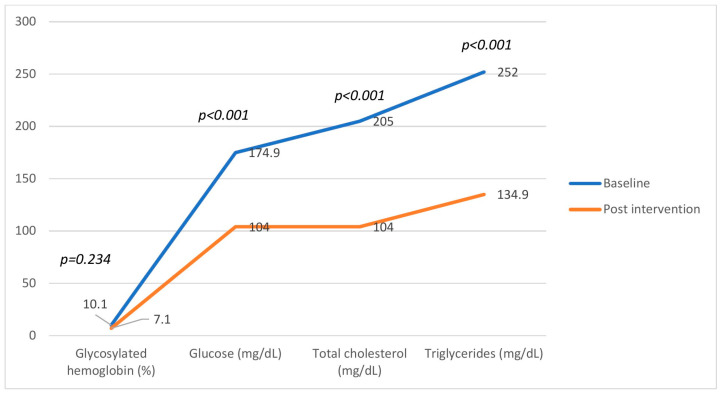 Figure 3
Peer Reviews
No public reviews on file for this paper yet. If you reviewed it on a platform where reviews are public (OpenReview, ICLR, NeurIPS, ICML), you can paste yours below so the community can read it here.
Videos
No videos yet. Explain this paper in a talk, walkthrough, or lecture? Add one.
Taxonomy
TopicsPhytoestrogen effects and research · Diet, Metabolism, and Disease · Nutritional Studies and Diet
1. Correction of Figure 3
We sincerely thank the Editor and the commenting authors for their careful review and constructive observations regarding our article [1]. Below we address their concerns and provide updated analyses.
During manuscript preparation, Figure 3 (Behavior of biochemical parameters of participants in the intervention group) was inadvertently duplicated from Figure 2, leading to misrepresentation of the control group data. We regret this oversight. The textual results and underlying dataset remain correct and unaffected. The corrected Figure 3 and data are provided as follows.
Behavior of biochemical parameters of participants in the intervention group (n = 82) before and after 12 weeks of flaxseed supplementation. Significant reductions were observed in fasting glucose, total cholesterol, and triglycerides (p < 0.001), while the change in glycated hemoglobin was not significant (p = 0.234). Data are presented as mean ± SD.
2. Reanalysis to Avoid DINS Error
To address the concern about Difference in Nominal Significance (DINS) and to properly test between-group differences, we reanalyzed our data using analysis of covariance (ANCOVA) with baseline values as covariates. The results strongly confirm our original conclusions:
- Glycated Hemoglobin (HbA1c): F(1163) = 192.89, p < 0.001. Adjusted means (±SE): 7.15 ± 0.13% (intervention) vs. 9.75 ± 0.13% (control); adjusted difference: −2.60% (95% CI: −2.97 to −2.23).
- Glucose: F(1163) = 58.42, p < 0.001. Adjusted means (±SE): 100.9 ± 3.6 mg/dL vs. 139.9 ± 3.6 mg/dL; difference: −38.96 mg/dL (95% CI: −49.02 to −28.89).
- Total Cholesterol: F(1163) = 266.99, p < 0.001. Adjusted means (±SE): 144.3 ± 2.7 mg/dL vs. 207.8 ± 2.7 mg/dL; difference: −63.53 mg/dL (95% CI: −71.20 to −55.85).
- Triglycerides: F(1163) = 296.11, p < 0.001. Adjusted means (±SE): 130.8 ± 4.3 mg/dL vs. 235.8 ± 4.3 mg/dL; difference: −105.08 mg/dL (95% CI: −117.14 to −93.02).
3. Data Availability
De-identified raw data and the R/SPSS code used for these analyses have been deposited in Zenodo for independent verification [2].
4. Conclusions
The corrected figure and new ANCOVA analyses confirm that daily supplementation with 16 g of flaxseed for 12 weeks significantly improves glucose and lipid metabolism in adults with type 2 diabetes compared to the control. We respectfully request that the journal publish this Author’s Reply and the associated corrigendum to update the record.
Thank you for the opportunity to clarify and strengthen our findings.
The reference list from the paper itself. Each links out to its DOI / PubMed record.
- 1Spitz R.W. Thapa D.K. Mokalla T.R. Najam W. Brown A.W. Allison D.B. Conclusions Are Not Supported by the Published Statistical Analysis. Comment on López-Toledo et al. Flaxseed Improves Glucose and Lipid Metabolism in Mexican Subjects with Type 2 Diabetes: A Parallel Randomized Clinical Trial. Nutrients 2025, 17, 709Nutrients 20261817010.3390/nu 17040709 PMC 1185839640005038 · doi ↗ · pubmed ↗
- 2López Toledo S. Flaxseed RCT in Adults with Type 2 Diabetes—De-identified dataset (v 1.0.0) [Data set]. Zenodo 202510.5281/zenodo.17165827 · doi ↗