Brain‐derived neurotrophic factor and cognitive function: Piloting dried blood spot sampling as a novel method in clinical trials for mild cognitive impairment
Brian Cohen, Naomi Goldsmith, Craig Story, Vadim Yerokhin, Paul Arciero, Valerie Needham, Stella Panos, Gary Warner, Cay Anderson‐Hanley

TL;DR
This study explores using dried blood spot sampling to measure brain-derived neurotrophic factor (BDNF) in older adults with mild cognitive impairment, linking it to cognitive performance.
Contribution
The study is the first to pilot dried blood spot sampling for BDNF in older adults, demonstrating its feasibility and correlation with cognitive function.
Findings
Higher BDNF levels correlated with better executive function in older adults with mild cognitive impairment.
Dried blood spot sampling was feasible for at-home collection and yielded analyzable BDNF levels.
Results suggest a novel, remote-friendly method for tracking biomarkers in cognitive clinical trials.
Abstract
Clinical trials to ameliorate mild cognitive impairment (MCI) and stave off Alzheimer's and related dementias (ADRDs) can benefit from facile methods for tracking biomarker correlates linking interventions (e.g., exercise) with neuropsychological outcomes (e.g., executive function). Brain‐derived neurotrophic factor (BNDF) has been found to be related to cognitive function (Shamida et al., 2014), and to mediate the impact of exercise interventions (Leckie et al., 2014). Serum is standard for measuring BDNF, but dried blood spot sampling (DBSS) was piloted with older adults to increase sample collection in a national RCT conducted remotely during the COVID pandemic (affording self‐collection in the comfort of home with return by mail). While two pediatric studies have reported analyzable BDNF via DBSS correlating with executive function (Ghassabian et al., 2017; Skogstrand et al., 2019),…
Genes, proteins, chemicals, diseases, species, mutations and cell lines named across the full text — each resolved to its canonical identifier and authoritative record.
Click any figure to enlarge with its caption.
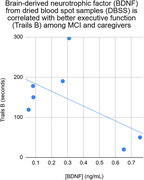 Figure 1
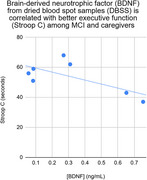 Figure 2
Peer Reviews
No public reviews on file for this paper yet. If you reviewed it on a platform where reviews are public (OpenReview, ICLR, NeurIPS, ICML), you can paste yours below so the community can read it here.
Videos
No videos yet. Explain this paper in a talk, walkthrough, or lecture? Add one.
Taxonomy
TopicsNerve injury and regeneration · Dementia and Cognitive Impairment Research · Neurotransmitter Receptor Influence on Behavior