Chemical Composition, Antioxidant Potential, and Acetylcholinesterase Inhibitory Activity of the Essential Oil from Croton alnifolius Lam
Claudia Cruz, Pablo Muñoz, Nixon Cumbicus, Vladimir Morocho, Omar Malagón

TL;DR
This study identifies the chemical makeup and biological activities of essential oil from Croton alnifolius, highlighting its antioxidant and potential neuroprotective properties.
Contribution
The first chemical characterization and biological evaluation of Croton alnifolius essential oil is presented.
Findings
The essential oil is rich in sesquiterpenes and monoterpenes, with (E)-caryophyllene and α-pinene as major constituents.
The oil showed strong antioxidant activity in the ABTS assay and moderate acetylcholinesterase inhibition.
It exhibited weak antimicrobial activity against Enterococcus faecium with a MIC of 1000 μg/mL.
Abstract
This study reports the first chemical characterization of the essential oil of Croton alnifolius. A very low yield of 0.028% ± 0.0012 (w/w) was obtained by steam distillation for 4 h using a Clevenger-type apparatus. The chemical composition of the oil was analyzed by gas chromatography coupled with mass spectrometry (GC–MS) for compound identification and by gas chromatography with a flame ionization detector (GC–FID) for quantification. A total of 49 compounds were identified, representing 94.65% of the total oil composition. The chemical profile was dominated by hydrocarbon sesquiterpenes (53.11%) and hydrocarbon monoterpenes (32.20%). The major constituents included (E)-caryophyllene (17.42%), α-pinene (14.53%), myrcene (9.51%), germacrene D (9.92%), and β-chamigrene (5.48%). The biological activity of the essential oil was also evaluated: it exhibited weak antimicrobial activity…
Genes, proteins, chemicals, diseases, species, mutations and cell lines named across the full text — each resolved to its canonical identifier and authoritative record.
Click any figure to enlarge with its caption.
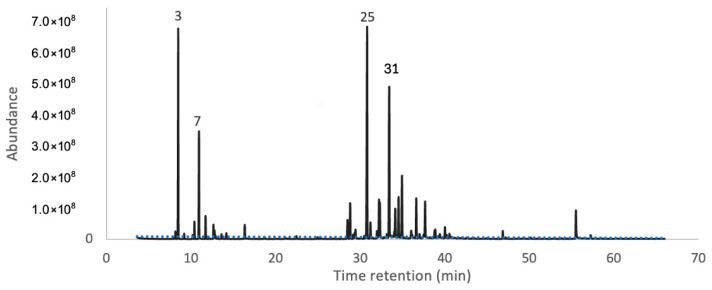 Figure 1
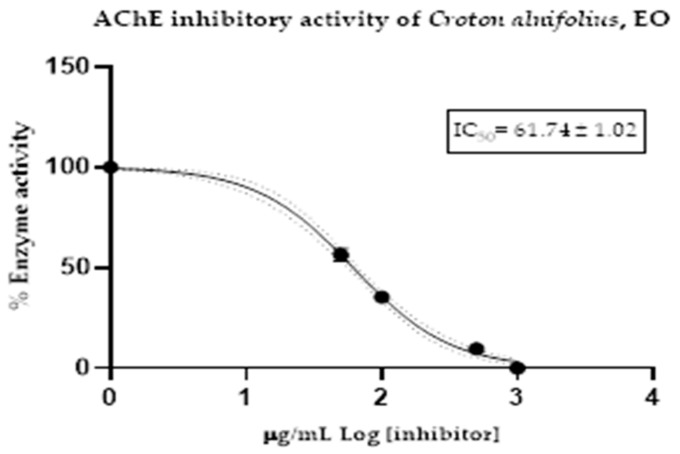 Figure 2
Peer Reviews
No public reviews on file for this paper yet. If you reviewed it on a platform where reviews are public (OpenReview, ICLR, NeurIPS, ICML), you can paste yours below so the community can read it here.
Videos
No videos yet. Explain this paper in a talk, walkthrough, or lecture? Add one.
Taxonomy
TopicsBioactive Natural Diterpenoids Research · Essential Oils and Antimicrobial Activity · Sesquiterpenes and Asteraceae Studies
1. Introduction
Medicinal and aromatic plants, especially those with ethnopharmacological uses, have been utilized as natural sources of remedies and healthcare for millennia, forming the foundation of many traditional medical systems worldwide [1,2]. Consequently, essential oils are highly valued for their biological properties and diverse industrial applications. In cosmetics, they are used for their aromatic qualities and skin benefits, while in the food industry they serve as natural flavoring agents and preservatives due to their antimicrobial and antioxidant effects. Moreover, their therapeutic potential, including antimicrobial, anti-inflammatory, and anticancer activities, supports their pharmacological relevance [3,4].
Euphorbiaceae is one of the largest families of angiosperms with global distribution, and several species produce essential oils with diverse chemical compositions and biological activities [5]. The genus Croton (Euphorbiaceae) is one of the most diverse within the family, comprising approximately 1200–1300 species distributed across tropical and subtropical regions of the world. Its species are known for producing a wide variety of secondary metabolites, including flavonoids, lignins, coumarins, tannins, alkaloids, cyanogenic glycosides, and glucosinolates. In particular, their volatile constituents, mainly essential oils, exhibit a broad spectrum of biological activities such as antioxidant, antimicrobial, anti-inflammatory, cytotoxic, antitumor, insecticidal, antiparasitic, anti-ulcerogenic, antinociceptive, myorelaxant, antispasmodic, anxiolytic, anthelmintic, and vasorelaxant effects [6,7,8]. This remarkable chemical and biological diversity has made Croton species valuable targets for phytochemical and pharmacological investigations, contributing to the discovery of new bioactive natural products with therapeutic potential.
Moreover, essential oils, including those from Croton species, demonstrate significant antioxidant potential by neutralizing free radicals and mitigating oxidative stress and cellular damage. Consequently, this activity contributes to slowing skin aging and reducing inflammation by decreasing proinflammatory cytokine expression. Therefore, essential oils are considered promising agents for preventing and managing chronic diseases, including diabetes, hyperlipidemia, and hypertension [9,10,11].
Another important biological property is acetylcholinesterase inhibition, which increases acetylcholine levels. Since reduced acetylcholine is associated with neurodegenerative diseases, inhibiting this enzyme may help slow disease progression [12]. Essential oils and their chemical constituents act on the central nervous system by inhibiting acetylcholinesterase [13]. Due to their small molecular size and lipophilicity, essential oil components can cross the blood–brain barrier. Moreover, their volatility facilitates inhalation administration, avoiding metabolic degradation and preserving active compounds [14].
Therefore, this study focuses on obtaining and characterizing the essential oil from Croton alnifolius Lam., evaluating its antimicrobial activity, and highlighting its notable antioxidant and acetylcholinesterase inhibitory properties. Additionally, a literature review on Croton essential oils was conducted to emphasize their relevance in oxidative stress reduction and neuroprotection as natural sources for therapeutic applications.
C. alnifolius is native to the region spanning from Ecuador to Peru and grows primarily in the wet tropical biome. It is a shrub species ranging from 80 cm to 1.5 m in height, characterized by simple, alternate leaves with stipules and an elliptic to ovate lamina with entire or slightly dentate margins. The small unisexual flowers are arranged in racemose inflorescences at the upper part of the plant and display a yellow coloration [15,16].
Considering the growing interest in natural products with antioxidant and neuroprotective properties, the study of C. alnifolius essential oil represents a valuable opportunity to expand current knowledge of the genus. Understanding its overall chemical composition and associated biological properties can contribute to recognizing species with potential pharmacological applications. Therefore, this study aimed to characterize the volatile chemical profile of the essential oil from C. alnifolius and to evaluate its antioxidant, antimicrobial, and acetylcholinesterase inhibitory activities, providing a scientific basis for its potential use in the development of natural antioxidant and neuroprotective agents.
2. Results
2.1. Yield and Chemical Composition
The essential oil of C. alnifolius was obtained by steam distillation for 4 h using a Clevenger-type apparatus. The yield was calculated as the ratio between the weight of the essential oil obtained and the dry weight of the plant material (w/w%), resulting in a very low yield of 0.028% ± 0.0012. Furthermore, a total of 49 compounds were identified by gas chromatography–mass spectrometry (GC–MS) and confirmed by gas chromatography with flame ionization detection (GC–FID), representing 94.65% of the total essential oil content. Of the total composition, 32.20% corresponded to hydrocarbon monoterpenes, 1.59% to oxygenated monoterpenes, 53.11% to hydrocarbon sesquiterpenes, 5.00% to oxygenated sesquiterpenes, and the remaining 2.76% to other compounds. The major constituents were (E)-caryophyllene (17.42%), α-pinene (14.53%), myrcene (9.51%), germacrene D (9.92%), and β-chamigrene (5.48%). The rest of the identified compounds were present at concentrations below 3% and were therefore considered minor constituents. The detailed chemical composition is presented in Table 1, where the compounds are presented in order of elution on the TR5-MS capillary column. For each constituent, the experimental retention index, the corresponding literature retention index, and the mean relative percentage are provided.
In Figure 1, the GC–MS chromatogram of the essential oil of C. alnifolius is presented, illustrating the complexity and diversity of volatile constituents in the sample. Each peak in the chromatogram corresponds to an individual compound, identified based on its retention time and mass spectral data. The integration and comparison of these peaks enabled a more precise characterization of the essential oil chemical profile.
2.2. Antimicrobial Activity of Essential Oil
The antimicrobial activity of the essential oil of C. alnifolius was evaluated against a panel of bacterial and fungal strains, and the results of the antimicrobial activity are presented in Table 2. The oil exhibited weak antibacterial activity against Enterococcus faecium (ATCC^®^ 27270) with an MIC value of 1000 μg/mL and antifungal activity against Aspergillus niger (ATCC^®^ 6275) with 4000 μg/mL. The other tested strains showed no growth inhibition at the concentrations evaluated, whereas the assays were validated using ampicillin (1 g/mL) and ciprofloxacin (1 mg/mL) as positive controls for bacteria, and amphotericin B (250 μg/mL) for fungi.
2.3. Antioxidant Activity
The antioxidant activity of C. alnifolius essential oil was evaluated using the DPPH (2,2-diphenyl-1-picrylhydrazyl) and ABTS (2,2-azino-bis(3-ethylbenzothiazoline-6-sulfonic acid)) radicals, with Trolox employed as the positive control (Table 3). Results are expressed as SC_50_ (µg/mL), representing the concentration required to reduce 50% of the free radical, along with the corresponding standard deviation. In addition, for the ABTS assay, the Trolox equivalent antioxidant capacity (TEAC) was calculated. In the DPPH assay, the essential oil exhibited an SC_50_ value of 1903.29 ± 1.26 µg/mL, indicating a very low antioxidant activity compared with Trolox. In contrast, in the ABTS assay, the essential oil showed an SC_50_ value of 28.43 ± 1.0 µg/mL, demonstrating a remarkably higher antioxidant activity, even exceeding that of Trolox.
2.4. Acetylcholinesterase Inhibitory Activity
The acetylcholinesterase (AChE) inhibitory activity of C. alnifolius essential oil was evaluated using Ellman’s method [19]. Results are expressed as the half-maximal inhibitory concentration (IC_50_, µg/mL–nM) with the corresponding standard deviation. Donepezil was used as the positive control. The essential oil of C. alnifolius exhibited an IC_50_ value of 61.74 ± 1.02 µg/mL against AChE, whereas donepezil showed an IC_50_ of 12.40 ± 1.35 µg/mL. The dose–response inhibition curve is shown in Figure 2, illustrating that increasing concentrations of the essential oil led to a progressive decrease in AChE activity. The IC_50_ value was determined based on this concentration–response curve.
3. Discussion
The essential oil of Croton alnifolius was obtained through steam distillation over a period of 4 h, resulting in a yield of 0.0289%. According to the criteria established by the Science and Technology for Development Program (CYTED) [20], this yield is considered low, as yields above 10 mL/kg are classified as high, those between 5 and 10 mL/kg as intermediate, and values below 5 mL/kg as low. Investigations on other species of the Croton genus show generally low essential oil yields. For example, C. adipatus, C. thurifer, and C. collinus exhibited yields of 0.01%, 0.07%, and 0.001%, respectively [21]. Furthermore, C. ferrugines presented a yield similar to that observed for C. alnifolius, with a value of 0.02% [22]. In contrast, C. greveanus, C. geayi, and C. borarium exhibited higher yields of 0.96%, 0.72%, and 0.68%, while C. zambesicus reached 0.29% [23,24]
Essential oil yield is influenced by multiple biological and technical factors. Climatic conditions play a significant role; for example, yields tend to be higher during rainy seasons compared to dry periods [25]. Distillation parameters, particularly the applied pressure, also significantly affect both yield and the physicochemical properties of the oil [26]. Moreover, geographic origin is another important determinant: higher altitudes are associated with increased essential oil yields, likely due to environmental conditions such as lower temperatures, reduced atmospheric pressure, and greater exposure to ultraviolet radiation, which stimulate the production of secondary metabolites [27].
Gas chromatography–mass spectrometry (GC–MS) analysis of the essential oil of C. alnifolius allowed the identification of 49 compounds, accounting for 94.65% of the total oil composition. Revealing a substantial presence of hydrocarbonated monoterpenes represented 32.20%, and hydrocarbonated sesquiterpenes 53.11%, the other groups with values less than 5%. The major constituents included (E)-Caryophyllene (17.42%), α-Pinene (14.53%), Myrcene (9.51%), Germacrene D (9.92%), and β-Chamigrene (5.48%), while other components were present at concentrations below 3% and thus considered minor constituents. This study constitutes the first report of the essential oil composition of C. alnifolius. Comparative analysis with other Croton species revealed both similarities and species-specific variations. For instance, the essential oil of C. ferrugineus contains 43.5% sesquiterpenes and 34.98% monoterpenes, with major constituents including (E)-Caryophyllene (20.47%), Myrcene (11.47%), β-Phellandrene (10.55%), Germacrene D (7.60%), Linalool (7.34%), and Humulene (5.49%) [22]. Similarly, C. rivulifolius presents a predominance of sesquiterpenes (68.21%) and low monoterpene content (1.21%), with γ-Muurolene (15.3%), (E)-Caryophyllene (11.7%), β-Elemene (6.4%), and α-Humulene (5.7%) as major constituents [28]. In C. hirtus, sesquiterpenes account for 95.4% of the oil, dominated by β-Caryophyllene (32.8%), Germacrene D (11.6%), β-Elemene (9.1%), α-Humulene (8.5%), and Caryophyllene oxide (5.0%) [6]. These comparisons indicate that the essential oil composition of C. alnifolius exhibits a strong chemical affinity with other species within the genus, particularly due to the substantial sesquiterpene content. Moreover, the recurrent presence of α-Pinene, Myrcene, and Germacrene D across species suggests a conserved chemical signature characteristic of the Croton genus. This pattern may reflect shared biosynthetic pathways and ecological adaptations that influence secondary metabolite production.
The predominance of sesquiterpenes in C. alnifolius and other Croton species is noteworthy given their recognized biological activities, including anti-inflammatory, antimicrobial, and antioxidant effects. The presence of compounds such as (E)-Caryophyllene, α-Pinene, and Myrcene further highlights the potential pharmacological relevance of C. alnifolius, warranting further studies on its bioactive properties and possible applications in pharmaceutical and industrial contexts.
Overall, the GC–MS profile presented here not only expands the phytochemical knowledge of the genus but also provides a chemical basis for future comparative and functional studies, contributing to the understanding of the chemical diversity and ecological significance of Croton essential oils.
The essential oil of C. alnifolius exhibited selective antimicrobial activity. The minimum inhibitory concentration (MIC) was determined to be 1000 μg/mL against Enterococcus faecium and 4000 μg/mL against Aspergillus niger, while no inhibition was observed against the remaining tested strains up to the maximum tested concentration (1000 μg/mL for bacteria and 4000 μg/mL for fungi). According to the MIC classification proposed by Freires et al. (2015) [29], values between 501 and 1000 μg/mL indicate moderate activity, whereas MIC values above 2001 μg/mL are considered inactive. Therefore, the essential oil of C. alnifolius can be regarded as moderately active against E. faecium and inactive against A. niger.
Although α-pinene and β-caryophyllene, two major components of this oil have been widely reported to exhibit antibacterial and antifungal properties [30], the overall antimicrobial response of C. alnifolius was relatively weak. This limited effect may arise from the low concentration of individual active constituents or from the occurrence of antagonistic interactions within the complex mixture of volatile compounds, which can suppress the activity of otherwise bioactive molecules [31]. Furthermore, the extraction method can also influence the biological performance of the oil. Conventional techniques such as hydrodistillation or steam distillation are often inefficient and may cause thermal degradation, leading to the loss of volatile compounds and a consequent reduction in antimicrobial efficacy [32]. Comparative studies within the Croton genus support this interpretation: C. hirtus and C. collinus, both rich in β-caryophyllene (>35%), exhibited stronger inhibitory effects [6,21], whereas C. ferrugineus, with a composition similar to C. alnifolius, showed negligible antimicrobial activity [22]. These observations reinforce that antimicrobial efficacy depends not only on the abundance of specific terpenes but also on the overall chemical matrix, synergistic interactions, and possible volatility losses during testing [33].
Although MBC (Minimum Bactericidal Concentration) and MFC (Minimum Fungicidal Concentration) values were not determined in this study, future assays should include these parameters to better differentiate between bacteriostatic and bactericidal or fungistatic and fungicidal effects, there by strengthening the antimicrobial evaluation of C. alnifolius essential oil.
In relation to the antioxidant potential, the essential oil of C. alnifolius exhibited markedly different responses depending on the assay employed. In the DPPH method, the oil presented an SC_50_ value of 1903.29 ± 1.26 μg/mL, indicating very low antioxidant activity when compared with the positive control (Trolox). In contrast, the ABTS assay revealed an SC_50_ of 28.43 ± 1.0 μg/mL, representing an antioxidant activity that surpassed that of Trolox.
According to the classification proposed by Kusmardiyani et al. (2016) [34], essential oils with IC_50_ values below 50 μg/mL are considered to have very strong antioxidant activity, those between 50 and 100 μg/mL strong activity, those between 101 and 150 μg/mL moderate activity, and those above 150 μg/mL weak activity. Based on this classification, the essential oil of C. alnifolius demonstrated very strong antioxidant activity in the ABTS assay but only weak activity in the DPPH assay. This discrepancy between assays can be attributed to methodological differences. The ABTS method is recognized as more sensitive, likely due to its faster reaction kinetics; ABTS radicals rapidly reach a steady state with antioxidants, whereas DPPH requires several hours to stabilize [35]. Similarly, Floegel et al. (2011) [36] emphasized that ABTS provides a more precise and comprehensive evaluation of antioxidant potential compared to DPPH.
Previous studies have linked the antioxidant capacity of essential oils to the presence of (E)-caryophyllene. Morais et al. (2019) [37] reported that Croton species with caryophyllene as the dominant constituent exhibited higher antioxidant activity compared to standards such as thymol and butylated hydroxytoluene (BHT). Moreover, they observed that antioxidant performance was directly related to the concentration of caryophyllene. In addition, Sytykiewicz et al. (2025) [38] demonstrated similar trends in essential oils of Juniperus communis and Acorus calamus. In that study, J. communis, dominated by α-pinene (22%), exhibited greater antioxidant capacity than A. calamus, as evidenced by DPPH and ABTS values of 85.4 ± 0.8 μg/mL and 14.2 ± 0.1 μg/mL, respectively.
Consistently with these observations, the major constituents of C. alnifolius essential oil, such as (E)-caryophyllene and α-pinene, could account for its strong antioxidant activity in the ABTS assay. A possible synergistic interaction between these compounds may enhance the overall activity, given that both have been previously reported to possess significant antioxidant potential. Finally, as highlighted by Chaves et al. (2020) [39], the apparent variability in antioxidant results further underscores the importance of selecting appropriate radical-generating systems when assessing antioxidant activity.
Regarding acetylcholinesterase (AChE) inhibition, the essential oil of C. alnifolius exhibited an IC_50_ value of 61.74 ± 1.02 µg/mL. According to the classification proposed by Magalhães et al. (2021) [40], AChE inhibitory activity is considered high when IC_50_ < 20 μg/mL, moderate when IC_50_ < 200 μg/mL, and low when IC_50_ < 1000 μg/mL. Based on this categorization, the essential oil of C. alnifolius can be classified as a moderate AChE inhibitor. The inhibition of AChE is a crucial therapeutic target in the management of neurodegenerative disorders, such as Alzheimer’s disease, due to the fundamental role of this enzyme in regulating cholinergic neurotransmission by hydrolyzing acetylcholine at neuronal synapses [41]. Therefore, the inhibitory activity demonstrated by C. alnifolius essential oil suggests significant pharmacological potential.
To date, no previous studies have reported the AChE inhibitory activity of C. alnifolius essential oil. Consequently, this research represents the first scientific evidence in this line for the species. The phytochemical analysis revealed a balanced composition of (E)-caryophyllene, α-pinene, and germacrene D as the major constituents.
Moreover, α-Pinene, a monoterpene, has been previously reported as a potent AChE inhibitor [42]. This finding is consistent with the results of Calva et al. (2023) [43], where an essential oil with α-pinene (22.70%) as the predominant compound exhibited moderate AChE inhibition (IC_50_ = 53.08 ± 1.13 μg/mL). Similarly, in Cyathocalyx pruniferus, α-pinene (24.4%) and germacrene D (20.2%) were identified as the main constituents, resulting in 75.5% inhibition compared with galantamine (85.6%) [44]. These studies highlight the central role of α-pinene in conferring anticholinesterase activity, suggesting that it may be one of the main contributors to the activity observed in the present study.
Although (E)-caryophyllene was also identified as a major constituent, current literature provides no direct evidence of its AChE inhibitory capacity. Nevertheless, Dahham et al. (2015) [30] reported its anticancer, antimicrobial, anti-inflammatory, and antioxidant properties. Interestingly, (E)-caryophyllene has been identified as the main constituent in other essential oils showing notable AChE inhibition. For instance, in Eugenia sulcata, (E)-caryophyllene (24.6%) was the predominant component and demonstrated strong inhibitory activity (IC_50_ = 4.66 ± 0.48 μg/mL), compared to physostigmine (IC_50_ = 0.59 ± 0.02 μg/mL) [45].
On the other hand, germacrene D has been associated with analgesic, anti-inflammatory, and antioxidant activities [46]. Similar to (E)-caryophyllene, germacrene D has been identified as a major constituent in plants showing promising AChE inhibition. For example, Morocho et al. (2025) [47] reported germacrene D (21.75%) as the major constituent in the fruits of Zanthoxylum mantaro, which displayed an IC_50_ of 65.46 ± 1.01 μg/mL.
Taken together, these findings suggest a possible synergistic effect among the main components of C. alnifolius essential oil. While α-pinene appears to play the predominant role in the observed anticholinesterase activity, the combined action of (E)-caryophyllene and germacrene D may enhance the overall inhibitory effect, reinforcing the pharmacological relevance of this essential oil.
The biological activities observed for the essential oil of C. alnifolius suggest potential applications in natural antioxidant and neuroprotective formulations. However, beyond its bioactivity, the practical and economic feasibility of the extraction process must also be considered. The essential oil in this study was obtained using a Clevenger-type hydrodistillation apparatus, which is suitable for laboratory-scale extractions but not representative of industrial production systems. The low yield (0.028%) reflects both the plant’s intrinsic characteristics and the limitations of this method, including high energy consumption, long extraction time, and low recovery efficiency. In contrast, industrial-scale techniques such as continuous steam distillation, supercritical CO_2_ extraction, and microwave-assisted hydrodistillation can provide higher yields, shorter processing times, and better preservation of thermolabile compounds, while also improving environmental sustainability [48,49]. From an economic standpoint, the viability of large-scale production would depend on optimizing biomass availability, energy efficiency, and operational costs [50]. Future studies should therefore evaluate these alternative methods to determine the most sustainable and cost-effective strategies for industrial exploitation of C. alnifolius essential oil.
4. Materials and Methods
4.1. Plant Material
Aerial parts of Croton alnifolius were collected in October 2024 during the flowering stage from Yambaca, Calvas canton, Loja province, Ecuador (4°24′40″ S, 79°37′14″ W; 1663 m a.s.l.). The plant material was transported to the Bioproducts Plant of the Universidad Técnica Particular de Loja (UTPL). Drying was carried out in an electric oven (Lassele DY-330H, Ansan City, Gyeonggi-do, Republic of Korea) at 35 °C for 48 h. The taxonomic identification was confirmed by Dr. Nixon Cumbicus at the UTPL Herbarium, where a voucher specimen was deposited under the accession number HUTPL5625. The collection was performed under the authorization issued by the Ministry of Environment of Ecuador (MAATE-ARSFC-2022-2839).
4.2. Extraction of Essential Oil
The essential oil was obtained by steam distillation for 4 h using a Clevenger-type apparatus. Three independent distillations were performed, each with approximately 400 g of dried plant material. Each distillation yielded approximately 110 mg of essential oil. The essential oil was collected directly from the Clevenger separator using a glass Pasteur pipette and transferred into pre-weighed 2 mL amber vials. The net mass of the essential oil was determined with high accuracy using an analytical balance Radwag AS 310/C/2 (310 g × 0.1 mg; Radwag, Radom, Poland). The obtained oil was dehydrated using 20–30 mg of anhydrous sodium sulfate, added carefully to prevent any loss of material and stored at −15 °C for further analysis. The yield was calculated on a weight/weight basis (w/w) relative to the dry plant material.
4.3. Qualitative and Quantitative Chemical Characterization of the Essential Oil
4.3.1. Gas Chromatography–Mass Spectrometry (GC–MS) Analysis
For qualitative profiling, 10 µL of essential oil was dissolved in 990 µL of HPLC-grade cyclohexane (Sigma-Aldrich, St. Louis, MO, USA), giving a final concentration of 1% (v/v). Analyses were performed on a Thermo Scientific Trace 1310 gas chromatograph coupled to an ISQ 7000 single-quadrupole mass spectrometer (Waltham, MA, USA). Separation was achieved using a TR-5MS capillary column (30 m × 0.25 mm i.d., 0.25 µm film thickness; 5% phenyl polysilphenylene-siloxane stationary phase, Thermo Fisher Scientific (Waltham, MA, USA). Helium served as the carrier gas at a constant flow of 1.0 mL min^−1^. The injector temperature was set at 230 °C and operated in split mode (1:80). The oven program began at 50 °C (held 3 min), increased at 3 °C min to 230 °C, and was maintained for 3 min. The MS detector operated in full-scan mode (40–400 m/z) with a scan rate of 0.2 s, ion source at 230 °C, and transfer line at 250 °C.
The components of the essential oil of C. alnifolius were identified by comparing their mass spectra with those of reference compounds showing similar Linear Retention Indices (LRIs) reported in the literature [17]. LRIs were calculated according to the method of Van Den Dool and Kratz [51], based on the retention times of a homologous series of n-alkanes C9–C22 (ChemService, West Chester, PA, USA) analyzed under the same chromatographic conditions to ensure reliable identification. Data acquisition and processing were performed using Chromeleon XPS software, version 7.2.10 (Waltham, MA, USA), and spectral matching was carried out using the NIST 17 MS library from the internal chromatogram database. A compound was considered positively identified when the calculated linear retention index (LRI) differed by no more than ±20 units from the corresponding literature value [52].
4.3.2. Gas Chromatography with Flame Ionization Detection (GC–FID) Analys
Quantitative analysis was performed using a Thermo Scientific Trace 1310 gas chromatograph equipped with a flame ionization detector (FID). The chromatographic separation employed the same TR-5MS column, temperature program, and operational parameters as described for the GC–MS analysis. The detector temperature was maintained at 250 °C, with hydrogen and air supplied at constant flow rates. Quantification was based on the integration of individual peak areas, and the results were expressed as relative percentages of the total composition without the use of correction factors.
4.4. Biological Activity
4.4.1. Antimicrobial Activity
The antimicrobial potential of the essential oil was determined using the broth microdilution assay following the procedure of Cartuche et al. [53] with slight adjustments. Minimum inhibitory concentration (MIC) values were assessed against standard American Type Culture Collection (ATCC) (Guildford, United Kingdom) strains representing common opportunistic pathogens: Enterococcus faecium ATCC 27270, Staphylococcus aureus ATCC 25923, Staphylococcus epidermidis ATCC 12228, Escherichia coli O157:H7 ATCC 43888, Pseudomonas aeruginosa ATCC 10145, Candida albicans ATCC 10231, and Aspergillus niger ATCC 6275. Positive control antibiotics included ampicillin (1 mg/mL) for Gram-positive bacteria, ciprofloxacin (1 mg/mL) for Gram-negative strains, and amphotericin B (250 µg/mL) for fungi. Wells containing only broth or the maximum DMSO concentration served as negative controls.
4.4.2. Radical Scavenging Assay
The antioxidant capacity of the essential oil was assessed using both DPPH and ABTS radical scavenging assays as described by Cartuche et al. [53], with modifications.
For the DPPH assay, a 0.247 mM methanolic solution of 2,2-diphenyl-1-picrylhydrazyl (DPPH) was prepared to reach an absorbance of 1.1 ± 0.01 at 515 nm. Serial dilutions of the essential oil (1.0, 0.5, and 0.25 mg/mL) were mixed with the DPPH working solution (270 µL + 30 µL sample) in 96-well plates and incubated for 60 min at room temperature in the dark. Absorbance was read at 515 nm using an EPOCH 2 microplate reader (BioTek, Winooski, VT, USA). Trolox and methanol served as positive and blank controls, respectively. Results were expressed as SC_50_ values (concentration required to reduce 50% of radicals).
For the ABTS assay, ABTS radicals were generated by mixing 7.4 mM ABTS with 2.6 mM potassium persulfate and allowing the reaction to proceed for 16 h in darkness. The resulting solution was diluted with methanol to an absorbance of 1.15–1.20 at 734 nm. Serial dilutions of essential oil (1.0, 0.5, and 0.25 mg/mL) were reacted with the ABTS working solution (270 µL + 30 µL sample) for 60 min under the same conditions. Trolox served as reference antioxidant, and results were also expressed as SC_50_ values. All experiments were performed in triplicate.
4.4.3. Acetylcholinesterase Inhibitory Activity
Inhibition of acetylcholinesterase (AChE) was evaluated using a colorimetric microplate assay adapted from methods [53,54]. Serial dilutions of essential oil (10–1000 µg/mL) were prepared in methanol. The reaction mixture contained phosphate-buffered saline (PBS), 5,5′-dithio-bis-(2-nitrobenzoic acid (DTNB), and acetylthiocholine iodide (ATCh) as substrate. After pre-incubation for 3 min at 37 °C, the enzyme solution was added, and the mixture was incubated for 1 h in darkness. Absorbance was measured at 412 nm using an EPOCH 2 microplate reader (BioTek). Methanol was used as the negative control, and donepezil hydrochloride served as the positive reference. IC_50_ values were obtained from dose–response curves.
5. Conclusions
This study was focused on obtaining and characterizing the essential oil of Croton alnifolius, evaluating its antimicrobial activity, and analyzing its antioxidant and acetylcholinesterase-inhibiting properties. The essential oil exhibited a complex chemical composition dominated by sesquiterpenes and hydrocarbon monoterpenes, with (E)-caryophyllene, α-pinene, myrcene, and germacrene D standing out as the main constituents; these were identified by using gas chromatography coupled with mass spectrometry (GC–MS and gas chromatography with a flame ionization detector (GC–FID) for quantification. To our knowledge, this study is the first report on the composition of C. alnifolius essential oil. Biologically, the oil showed moderate antimicrobial activity against Enterococcus faecium but did not exhibit a significant effect on other microorganisms analyzed. This could be due to the concentration of bioactive compounds or possible antagonistic interactions. The oil demonstrated strong antioxidant activity in the ABTS assay, but weak activity in the DPPH assay, likely due to differences in assay kinetics and the possible synergistic action of its main components. Furthermore, it showed moderate acetylcholinesterase inhibitory activity. These results highlight the potential pharmacological properties of C. alnifolius essential oil from natural sources, particularly its antioxidant and neuroprotective activity, which warrants further investigation. This knowledge also provides important phytochemical information about the Euphorbiaceae family and the Croton genus in southern Ecuador.
The reference list from the paper itself. Each links out to its DOI / PubMed record.
- 1Patwardhan B. Vaidya A.D.B. Natural products drug discovery: Accelerating the clinical candidate development using reverse pharmacology approaches Indian J. Exp. Biol.20104822022721046974 · pubmed ↗
- 2Chaachouay N. Zidane L. Plant-Derived Natural Products: A Source for Drug Discovery and Development Drugs Drug Candidates 2024318420710.3390/ddc 3010011 · doi ↗
- 3Tongnuanchan P. Benjakul S. Essential Oils: Extraction, Bioactivities, and Their Uses for Food Preservation J. Food Sci.2014791231124910.1111/1750-3841.1249224888440 · doi ↗ · pubmed ↗
- 4Ramsey T. Shropshire C. Nagy T.R. Chambers K.D. Li Y. Korach K.S. Essential Oils and Health Yale J. Biol. Med.20209329130532607090 PMC 7309671 · pubmed ↗
- 5Da Costa L.S. Ferreira O.O. Lobato L.G.N. De Santana Botelho A. Mali S.N. Kumar R. De Jesus Pereira Franco C. Rosa U.A. Correia Z.A. Da Silva M.P. Exploring phytochemistry, antioxidant capacity, and biological potential of essential oils obtained from Euphorbiaceae species Phytochem. Rev.2024244101412410.1007/s 11101-024-10031-3 · doi ↗
- 6Luu-Dam N.A. Le C.V.C. Satyal P. Le T.M.H. Bui V.H. Vo V.H. Ngo G.H. Bui T.C. Nguyen H.H. Setzer W.N. Chemistry and Bioactivity of Croton Essential Oils: Literature Survey and Croton hirtus from Vietnam Molecules 202328236110.3390/molecules 2805236136903605 PMC 10005233 · doi ↗ · pubmed ↗
- 7Inostroza L. Hernandez E. Casanova H. Castro A. Evaluación de la actividad leishmanicida y toxicidad aguda del extracto hidroalcohólico de los tallos de Croton alnifolius Cienc. Investig.201114152110.15381/ci.v 14i 2.3164 · doi ↗
- 8Barrera C.A. Gómez D.C. Castiblanco F.A. Importancia medicinal del género Croton (Euphorbiaceae)Rev. Cuba. Plantas Med.201621234247