APOEε4 genotyping for populational enrichment of tau‐targeting clinical trials in cognitively impaired individuals
Lucas Bastos Beltrami, João Pedro Ferrari‐Souza, Laura Motter Rosso, Guilherme Povala, Douglas Teixeira Leffa, Firoza Z Lussier, Wagner S. Brum, Cristiano Aguzzoli, Marco De Bastiani, Andrei Bieger, Giovanna Carello‐Collar, Wyllians Vendramini Borelli, Joseph Therriault

TL;DR
This study shows that combining APOEε4 genotyping with amyloid-beta PET scans can reduce sample sizes and costs in clinical trials targeting tau accumulation in Alzheimer's disease.
Contribution
The study demonstrates that combining APOEε4 carriership with Aβ positivity improves population enrichment for tau-targeting trials.
Findings
Combining APOEε4 and Aβ positivity reduces required sample sizes by 53% in the medial temporal lobe and 41% in the neocortex.
This strategy also reduces trial costs by 55% in the medial temporal lobe and 44% in the neocortex compared to using Aβ positivity alone.
Abstract
The accumulation of tau tangle deposits is a potential target for clinical trials in Alzheimer's disease (AD). It is known that amyloid‐β (Aβ) pathology and the apolipoprotein E ε4 (APOEε4) allele accelerate tau pathology; yet, it is unclear whether assessing both variables could lead to more cost‐effective tau‐targeting trials using tau positron emission tomography (PET) as outcome. Here, we investigated the potential utility of considering APOEε4 carriership for population enrichment in AD trials testing drug effects on tau tangle deposition in cognitively impaired (CI) individuals. Data was retrieved from the ADNI cohort. We selected CI participants with available clinical assessments, APOE genotyping, Aβ PET ([18F]Florbetapir or [18F]Florbetaben) and tau PET ([18F]Flortaucipir) at baseline and a 2‐year follow‐up. Patients with global [18F]Florbetapir SUVR >1.11 or [18F]Florbetaben…
Genes, proteins, chemicals, diseases, species, mutations and cell lines named across the full text — each resolved to its canonical identifier and authoritative record.
Click any figure to enlarge with its caption.
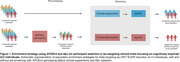 Figure 1
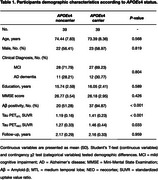 Figure 2
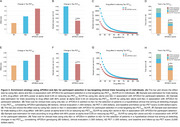 Figure 3
Peer Reviews
No public reviews on file for this paper yet. If you reviewed it on a platform where reviews are public (OpenReview, ICLR, NeurIPS, ICML), you can paste yours below so the community can read it here.
Videos
No videos yet. Explain this paper in a talk, walkthrough, or lecture? Add one.
Taxonomy
TopicsAlzheimer's disease research and treatments · Dementia and Cognitive Impairment Research · Intracerebral and Subarachnoid Hemorrhage Research