Late‐life physical activity and increased default mode network connectivity
Bo Kyung Sohn, Min Soo Byun, Dahyun Yi, So Yeon Jeon, Yoon Young Chang, Hyeji Choi, Gijung Jung, Hyejin Ahn, Woo‐Jin Cha, Dong Woo Lee, Jun‐Young Lee, Yu Kyeong Kim, Koung Mi Kang, Chul‐Ho Sohn, Shannon L Risacher, Evgeny J. Chumin, Olaf Sporns, Kwangsik Nho, Andrew J. Saykin

TL;DR
Late-life physical activity is linked to stronger connections in the brain's default mode network, which may help reduce Alzheimer's risk.
Contribution
This study identifies a novel association between late-life physical activity and increased default mode network connectivity in cognitively healthy older adults.
Findings
Late-life physical activity is positively associated with default mode network functional connectivity.
The association remains significant even after accounting for Alzheimer's-related brain pathologies.
No significant associations were found with other brain networks.
Abstract
Higher levels of physical activity (PA) have been linked to a reduced risk of Alzheimer's disease (AD) dementia among older adults. However, the mechanisms underlying the association between increased PA and a lower risk of AD‐related cognitive decline remain unclear. This study aimed to investigate the relationship between late‐life PA (PAlate) and functional connectivity (FC) within major functional resting state brain networks in cognitively healthy older adults. This study was part of the Korean Brain Aging Study for Early Diagnosis and Prediction of Alzheimer's Disease (KBASE). It included 157 cognitively normal (CN) participants who underwent comprehensive clinical assessments at baseline. The participants also received multimodal brain imaging including resting‐state functional MRI, structural MRI, [11C] Pittsburgh Compound B (PiB) positron emission tomography (PET), [18F]…
Genes, proteins, chemicals, diseases, species, mutations and cell lines named across the full text — each resolved to its canonical identifier and authoritative record.
Click any figure to enlarge with its caption.
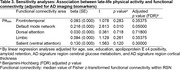 Figure 1
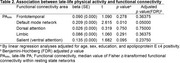 Figure 2
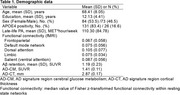 Figure 3
Peer Reviews
No public reviews on file for this paper yet. If you reviewed it on a platform where reviews are public (OpenReview, ICLR, NeurIPS, ICML), you can paste yours below so the community can read it here.
Videos
No videos yet. Explain this paper in a talk, walkthrough, or lecture? Add one.
Taxonomy
TopicsFunctional Brain Connectivity Studies · Dementia and Cognitive Impairment Research · EEG and Brain-Computer Interfaces