Association of pesticide exposure with plasma Aβ‐42/40 Ratio: Translational evidence from 5xFAD mice and the Child Health and Development Studies
Isha Mhatre‐Winters, Ferass M Sammoura, Piera Cirillo, Arturo J Barahona, Yoonhee Han, Nickilou Krigbaum, Pam Factor‐Litvak, Bruce Link, Young‐Mi Go, Dean P Jones, Barbara Cohn, Jason R Richardson

TL;DR
This study shows that exposure to DDE, a DDT metabolite, is linked to increased Alzheimer's-related brain changes and cognitive decline in both mice and humans.
Contribution
The study provides translational evidence that prenatal DDE exposure is associated with reduced Aβ-42/40 ratio and cognitive deficits in midlife.
Findings
DDE-exposed 5xFAD mice showed increased insoluble Aβ42 and reduced serum Aβ-42/40 ratio.
Higher prenatal DDE levels in humans correlated with lower midlife Aβ-42/40 and worse cognitive performance.
DDE exposure was associated with working memory deficits in mice and lower cognitive scores in humans.
Abstract
Environmental factors, including pesticides, are increasingly associated with an increased risk of Alzheimer's disease (AD). Although banned in 1972, DDT remains persistent due to its long half‐life, bioaccumulation, and residual dumpsites. However ubiquitous, its metabolite, dichlorodiphenyldichloroethylene (DDE), is considered non‐neurotoxic. We previously reported that serum DDE levels were nearly 4x higher in AD patients compared to healthy individuals. Here, we assessed: i) effects of subchronic DDE exposure on serum Aβ‐42/40, brain Aβ pathology, and cognition in 5xFAD mice, and ii) impact of prenatal DDE exposure on midlife plasma Aβ‐42/40 in humans. Six‐week‐old male 5xFAD mice were exposed to 3 mg/kg p,p’‐DDE or corn oil every 3 days for 90 days. At 4.5 months, mice were sacrificed post‐behavioral testing; brains were drop‐fixed for staining, hippocampi dissected, and serum…
Genes, proteins, chemicals, diseases, species, mutations and cell lines named across the full text — each resolved to its canonical identifier and authoritative record.
Click any figure to enlarge with its caption.
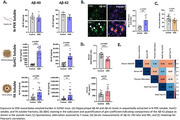 Figure 1
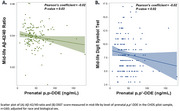 Figure 2
Peer Reviews
No public reviews on file for this paper yet. If you reviewed it on a platform where reviews are public (OpenReview, ICLR, NeurIPS, ICML), you can paste yours below so the community can read it here.
Videos
No videos yet. Explain this paper in a talk, walkthrough, or lecture? Add one.
Taxonomy
TopicsPesticide Exposure and Toxicity · Toxic Organic Pollutants Impact · Pesticide and Herbicide Environmental Studies