Enhancing Patient Understanding of Perianal Fistula MRI Findings Using ChatGPT: A Randomized, Single Centre Study
Easan Anand, Itai Ghersin, Gita Lingam, Katie Devlin, Theo Pelly, Daniel Singer, Chris Tomlinson, Robin E. J. Munro, Rachel Capstick, Anna Antoniou, Ailsa L. Hart, Phil Tozer, Kapil Sahnan, Phillip Lung

TL;DR
This study shows that using ChatGPT can help make complex MRI reports about perianal fistulas easier for patients to understand, though it still has some risks like inaccuracies.
Contribution
The study introduces a novel application of LLMs to generate patient-friendly summaries of MRI reports and identifies strategies to mitigate risks like hallucinations.
Findings
AI-generated summaries scored significantly higher in readability, comprehension, and usefulness compared to original reports.
Hallucinations occurred in 11% of AI outputs, highlighting the need for clinician validation.
A revised template incorporating lay summaries and MDT-focused action points was co-developed to improve safety and clarity.
Abstract
Background/Objectives: Large Language Models (LLMs) may help translate complex Magnetic Resonance Imaging (MRI) fistula reports into accessible, patient-friendly summaries. This study evaluated the clinical utility, safety, and patient acceptability of Generative Pre-trained Transformer (GPT-4o) in generating such reports. Methods: A three-phase study was conducted at a single centre. Phase I involved prompt engineering and pilot testing of GPT-4o outputs for feasibility. Phase II assessed 250 consecutive MRI fistula reports from September 2024 to November 2024, each reviewed by a multi-disciplinary panel to determine hallucinations and thematic content. Phase III randomised patients to review either a simple or complex fistula case, each containing an original report and an Artificial Intelligence (AI)-generated summary (order randomised, origin blinded), and rate readability,…
Genes, proteins, chemicals, diseases, species, mutations and cell lines named across the full text — each resolved to its canonical identifier and authoritative record.
Click any figure to enlarge with its caption.
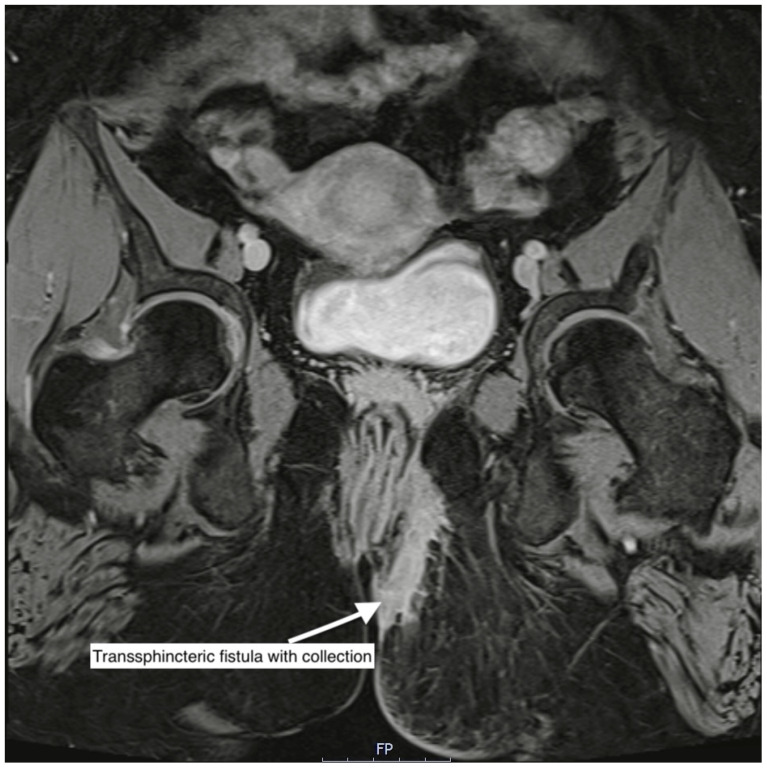 Figure 1
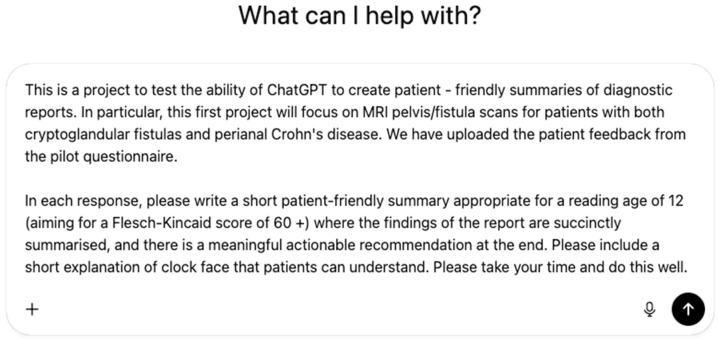 Figure 2
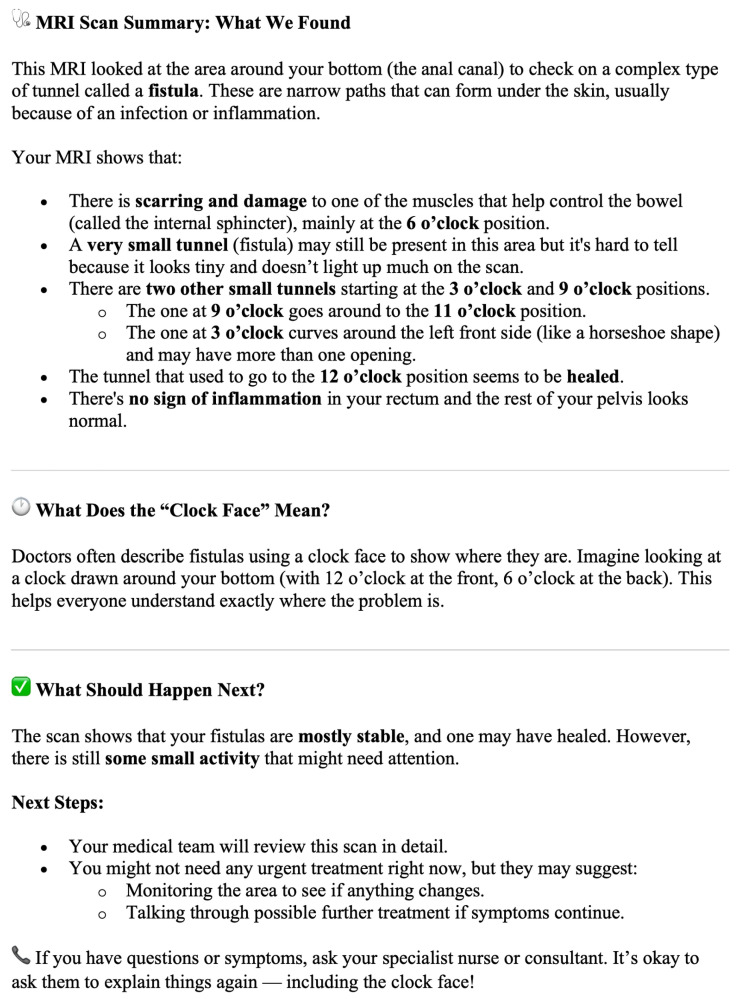 Figure 3
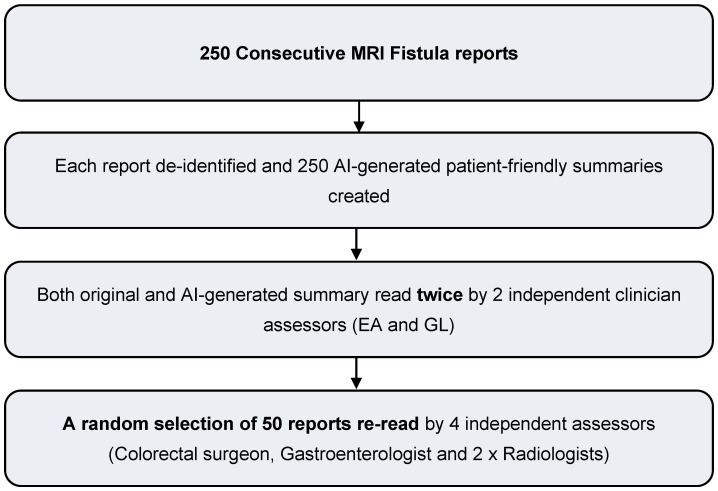 Figure 4
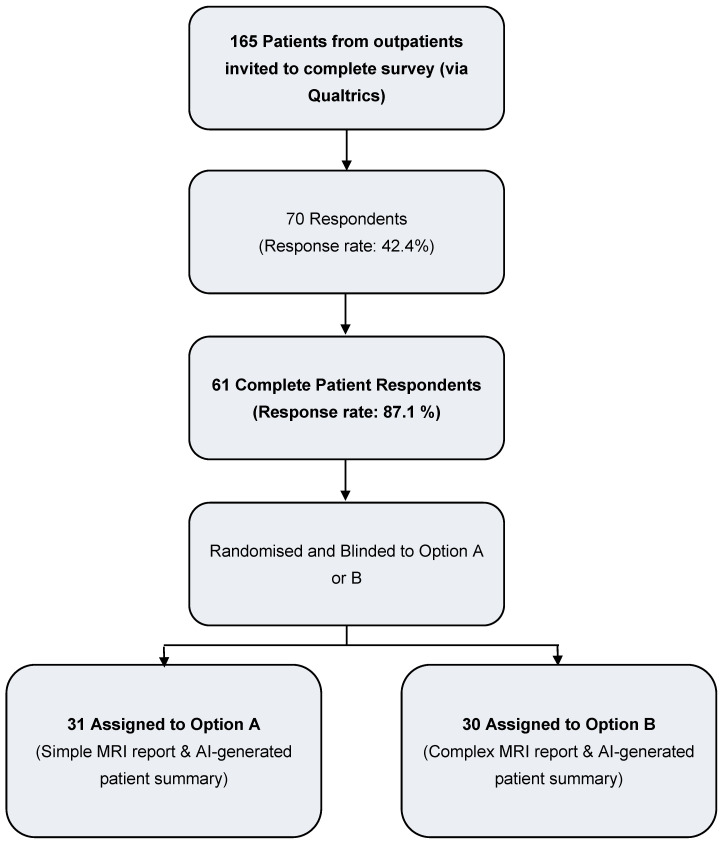 Figure 5
- —Imperial College London
Peer Reviews
No public reviews on file for this paper yet. If you reviewed it on a platform where reviews are public (OpenReview, ICLR, NeurIPS, ICML), you can paste yours below so the community can read it here.
Videos
No videos yet. Explain this paper in a talk, walkthrough, or lecture? Add one.
Taxonomy
TopicsArtificial Intelligence in Healthcare and Education · Anorectal Disease Treatments and Outcomes · Radiology practices and education
1. Introduction
Artificial intelligence (AI) is increasingly recognised as a transformative force in healthcare, with large language models (LLMs) like ChatGPT showing particular promise in summarising clinical documents, simplifying complex information, including diagnostic reports, and supporting decision-making [1,2,3,4,5,6,7]. A clear understanding of their disease and its management is crucial for patients, as effective shared decision-making and greater engagement in care have been associated with improved outcomes in chronic conditions such as Inflammatory Bowel Disease (IBD). In perianal Crohn’s disease (pCD), a severe phenotype of Crohn’s disease (CD), complex fistulae can cause substantial social and occupational burden [8]. Management often requires lifelong repeated imaging, with MRI recommended by both European Crohn’s and Colitis Organisation (ECCO) and the European Society for Gastrointestinal and Abdominal Radiology (ESGAR) as the gold standard modality [9,10]. An example MRI of a complex perianal fistula is shown in Figure 1.
However, patient perspectives in radiology remain underexplored despite evidence showing that engaging patients in IBD care improves quality of life and likelihood of remission [11,12]. Our recent global survey of patients’ attitudes to imaging in pCD [13] found that whilst MRI is valued for both accuracy and insight, standard MRI fistula reporting is often complex and difficult to understand. Patients expressed a strong interest in AI-generated patient-friendly summaries with actionable recommendations, provided these are clearly explained and validated by professionals [13].
MRI reports are traditionally written for clinicians using technical terminology and assume a medical background. With imaging now routinely digitised and reports increasingly available to patients without a detailed lay person explanation of its contents, LLMs offer a compelling opportunity to automate care pathways and generate personalised, patient-friendly summaries. Patients and families consistently express a strong desire for AI in healthcare, particularly when it enhances the readability, accessibility, and personal relevance of medical information [13,14,15,16,17,18,19]. Studies show high acceptability and even preference for AI-generated content, provided it is trustworthy and context-specific [17,18]. In parallel, medical institutions and specialist societies are increasingly exploring responsible integration of AI, calling for structured data integration, governance frameworks, and alignment with clinical workflows [20,21,22,23]. Specialist taskforces including the ACPGBI AI & Data Management Taskforce and ECCO’s 9th Scientific workshop in AI have been established to support ethical implementation and build clinician and public trust [24,25,26].
Radiology research into the application of LLMs has shown promise in supporting clinical decision making by aligning with imaging appropriateness criteria [27], enhancing accessibility through generating patient-friendly summaries [2,28] and simplified terminology [1,3,29], structuring unformatted reports [30] and supporting follow-up tracking [31]. Yet despite this momentum, real-world evidence on the feasibility, benefits, and risks of AI, particularly from the patient and frontline clinician perspective, remains limited [32,33]. Furthermore, concerns persist around factual inaccuracies, oversimplification, and hallucinations, highlighting the need for expert oversight and further validation before routine clinical use [34,35,36].
This randomised feasibility study aims to evaluate the use of a general-purpose LLM (ChatGPT-4o) to generate lay summaries of MRI reports for patients with complex perianal fistulae. The primary objective is to assess patient-perceived comprehensibility, readability, and usefulness. Secondary objectives include a multi-disciplinary clinician evaluation of factual accuracy, completeness, and the presence of hallucinations or misleading content.
2. Materials and Methods
2.1. Patient and Public Involvement (PPI)
A dedicated PPI workshop and global survey informed our study’s priorities [13]. Patients with complex perianal fistulising disease advocated for AI-generated summaries that were clear, comprehensible, and actionable. Three patient advocates joined the study steering group and helped design the evaluation framework. Their input shaped the prompt structure, report content preferences, and interpretation of findings.
2.2. Study Design and Overview
This was a mixed-methods study evaluating the feasibility, accuracy, and patient perception of large language model (LLM)-generated summaries of MRI reports for benign complex perianal fistulising disease. The study was conducted in three phases:
- Prompt engineering and pilot testing (results published in the Journal of Imaging [37])
- Clinical evaluation of LLM outputs
- Patient evaluation: Randomised patient study assessing readability, comprehensibility, perceived utility, trustworthiness and follow-up questions.
The study used While not fine-tuned for radiology or perianal disease, it draws on a broad dataset including open access medical literature up to August 2023 and has undergone reinforcement learning for safety and alignment. Outputs were reviewed by clinicians before patient use. As GPT-4o lacks DICOM training and regulatory approval, its use was limited to supporting patient communication within a research context and not clinical decision-making.
2.3. Setting and Participants
A total of 250 consecutive, de-identified MRI reports were collected from adult patients (≥18 years) undergoing imaging for benign fistula-in-ano conditions at a UK tertiary centre. Reports were included if they described fistulae related to inflammatory bowel disease, cryptoglandular origin, or ileoanal pouch surgery. Exclusion criteria included patients < 18 years, malignancy or absence of a fistula.
2.4. Phase 1: Prompt Engineering & Pilot Phase
A pilot study involving sixteen patients with fistulae was conducted to optimise prompts and study design, and to determine the appropriate sample size. A brief report of the pilot can be found at the Journal of Imaging [37].
Prompt engineering was iteratively refined to guide GPT-4o in generating patient-friendly MRI summaries of anorectal fistula reports. Prompts included relevant, anonymised, clinical history and imaging findings, followed by clear instructions to simplify terminology to a ~12-year-old reading level (Flesch-Kincaid ≥ 60), use clock-face analogies to describe fistula location, and provide actionable, patient-tailored recommendations (based on qualitative feedback from a PPI day). Variations in phrasing were tested using clinician feedback to optimise accuracy and clarity. GPT-4o used structured radiology text as input and was not fine-tuned on clinical data. All outputs were reviewed by clinicians before being shared with patients. Outcomes from the pilot phase were utilised to determine an appropriate sample size for the primary patient evaluation study.
Sample Size Calculation
Power calculations for the primary outcomes were performed to estimate the number of participants required to achieve 90% power (α = 0.05) in the main phase of the study. Effect sizes were derived from pilot data: readability (d = 1.08), comprehensibility (d = 1.11), utility (d = 0.92), follow-up intentions (d = 0.82), and trustworthiness (d = 0.61). Based on these estimates, required sample sizes per arm ranged from 9 participants for readability and comprehensibility to 29 participants for trustworthiness. To ensure sufficient power across all outcomes, a conservative sample size of 30 participants per arm was targeted.
2.5. Phase 2: Clinical Evaluation of AI Summaries
Each of the 250 AI-generated summaries was independently reviewed by at least two clinicians from a 6-team multidisciplinary panel (2 radiologists, 2 colorectal surgeons, 2 gastroenterologists). Fifty cases underwent assessment by all 6 readers and case-weighted means were calculated. Discrepancies were resolved through consensus discussion.
All assessors received training with structured templates and clear annotation guidelines. The evaluation framework excluded comments on AI competence to ensure unbiased assessment.
Evaluation criteria included:
- •Fidelity to original report:
- ○Yes
- ○No, but not clinically significant
- ○No, clinically significant (hallucination)
- •Quantitative ratings (1–5):
- ○Overall impression
- ○Strength of recommendations
- ○Confidence in report
- •Hallucination detection:
- ○Presence (HS harm scale [38]: none, mild, moderate, severe). Hallucinations were classified according to the WHO/NHS harm-severity framework, using the International Classification for Patient Safety categories (none, mild, moderate, severe, death) to assess potential patient-impact.
2.6. Phase 3: Randomised Patient Evaluation
Patients were randomised using a computer-generated sequence to review one original and one AI-generated summary of the same report, matched to simple or complex cases. Both the order of presentation and the report type were blinded.
Patients scored reports on a 5-point Likert scale (1 = strongly disagree, 5 = strongly agree) across the following domains:
- •Readability
- •Comprehensibility
- •Perceived utility
- •Likelihood of follow-up questions
- •Trustworthiness
Qualitative feedback was also collected and analysed thematically to explore comprehension, preferences, and suggestions for improvement.
2.7. Data Analysis
2.7.1. Quantitative Analysis
Ratings were analysed using either means ± standard deviation (SD) or medians with interquartile range (IQR), depending on data distribution. Paired t-tests were used for normally distributed data; non-parametric tests (e.g., Wilcoxon signed-rank) were applied for skewed data. Analyses were conducted in IBM SPSS Statistics v29.
2.7.2. Qualitative Analysis
Open-text feedback from patients and clinicians was thematically coded and analysed using Braun & Clark methodology [39]. This informed prompt refinement and highlighted specific strengths, areas for improvement, and potential for harm in AI outputs.
2.8. Ethical Approval and Data Availability
The study received ethical approval from the Research Ethics Committee (REC Reference: 24/WA/0374), with institutional approval from London North West University Healthcare NHS Trust.
GPT-4o model architecture and weights remain proprietary to OpenAI.
3. Results
3.1. Phase 1: Prompt Engineering & Pilot Phase
A pilot study involving 16 patients recruited from a tertiary outpatient setting in a single centre evaluated the feasibility of AI-generated MRI fistula summaries, which were designed for a reading age of 12 [37]. In a blinded, randomised comparison, AI-generated summaries were expectedly rated significantly higher than original reports (written for clinicians) for readability (median 5 vs. 2, p = 0.011), comprehensibility (median 5 vs. 2, p = 0.007), and overall quality (median 4.5 vs. 4, p = 0.013). Patients were also less likely to have follow-up questions after reading AI summaries (median 3 vs. 4, p = 0.018), though both report types were rated similarly for trustworthiness. Clinician assessments confirmed these findings, with AI summaries achieving higher Flesch-Kincaid scores (mean 54.6 vs. 32.2, p = 0.005), full marks for quality, and no hallucinations or critical errors. The iterative refinement of the prompt has been fully described in our original pilot study, published in the Journal of Imaging [37], which details all earlier prompt versions and the stepwise modifications applied. For the present study, we incorporated both the quantitative results and qualitative patient feedback from that pilot, alongside input from patient representatives within the study group, to develop the final prompt used (Figure 2). Key refinements focused on elements patients identified as most helpful—simple language, clearer anatomical descriptions including clock-face positions, structured actionable recommendations, and improved formatting. The Flesch–Kincaid target of ≥60 was unchanged; the higher mean score observed in the current study (65.83) reflects natural variation rather than a change in the prompt specification. AI-generated summaries were produced rapidly, in an average of 18.2 s per report. An example AI-generated summary is provided in Figure 3.
3.2. Phase 2: Clinician Evaluation of 250 Consecutive MRI Fistula Reports
A study flowchart for Phase 2 is provided in Figure 4.
Table 1 shows the aetiology and anatomical classification of the 250 consecutive MRI fistula scans analysed during Phase II of the study.
Among 250 consecutive MRI reports, the most common fistula aetiologies were cryptoglandular (63.2%), Crohn’s disease (27.6%), pouch-related (7.6%), and obstetric-injury related rectovaginal fistulae (1.6%). The majority of fistulae were transsphincteric (61.2%), with intersphincteric (25.2%), extrasphincteric (6.8%), subsphincteric (3.6%), and suprasphincteric (3.2%) tracts less frequent. Single fistula tracts were reported in 46.0% of cases, two tracts in 32.0%, and three or more in 18.8%. Horseshoe extensions and abscesses were identified in 15.6% of scans, and 27.6% showed additional fistula extensions beyond the primary tract.
Objective clinician assessment of 250 MRI reports showed significant differences in readability metrics between original and AI-generated summaries (Table 2). AI reports had a much higher Flesch-Kincaid readability score (65.83 vs. 26.25; p < 0.001), indicating easier readability, and a lower FK Grade level (7.93 vs. 14.1; p < 0.001), suggesting they were accessible to a broader audience. Across all 250 cases, clinicians reported that the AI-generated summaries reflected the original radiology report in 212/250 cases (84.8%), with discrepancies in the remaining 38/250 cases (15.2%). The overall impression of the summaries was high, with a case-weighted mean score of 4.33 on a 5-point scale. Clinicians rated the strength of recommendations at a mean of 4.39, and confidence in the reports at a mean of 4.68. Hallucinations were identified in 29/250 cases (11.6%) and were typically found in aberrant clock-face descriptions. Overall, 2.4% cases were considered as causing mild harm primarily due to minor discrepancies in anatomical or descriptive details. These errors or hallucinations were considered mildly harmful as they could potentially cause patient anxiety or confusion, e.g., if an AI-generated summary incorrectly indicated the side of a fistula and, in a worst-case scenario, could mislead clinicians if they relied solely on the AI-generated summary. No hallucinations were classified as causing moderate or severe harm, as standard clinical practice would require clinicians to verify AI-generated summaries before making any patient care decisions.
3.3. Phase 3: Patient Evaluation of AI-Generated Summaries
Figure 5 depicts the recruitment of patients to the patient-evaluation arm of the study (Phase 3).
Table 3 presents demographic data for the 61 patients recruited to Phase 3 of the study. The mean age was 48 years (SD 13.7), and 59% were male. Most participants identified as White (70.5%), followed by Asian (18.0%), Arab (9.8%), and Mixed ethnicity (1.6%). Educational attainment was diverse, with 31.1% holding a university bachelor’s degree and 26.2% having completed graduate or professional qualifications. The majority of participants reported either fluent (68.9%) or advanced (26.2%) proficiency in English reading and writing, while 4.9% reported intermediate proficiency. The most common fistula aetiology was cryptoglandular disease (49.2%), followed by Crohn’s disease (37.7%).
Most participants (85.2%) reported using the NHS app, with 32.8% accessing their records a few times a year and 32.8% a few times a month (Table 4). Despite this, 39.4% found diagnostic reports difficult to understand. The majority found a patient-friendly AI-generated summary (78.7%) and a clear ‘next steps’ or action plan (82.0%) to be extremely or very useful.
3.4. Patient Evaluation of Original Reports vs. AI-Generated Patient Summaries
Sixty-one patients were randomised to review either a pair of simple or complex MRI fistula reports, comprising the original radiology report and an AI-generated patient-friendly summary (Table 5). Patients were blinded to the complexity of the case and the origin of the reports (AI or original), and the order of report presentation was randomised. Across both arms, AI-generated summaries were rated significantly higher than original reports or readability, comprehensibility, and perceived utility. This improvement remained statistically significant (p < 0.001) even after adjusting for report order, report complexity, and participant characteristics. In the simple fistula group (n = 31), AI summaries demonstrated a marked increase in readability (mean difference = 1.19, p < 0.001), comprehensibility (1.19, p < 0.001), and perceived utility (0.84, p < 0.001). Follow-up questions were slightly reduced in the AI group, but this was not statistically significant (p = 0.19). Trustworthiness ratings were equivalent between the two formats (p = 0.23). In the complex fistula group (n = 30), the differences were even more pronounced. AI summaries were significantly more readable (mean difference = 1.80, p < 0.001), comprehensible (1.60, p < 0.001), and perceived as more useful (1.43, p < 0.001) than original reports. There was a non-significant trend toward fewer follow-up questions after reading the AI summaries (p = 0.14), trustworthiness again remained equivalent (p = 0.36). There was no statistically significant difference in subjective metrics between the AI reports generated in Option A vs. Option B. Patients were able to correctly tell a report was AI-generated 74% of the time when the report was simple, and 62% of the time when it was a complex MRI fistula report.
Patient and clinicians generally viewed the AI-generated MRI summaries as clear, logically structured, and more accessible than standard reports (Table 6). All assessors appreciated formatting features like bullet points and spacing, as well as accurate anatomical localisation using clockface notation when correctly applied. Clinicians highlighted improved readability and satisfactory explanation of complex fistula anatomy, including tract extensions and post-surgical changes. The “action plan” section was valued for its practical relevance and multidisciplinary framing. However, concerns were raised about variable anatomical precision, occasional errors in localisation or omitted findings including vague language (e.g., “travels through the muscles”) and incorrect clockface references. Clinicians flagged hallucinated references to Crohn’s activity (in cases of cryptoglandular fistulas) and missing incidental findings (e.g., hernias and pelvic lumps unrelated to the fistula tract). There was concern regarding overly generic or minimising language around surgical procedures, insufficient detail for complex planning, and the need for clearer, more patient-specific recommendations. In response, a structured reporting template was developed incorporating the most positively received elements, including an optional MDT section and lay AI-generated summary (Table 7).
4. Discussion
4.1. General Findings
This study was shaped by our Patient and Public Involvement (PPI) day, where patients with pCD emphasised the need for MRI reports written for lay persons, whilst also containing actionable guidance [13]. These priorities echo wider evidence that meaningful engagement improves comprehension and outcomes in chronic disease [11,12]. Building on this, we conducted a three-phase patient- and clinician-led study to assess AI-generated lay summaries of MRI reports in complex perianal fistula disease: a pilot with 16 patients to refine AI prompts; a case series of 250 reports evaluated by clinicians for accuracy, safety, and readability; and a randomised study of 61 patients comparing original versus AI-generated reports using structured Likert scales.
Across all phases, AI-generated summaries, which were specifically designed to be read by a patient with a 12-year-old reading level, were consistently rated higher (p < 0.001) for readability, comprehensibility, and overall usefulness, with patients reporting fewer follow-up questions and equal levels of trust compared to original reports, which are written for clinicians. Patients and clinicians attributed the improved readability of AI-generated lay summaries to their structured layout, simplified language (supported by objective improvements in Flesch–Kincaid scores), and clearer anatomical descriptions. Patients and clinicians particularly valued the clarity, structure (including bullet points which are not always available in radiology reporting software), and practical clinical framing of the summaries, although clinicians repeatedly raised concerns about oversimplification and occasional anatomical imprecision. These findings highlight the potential of LLM tools to enhance patient-centred communication in a highly complex disease area, where even the most experienced clinicians can struggle to convey salient findings to patients, but this must be balanced against the inherent nature of existing LLMs to produce hallucinations, defined as factually incorrect content.
Attempts to provide a visual description of the clock face of fistula anatomy were generally well received by patients (although they were unable to verify its accuracy) but some generic recommendations risked being misleading when applied across heterogeneous groups, highlighting some of the pitfalls of a generic transformer-based LLM. For instance, cryptoglandular fistula patients were given an option to follow up with an IBD team, and pouch fistula patients, without context on pouch indication, were presented with generic and IBD-related advice, which could be inaccurate for those with familial adenomatous polyposis. These are not hallucinations per se but represent potentially confusing statements for patients. Conversely, positive examples included translating radiological improvements, such as reduced fistula volume and clearer anatomy, into actionable advice (Table 8).
Hallucinations were identified in up to 11% by clinicians, a quarter of which were judged to be mildly harmful. These findings are relatively high compared with external benchmarks. For example, the Vectara (an AI company) leaderboard [41], which applies a narrow and consistent definition of hallucination across models, reports a typical hallucination rate for GPT-4o of ~1.5%. Although our methodology is not directly comparable, this discrepancy raises important questions. The higher hallucination rate likely reflects the greater difficulty and precision required in medical imaging summarisation, where small anatomical inaccuracies are counted as errors. Hallucination rates in radiology-focused LLM studies are typically higher than in general testing, with one study reporting rates of 6% [42] whilst studies investigating errors in the assessment of medical literature have reported rates as high as 40% [43]. It might indicate that creating technically accurate medical summaries is harder than general-domain tasks because there aren’t enough medical reports in the training data, or alternatively, that clinical evaluators apply a higher standard of scrutiny than benchmark datasets. Hallucinations increased from the pilot study [37] (no hallucinations) to the full study when prompts involved more complex tasks, such as anatomical localisation using clockface notation. These types of errors, though infrequent, raise safety concerns, especially if summaries are delivered without clinical validation. Moreover, the subjective reliability of LLM output is highly sensitive to prompt structure and phrasing, which requires expertise in prompt engineering and introduces further variability. Transformer-based models such as Chat-GPT are inherently stochastic, resulting in non-deterministic (or probabilistic) outputs. Ensuring consistency and reproducibility requires strict constraints and this may be achieved in subsequent iterations with more refined prompts and tailoring of information, including a visual and anatomical description of fistula anatomy and clockface, for example.
Whilst actionable recommendations were consistently highlighted as important by patients, generating accurate, personal statements without access to the full medical record remains a major challenge for generic LLMs. Nonetheless, our findings suggest that concise two- to three-line recommendations at the end of a report could enhance patient engagement, which is itself linked to improved outcomes. Patients, despite being blinded to report type, placed equal trust in AI-generated summaries and radiologist reports, consistent with broader evidence of patient support for AI in healthcare [14,15,16,17,18]. However, this trust reflects confidence in the report as presented, not awareness of potential inaccuracies. If errors were recognised, trust would likely decline, underscoring the need for validation and transparent communication to ensure safety.
A further practical consideration is the potential for LLMs to inadvertently increase workload rather than alleviate it. While designed to streamline communication, generated content may require time-consuming review and approval by clinicians, particularly given the 2 times increase in word count for AI-generated reports, adding administrative burden. This is particularly relevant in radiology, where turnaround times and medico-legal responsibility are already tightly constrained. If poorly implemented, the use of LLMs could compromise documentation quality or reduce the clarity and efficiency of clinical workflows, as noted in other healthcare contexts [33]. Lastly, the automatic insertion of AI-generated lay summaries into patient portals could erode patient-clinician trust if inaccuracies remain uncorrected or cause confusion.
4.2. Study Limitations
This study did not address several critical systemic issues that were beyond the scope of this feasibility study, such as comparison with competing LLM models (e.g., DeepSeek, Gemini and CoPilot), cost-effectiveness of AI, infrastructure burden, or environmental impact of deploying LLMs at scale in healthcare settings. These are non-trivial concerns, particularly given the substantial energy requirements and ongoing need for human oversight to validate output. Time constraints meant that certain aspects, such as expanding the breadth of report types and analyses, could not be fully explored and should be addressed in future work. ChatGPT was selected due to its accessibility, widespread use, and robust language generation capabilities at the time of study design. We acknowledge that other LLMs (e.g., Gemini, DeepSeek, Sider, Claude) may produce different outputs, and model performance may vary depending on prompting and domain expertise. Future work could compare multiple models to determine relative reliability, but in clinical contexts, trust must always be mediated by expert review rather than reliance on any single AI model.
Although efforts were made to recruit a broad sample of readers, this could be widened further to capture greater diversity. The patient sample in Phase 3 was predominantly White (70.5%) and highly educated (over 57% with university degrees), which may limit the generalizability of findings to more diverse populations or those with lower health literacy. Future studies should aim to include broader, multi-centre cohorts to ensure equity and inclusivity in AI-assisted patient communication research. Additionally, each patient reviewed a small number of AI-generated reports as participants themselves indicated limited willingness to read multiple reports in one sitting, although this was partially mitigated by recruiting a larger cohort. A more comprehensive assessment of trustworthiness and accuracy could be achieved by providing patients with their own fistula reports and AI-generated summaries and presents an intriguing opportunity for future research. From a regulatory and ethical standpoint, challenges remain around transparency, data governance, and fairness. Many widely used LLMs are opaque in terms of their training data and algorithmic processes, limiting clinician and patient trust [44]. Risks of bias, especially in underserved populations, persist due to non-representative training datasets [32,45]. Furthermore, automation bias means the tendency of clinicians to over-rely on AI outputs even when incorrect has been widely reported and may degrade diagnostic vigilance over time [46]. This is particularly pertinent when one considers that radiologists are already time-limited and unable to produce additional lay summaries, let alone verify the accuracy of AI-generated summaries.
4.3. Clinical Implications and Future Directions
This study reinforces that AI-generated summaries offer value, but cannot yet replace radiologist-authored reports, particularly in complex, high-stakes cases. Future development should focus on bespoke, clinically fine-tuned LLMs trained on high-quality, domain-specific datasets and validated against gold-standard clinical benchmarks. Off-the-shelf, general-purpose models lack precise anatomical language or contextualised clinical reasoning. Tailored models, ideally co-developed by interdisciplinary teams of clinicians, data scientists, and patients, could help mitigate hallucinations and improve the relevance and safety of AI-generated content. Progress will also rely on specialised biomedical models, like the open-source BiomedGPT, which are designed to remain stable and avoid losing previously learned knowledge when tackling complex medical tasks [47,48]. BiomedGPT has shown satisfactory performance, with an 8.3% error rate in generating complex radiology reports [47] but further work is clearly required to lower rates of hallucinations and errors to an acceptable level. Specific features desired by patients [13] such as accurate clockface annotations, clear descriptions of disease trajectory, and simplified anatomical diagrams, which are currently beyond the scope of open source models, hold promise if reliably automated. Importantly, AI-generated summaries could help reduce patient anxiety and residual uncertainty by translating complex radiological findings into understandable, actionable language. The rapid evolution of digital health, particularly the Internet of Things (IoT), may enable real-time symptom tracking and delivery of patient-friendly MRI summaries in the future. Emerging 3D-printing techniques can translate complex fistula anatomy into tangible models to enhance patient understanding and support shared decision-making [49,50]. Iterative development of LLMs grounded in robust clinical knowledge and ethical implementation could transform these systems into essential tools that enhance patient engagement and, as Topol [51] emphasised, the ultimate promise of AI lies not in replacing the clinician, but in “deepening the human connection in medicine” by offloading routine documentation and facilitating more meaningful interactions.
5. Conclusions
In conclusion, AI-generated MRI summaries can improve patient communication by enhancing readability, structure, and accessibility, particularly in complex conditions requiring repeated imaging. While not yet suitable for standalone use due to inaccuracies and limited contextual nuance, they have potential as valuable adjuncts within radiology workflows, supporting standardised reporting, streamlining documentation, and providing clinician-validated lay summaries. Generative AI models such as ChatGPT can produce coherent and patient-friendly summaries; however, as our study demonstrates, they are prone to inaccuracies (hallucinations) and omissions. Therefore, outputs must be interpreted cautiously and always verified by clinicians before informing patient care. Our study focused on evaluating feasibility, readability, and potential patient comprehension rather than clinical decision-making. Patients value simplified language and actionable guidance in their reports, which we have incorporated. Safe integration requires rigorous clinical oversight, domain-specific model refinement, and ethical safeguards that prioritise patient safety, equity, and trust. Future work should focus on standardised structured reporting templates, clinician-validated AI summaries, expansion into other radiology subspecialties and medical disciplines, all with continued patient input and approval.
The reference list from the paper itself. Each links out to its DOI / PubMed record.
- 1Chung E.M. Zhang S.C. Nguyen A.T. Atkins K.M. Sandler H.M. Kamrava M. Feasibility and Acceptability of Chat GPT Generated Radiology Report Summaries for Cancer Patients Digit. Health 202392055207623122162010.1177/2055207623122162038130802 PMC 10734360 · doi ↗ · pubmed ↗
- 2Kuckelman I.J. Wetley K. Yi P.H. Ross A.B. Translating Musculoskeletal Radiology Reports into Patient-Friendly Summaries Using Chat GPT-4Skelet. Radiol.2024531621162410.1007/s 00256-024-04599-238270616 · doi ↗ · pubmed ↗
- 3Jeblick K. Schachtner B. Dexl J. Mittermeier A. Stüber A.T. Topalis J. Weber T. Wesp P. Sabel B.O. Ricke J. Chat GPT Makes Medicine Easy to Swallow: An Exploratory Case Study on Simplified Radiology Reports Eur. Radiol.2024342817282510.1007/s 00330-023-10213-137794249 PMC 11126432 · doi ↗ · pubmed ↗
- 4Amin K.S. Davis M.A. Doshi R. Haims A.H. Khosla P. Forman H.P. Accuracy of Chat GPT, Google Bard, and Microsoft Bing for Simplifying Radiology Reports Radiology 2023309 e 23256110.1148/radiol.23256137987662 · doi ↗ · pubmed ↗
- 5Gencer A. Readability Analysis of Chat GPT’s Responses on Lung Cancer Sci. Rep.2024141723410.1038/s 41598-024-67293-239060365 PMC 11282056 · doi ↗ · pubmed ↗
- 6Stephan D. Bertsch A.S. Schumacher S. Puladi B. Burwinkel M. Al-Nawas B. Kämmerer P.W. Thiem D.G. Improving Patient Communication by Simplifying AI-Generated Dental Radiology Reports With Chat GPT: Comparative Study J. Med. Internet Res.202527 e 7333710.2196/7333740489773 PMC 12186002 · doi ↗ · pubmed ↗
- 7Shieh A. Tran B. He G. Kumar M. Freed J.A. Majety P. Assessing Chat GPT 4.0’s Test Performance and Clinical Diagnostic Accuracy on USMLE STEP 2 CK and Clinical Case Reports Sci. Rep.202414933010.1038/s 41598-024-58760-x 38654011 PMC 11039662 · doi ↗ · pubmed ↗
- 8Spinelli A. Yanai H. Girardi P. Milicevic S. Carvello M. Maroli A. Avedano L. The Impact of Crohn’s Perianal Fistula on Quality of Life: Results of an International Patient Survey Crohns Colitis 36020235 otad 03610.1093/crocol/otad 03637529012 PMC 10390083 · doi ↗ · pubmed ↗