Accuracy of Visual Atrophy Scales on MRI to predict Mild Dementia in the Cog‐Aging Cohort Study
Giovanna Correia Pereira Moro, Thaise Vallesca Queiroz, Gabriela Tomé Oliveira Engelmann, Carolina Andrade Koehne, Joice Coutinho de Alvarenga, Leticia Xavier Carneiro Calixto, Aline Siqueira de Souza, João Henrique Fonseca, João Marcos Silva Borges, Erika de Oliveira Hansen

TL;DR
This study evaluates how well MRI-based visual atrophy scales predict dementia in older adults, finding that the ERICA scale is most accurate.
Contribution
The study introduces the ERICA scale as a more accurate predictor of dementia compared to other visual atrophy scales in a clinical cohort.
Findings
ERICA average score had the highest AUC of 0.792 with 88.9% sensitivity and 51% specificity at a cut-off of 1.5.
ERICA average score was the best logistic regression model for predicting dementia after adjusting for age and education.
All visual atrophy scales showed significant differences between dementia and non-dementia groups.
Abstract
The Clinical Dementia Rating (CDR) is the most used categorization system for Alzheimer's Disease Dementia (ADD). In clinical practice, Magnetic Resonance Imaging (MRI) remains one of the most used methods for differential diagnosis and to improve accuracy, particularly with Visual Atrophy Scales (VAS). To conduct an accuracy analysis of two VAS to predict dementia with CDR1 in an Outpatient Memory Clinic. This is a cross‐sectional study, using data from the Cog‐Aging cohort study from 2019 to 2024. Participants underwent a comprehensive clinical, neuropsychological and neuroimaging assessment to determine CDR scores. Fifty‐two participants had MRI and assessments within 6 months. Participants were divided in Dementia (9) and Non‐Dementia (ND=43) groups. MRIs were assessed by two independent physicians, using The Entorhinal Cortical Atrophy (ERICA) scale and the Medial Temporal Lobe…
Genes, proteins, chemicals, diseases, species, mutations and cell lines named across the full text — each resolved to its canonical identifier and authoritative record.
Click any figure to enlarge with its caption.
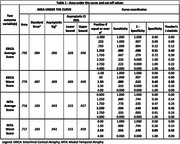 Figure 1
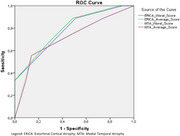 Figure 2
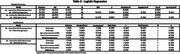 Figure 3
Peer Reviews
No public reviews on file for this paper yet. If you reviewed it on a platform where reviews are public (OpenReview, ICLR, NeurIPS, ICML), you can paste yours below so the community can read it here.
Videos
No videos yet. Explain this paper in a talk, walkthrough, or lecture? Add one.
Taxonomy
TopicsDementia and Cognitive Impairment Research · Spatial Neglect and Hemispheric Dysfunction · Ophthalmology and Visual Impairment Studies