Effect of image‐processing and statistical harmonization methods on tau PET cognitive group separability for multisite cross‐sectional and longitudinal studies using 18F‐Flortaucipir PET
Weiquan Luo, Charles M Laymon, Suzanne L. Baker, Howard J Aizenstein, Dana L Tudorascu, Davneet S Minhas

TL;DR
This study compares methods to harmonize PET imaging data from multiple sites, finding that partial volume correction plus statistical harmonization improves detection of cognitive differences over time.
Contribution
The novel contribution is evaluating the combined effect of partial volume correction and LongComBat on longitudinal tau PET data harmonization.
Findings
Partial volume correction (PVC) consistently reduced scanner effects across Braak regions compared to raw data.
Combining PVC with LongComBat maximized detection of longitudinal cognitive group differences in multi-site PET data.
Smoothing to a common resolution did not consistently reduce scanner effects in cross-sectional or longitudinal analyses.
Abstract
Gaussian smoothing to a common resolution is regularly employed to harmonize PET imaging data acquired across different scanners in multisite studies. However, spatial smoothing of PET can increase spill‐over contamination between neighboring regions. Partial volume correction (PVC) has, in turn, been applied to correct for such contamination. Despite being common practices, the harmonizing impact of smoothing and PVC on tau PET data remains unclear. Evaluate the impact of eight image‐processing and statistical harmonization pipelines on estimated scanner (batch) effects and cognitive status group separation in cross‐sectional and longitudinal analyses of multisite 18F‐Flortaucipir (FTP) PET data. Native‐resolution FTP PET images (RAW) from 322 ADNI participants scanned at up to 4 different time points on 19 different PET scanners were included in the analyses (Table 1). Putative…
Genes, proteins, chemicals, diseases, species, mutations and cell lines named across the full text — each resolved to its canonical identifier and authoritative record.
Click any figure to enlarge with its caption.
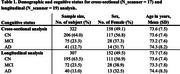 Figure 1
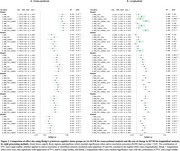 Figure 2
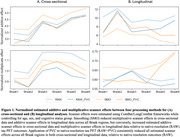 Figure 3
Peer Reviews
No public reviews on file for this paper yet. If you reviewed it on a platform where reviews are public (OpenReview, ICLR, NeurIPS, ICML), you can paste yours below so the community can read it here.
Videos
No videos yet. Explain this paper in a talk, walkthrough, or lecture? Add one.
Taxonomy
TopicsMedical Imaging Techniques and Applications · Radiomics and Machine Learning in Medical Imaging · Radiation Dose and Imaging