Enhancing voxel‐level morphometry through Deep Learning‐based MRI Super‐Resolution for detecting Alzheimer's Disease related atrophy
Walter Adame‐Gonzalez, Roqaie Moqadam, Yashar Zeighami, Mahsa Dadar

TL;DR
This paper shows that using deep learning to improve MRI resolution helps detect early Alzheimer's-related brain atrophy more accurately.
Contribution
A novel deep learning-based MRI super-resolution method is introduced to enhance voxel-level morphometry for Alzheimer's detection.
Findings
High-resolution models detected 19.23% significant voxels compared to 18.52% in standard resolution after FDR correction.
High-resolution imaging better localized atrophy in the entorhinal cortex, hippocampus, and temporal cortex grey matter.
Subfields like the dentate gyrus and CA4 showed significant atrophy only visible at 0.5 mm³ resolution.
Abstract
Alzheimer's Disease (AD) is characterized by the accumulation of Amyloid‐beta plaques and hyperphosphorylated‐tau neuro‐fibrillary tangles (NFT). In early stages of the disease, grey matter loss and proteinopathy is localized to the entorhinal cortices, nucleus basalis of Meynert, and hippocampus (Shafiee et. al. 2024). Additionally, atrophy in these regions has been shown to mediate cognitive decline (Xia et. al. 2024). Deformation Based Morphometry (DBM) is a widely‐used technique for modelling voxel‐wise volume changes with respect to a common template using Magnetic Resonance Imaging (MRI) data. However, DBM is constrained by MRI voxel resolution, making the study of smaller structures more challenging as commonly used MRI images are acquired at ∼1 mm3 voxel size. We used baseline T1‐weighted MRI images from an ADNI subsample of age‐, sex‐, and diagnosis balanced individuals (N =…
Genes, proteins, chemicals, diseases, species, mutations and cell lines named across the full text — each resolved to its canonical identifier and authoritative record.
Click any figure to enlarge with its caption.
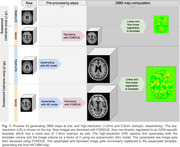 Figure 1
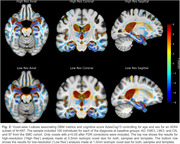 Figure 2
Peer Reviews
No public reviews on file for this paper yet. If you reviewed it on a platform where reviews are public (OpenReview, ICLR, NeurIPS, ICML), you can paste yours below so the community can read it here.
Videos
No videos yet. Explain this paper in a talk, walkthrough, or lecture? Add one.
Taxonomy
TopicsDementia and Cognitive Impairment Research · Alzheimer's disease research and treatments · Neurological Disease Mechanisms and Treatments