Validity of two cognitive screening markers to distinguish between amnestic mild cognitive impairment (amMCI), Alzheimer's disease (AD) and healthy controls (HC) in low‐income populations with limited educational attainment
Alfredis Gonzalez‐Hernandez, Jasmin Bonilla‐Santos, Dorian Cala, Duvan Gomez, María Fernanda Aguilar Mora, Laura Natalia Calceto Garavito

TL;DR
This study shows that the ACE-R cognitive test works better than others for diagnosing memory issues in low-income, less-educated older adults in Colombia.
Contribution
The study validates the ACE-R as a more effective diagnostic tool for cognitive impairment in populations with limited education and low income.
Findings
ACE-R had an AUC of 0.71 for aMCI vs HC, outperforming MMSE (AUC 0.60).
ACE-R subdomains like memory and language were strong predictors of cognitive impairment.
ACE-R showed superior diagnostic accuracy in low-income populations compared to MMSE.
Abstract
The low levels of educational attainment in Colombia, closely tied to socioeconomic inequalities, contribute to the cognitive and functional decline of older adults (Santamaria‐Garcia et al., 2023). These disparities explain 24.6% to 30% of brain variability linked to neurodegeneration in Latin America, intensifying cognitive decline in vulnerable populations (Gonzalez‐Gomez et al., 2024). Among cognitive screening tools, Addenbrooke's Cognitive Examination‐Revised (ACE‐R) effectively differentiates cognitive disorders. This study aimed to (a) evaluate the reliability and validity of two screening markers distinguishing amnestic mild cognitive impairment (aMCI), Alzheimer's disease (AD), and healthy controls (HC) in low‐income populations with limited education, and (b) examine the contribution of ACE‐R subdomains as explanatory variables for diagnosing aMCI and AD, while accounting for…
Genes, proteins, chemicals, diseases, species, mutations and cell lines named across the full text — each resolved to its canonical identifier and authoritative record.
Click any figure to enlarge with its caption.
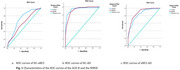 Figure 1
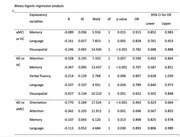 Figure 2
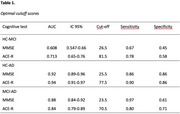 Figure 3
Peer Reviews
No public reviews on file for this paper yet. If you reviewed it on a platform where reviews are public (OpenReview, ICLR, NeurIPS, ICML), you can paste yours below so the community can read it here.
Videos
No videos yet. Explain this paper in a talk, walkthrough, or lecture? Add one.
Taxonomy
TopicsDementia and Cognitive Impairment Research · Cancer-related cognitive impairment studies · Cognitive Functions and Memory