Unveiling the distinct roles of p‐tau, iron and MAOB in neurobiological basis of F18‐flortaucipir signal with voxel‐to‐voxel histology to PET analysis in different tauopathies
Yuheng Chen, Renaud La Joie, Song Hua Li, Felipe Luiz Pereira, Lucile Zhu, Tia LaMore, Duygu Tosun, Daniela Ushizima, William W. Seeley, Salvatore Spina, Helmut Heinsen, Gil D. Rabinovici, Lea T. Grinberg

TL;DR
This study explores why the Flortaucipir PET tracer shows different signals in various brain diseases, revealing that factors like iron and MAOB may contribute to the signal in non-Alzheimer's diseases.
Contribution
The study identifies distinct neurobiological contributors to Flortaucipir signal in different tauopathies using voxel-to-voxel histology-PET analysis.
Findings
Flortaucipir signal in Alzheimer's disease correlates best with p-tau, while non-AD tauopathies show stronger correlations with iron and MAOB.
Iron contributes more to PET signal in PSP and FTLD-MAPT, while MAOB is more prominent in TDP-43 cases.
The study highlights the need for improved tracer specificity and complementary markers for accurate diagnosis in diverse neurodegenerative disorders.
Abstract
Flortaucipir F18 was the first FDA approved PET tracer to detect tau pathology. Previous studies show that Flortaucipir is sensitive to Alzheimer's disease tau but not four‐repeat tauopathies. Furthermore, the neurobiological basis of low Flortaucipir signal remain unclear, especially in basal ganglia. In this study, we aimed to identify the contributions of p‐tau (Ser 202), iron/Fe(III), and MAOB to Flortaucipir signal in different tauopathies by performing voxel‐to‐voxel correlations between histological and PET‐CT volumes. Coronal slides of ∼ 1 cm thickness from four tauopathy cases (AD, progressive supranuclear palsy, corticobasal degeneration, and (FTLD due to MAPT mutation P305S) and one FTLD‐TDP type‐A case were processed following a computational/histopathology pipeline (Ushizima, Chen, et al. 2021), allowing for whole 3D reconstruction of the histological maps at microscopical…
Genes, proteins, chemicals, diseases, species, mutations and cell lines named across the full text — each resolved to its canonical identifier and authoritative record.
Click any figure to enlarge with its caption.
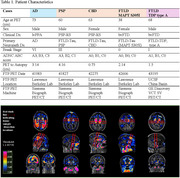 Figure 1
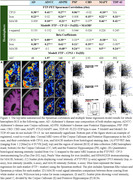 Figure 2
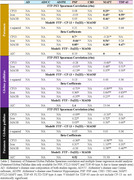 Figure 3
Peer Reviews
No public reviews on file for this paper yet. If you reviewed it on a platform where reviews are public (OpenReview, ICLR, NeurIPS, ICML), you can paste yours below so the community can read it here.
Videos
No videos yet. Explain this paper in a talk, walkthrough, or lecture? Add one.
Taxonomy
TopicsAlzheimer's disease research and treatments · Dementia and Cognitive Impairment Research · Intracerebral and Subarachnoid Hemorrhage Research