Robustness of the Centiloid scale to target and reference regions calculated with a commercial software using [18F]flutemetamol PET images
Rachid Fahmi, Ariane Bollack, Mark R Battle, Gill Farrar, Bruce Spottiswoode

TL;DR
This study evaluates how different brain regions affect the accuracy and consistency of amyloid PET measurements using the Centiloid scale in Alzheimer's research.
Contribution
The study provides empirical evidence on the robustness of the Centiloid scale using a commercial software with various target/reference region combinations.
Findings
Using the pons as a reference region leads to a 23% underestimation of Centiloid values compared to other regions.
The best repeatability results were observed when using the pons with the GAAIN cortical mask, while the worst were with the cerebellar gray.
Dichotomization agreements were reliable at 25 and 37 CL thresholds but less so at 11 CL.
Abstract
Quantification of amyloid‐PET using the Centiloid (CL) scale has been increasingly used in clinical trials of AD modifying therapies and is set to play a role in clinical decision‐making. We assessed the effect of target/reference regions’ combinations on repeatability, reproducibility, and reliability of the CL metric using a commercial software applied to 18F‐flutemetamol scans. A regulatory‐approved software was used for CL calculation using five different target/reference region (TR/RR) combinations: two custom‐made tracer‐specific TRs combined with either whole‐cerebellum (WC) or pons; and three combinations of GAAIN cortex with either GAAIN‐WC, GAAIN‐pons or GAAIN‐Cerebellar Gray (CG) (Figure 1). An AD test‐retest cohort (N = 10x2) was used to assess within‐subject repeatability, and an amnestic MCI cohort (N = 80) was used to assess reproducibility in terms of absolute agreement…
Genes, proteins, chemicals, diseases, species, mutations and cell lines named across the full text — each resolved to its canonical identifier and authoritative record.
Click any figure to enlarge with its caption.
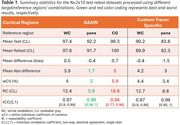 Figure 1
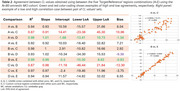 Figure 2
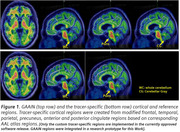 Figure 3
Peer Reviews
No public reviews on file for this paper yet. If you reviewed it on a platform where reviews are public (OpenReview, ICLR, NeurIPS, ICML), you can paste yours below so the community can read it here.
Videos
No videos yet. Explain this paper in a talk, walkthrough, or lecture? Add one.
Taxonomy
TopicsDementia and Cognitive Impairment Research · Alzheimer's disease research and treatments · Intracerebral and Subarachnoid Hemorrhage Research