Assessing neuroinflammation in Alzheimer's disease: A TSPO‐PET study using ER176 and its correlation with amyloid and tau pathology
Mahathi Kandimalla, David N Jacobson, Seokbeen Lim, Jeyeon Lee, Hoon‐Ki Min, Marin E Nycklemoe, Hugo Botha, Jonathan Graff‐Radford, David T. Jones, Prashanthi Vemuri, Kejal Kantarci, David S. Knopman, Clifford R. Jack, Ronald Petersen, Val J Lowe

TL;DR
This study uses ER176 PET imaging to show that neuroinflammation increases with Alzheimer's disease progression and is linked to amyloid and tau pathology.
Contribution
The study demonstrates ER176's utility in detecting early and progressive neuroinflammation in Alzheimer's disease.
Findings
Neuroinflammation is higher in cognitively unimpaired individuals with amyloid positivity compared to those without.
Alzheimer's disease shows more widespread neuroinflammation in temporal, occipital, and parietal lobes.
Neuroinflammation correlates with both amyloid and tau pathology as the disease progresses.
Abstract
Neuroinflammation plays a crucial role in neuronal damage, synaptic dysfunction, and impaired neurogenesis, significantly contributing to Alzheimer's Disease (AD) progression. To address this, we assessed ER176's effectiveness in detecting neuroinflammation in cognitively unimpaired (CU) A–, CU A+, mild cognitive impairment (MCI), and AD participants, with a particular focus on their amyloid and tau status. This research aims to help identify suitable candidates for specialized treatment when adversely impacted by neuroinflammation. Participants from the Mayo Clinic Study of Aging were recruited for this study. The study included four participant groups: CU A– (n = 25), CU A+ (n = 25), MCI A+ (n = 25), and AD (n = 15). We explored the variations in neuroinflammation PET results among different groups. When compared to CU A–, both CU A+ and MCI A+ groups (Figure 1) showed greater…
Genes, proteins, chemicals, diseases, species, mutations and cell lines named across the full text — each resolved to its canonical identifier and authoritative record.
Click any figure to enlarge with its caption.
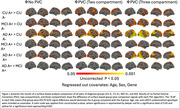 Figure 1
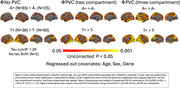 Figure 2
Peer Reviews
No public reviews on file for this paper yet. If you reviewed it on a platform where reviews are public (OpenReview, ICLR, NeurIPS, ICML), you can paste yours below so the community can read it here.
Videos
No videos yet. Explain this paper in a talk, walkthrough, or lecture? Add one.
Taxonomy
TopicsAlzheimer's disease research and treatments · Dementia and Cognitive Impairment Research · Neuroinflammation and Neurodegeneration Mechanisms