A multisite evaluation of machine learning classifiers to predict progression to mild cognitive impairment using multimodal imaging
Braden Yang, Tom Earnest, Murat Bilgel, Tammie L.S. Benzinger, Brian A. Gordon, Aristeidis Sotiras

TL;DR
This study uses machine learning to predict which people with early Alzheimer's signs will develop mild cognitive impairment, using brain imaging data from multiple research sites.
Contribution
The study evaluates machine learning models across multiple datasets to predict MCI progression using multimodal imaging and identifies the most effective features and models.
Findings
Logistic regression performed best with A4 and ADNI testing sets, achieving AUCs of 0.7391 and 0.8367, respectively.
Omitting volumetric features caused the largest drop in performance for A4 and OASIS testing sets.
ML models using multimodal imaging showed robustness across external testing sites.
Abstract
Predicting progression to mild cognitive impairment (MCI) and dementia in preclinical AD patients is crucial for proper recruitment into anti‐amyloid clinical trials. We evaluated the predictive ability of machine learning (ML) classifiers for distinguishing MCI‐progressors from non‐progressors using baseline amyloid positron emission tomography (PET) and magnetic resonance imaging (MRI) features as predictors. We selected cognitively‐normal, amyloid‐positive participants from ADNI (N = 86, 36 progressors), OASIS (N = 56, 12 progressors), and A4 (N = 210, 79 progressors). Subjects were classified as stable (remain CDR=0 at least 3 years from baseline) or progressor (convert to CDR>0 within 3 years of baseline). Each subject's first amyloid‐positive [18F]‐florbetapir PET scan and matching T1‐weighted MRI underwent standard PET‐MRI processing to obtain 86 regions‐of‐interest, from which…
Genes, proteins, chemicals, diseases, species, mutations and cell lines named across the full text — each resolved to its canonical identifier and authoritative record.
Click any figure to enlarge with its caption.
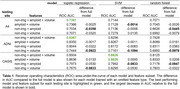 Figure 1
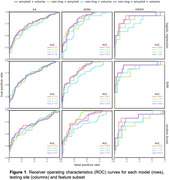 Figure 2
Peer Reviews
No public reviews on file for this paper yet. If you reviewed it on a platform where reviews are public (OpenReview, ICLR, NeurIPS, ICML), you can paste yours below so the community can read it here.
Videos
No videos yet. Explain this paper in a talk, walkthrough, or lecture? Add one.
Taxonomy
TopicsDementia and Cognitive Impairment Research · Intracerebral and Subarachnoid Hemorrhage Research · Alzheimer's disease research and treatments