Ventricle Enlargement is Negatively Correlated with Aβ38 in human CSF
Yansheng Zheng, Seyyed Ali Hosseini, Joseph Therriault, Brandon J Hall, Etienne Aumont, Arthur C. Macedo, Lydia Trudel, Yi‐Ting Wang, Nesrine Rahmouni, Stijn Servaes, Gleb Bezgin, Jaime Fernandez Arias, Tevy Chan, Jenna Stevenson, Kely Monica Quispialaya Socualaya, Wan Lu Jia

TL;DR
Higher levels of Aβ38 in cerebrospinal fluid are linked to smaller ventricles in Alzheimer's disease, suggesting a connection between Aβ clearance and brain structure.
Contribution
This study reveals a novel negative correlation between CSF Aβ38 levels and ventricular enlargement in Alzheimer's disease.
Findings
CSF Aβ38 levels were significantly lower in Aβ-positive individuals compared to Aβ-negative individuals.
CSF Aβ38 levels were negatively correlated with lateral ventricle and choroid plexus volumes.
Aβ38 and Aβ42 levels were positively correlated, suggesting a metabolic link in Aβ processing.
Abstract
Senile plaques in Alzheimer's disease (AD) primarily consist of Aβ42, while Aβ38 is a shorter isoform cleaved from Aβ42. Higher cerebrospinal fluid (CSF) Aβ38 levels have been linked to slower cognitive decline and a reduced risk of developing AD dementia. Ventricular enlargement, a CSF‐related abnormality in AD, is characterized by changes in lateral ventricle volume (LVV) and choroid plexus volume (CPV). This enlargement is associated with brain atrophy and cognitive decline, highlighting its relevance as a marker of disease progression. A total of 204 individuals from the TRIAD cohort were analyzed including, 133 cognitively unimpaired (CU), 34 mild cognitive impaired (MCI) due to AD, and 37 AD dementia individuals. Aβ‐PET SUVR determined Aβ positivity. The levels of CSF Aβ38 and 42 were quantified by a novel nucleic acid linked immuno‐sandwich assay (NULISA). LVV and CPV in native…
Genes, proteins, chemicals, diseases, species, mutations and cell lines named across the full text — each resolved to its canonical identifier and authoritative record.
Click any figure to enlarge with its caption.
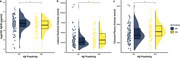 Figure 1
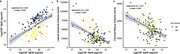 Figure 2
Peer Reviews
No public reviews on file for this paper yet. If you reviewed it on a platform where reviews are public (OpenReview, ICLR, NeurIPS, ICML), you can paste yours below so the community can read it here.
Videos
No videos yet. Explain this paper in a talk, walkthrough, or lecture? Add one.
Taxonomy
TopicsDementia and Cognitive Impairment Research · Cerebrospinal fluid and hydrocephalus · Alzheimer's disease research and treatments