WMH Growth/Regression Computation Method Can Serve as A Sensitive Neuroimaging Biomarker for CAA
Michael Tyler Jessup, Ahmed A Bahrani, David K Powell, Larry B Goldstein, Gregory A Jicha

TL;DR
A new method to track white matter changes in the brain can better detect a disease linked to dementia than traditional methods.
Contribution
A novel longitudinal pipeline for computing white matter hyperintensity growth and regression is proposed as a sensitive biomarker for cerebral amyloid angiopathy.
Findings
WMH growth showed a statistically significant difference between CAA+ and CAA− groups (p < 0.04).
Conventional volume subtraction failed to distinguish CAA+ from CAA− (p = 0.067).
Dynamic WMH growth analysis is more sensitive than static volumetric methods for CAA detection.
Abstract
Cerebral amyloid angiopathy (CAA) is frequently associated with cognitive impairment and other types of dementia and can lead to lobar cerebral microbleeds and be associated with an increased burden of white matter hyperintensities (WMH). Traditional WMH quantification methods, such as simple volume subtraction, often fail to show the dynamic changes of WMH within subject, as they do not distinguish between WMH growth and regression. This study evaluates whether a novel longitudinal WMH growth and regression pipeline, validated within the MarkVCID consortium, can better differentiate CAA‐positive (CAA+) from CAA‐negative (CAA−) individuals. Longitudinal (12‐month follow‐up) 3D FLAIR and T1‐weighted MRI scans (n = 78) from the University of Kentucky were analyzed using the WMH growth/regression pipeline to compute the WMH growth and regression volumes and location with subject over…
Genes, proteins, chemicals, diseases, species, mutations and cell lines named across the full text — each resolved to its canonical identifier and authoritative record.
Click any figure to enlarge with its caption.
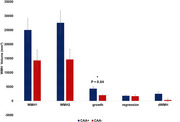 Figure 1
Peer Reviews
No public reviews on file for this paper yet. If you reviewed it on a platform where reviews are public (OpenReview, ICLR, NeurIPS, ICML), you can paste yours below so the community can read it here.
Videos
No videos yet. Explain this paper in a talk, walkthrough, or lecture? Add one.
Taxonomy
TopicsIntracerebral and Subarachnoid Hemorrhage Research · Dementia and Cognitive Impairment Research · Cerebrospinal fluid and hydrocephalus