Age effects on brain network dynamics at different sleep stages
Sebastian Moguilner, Shahab Haghayegh, Agustin Ibanez, Kun Hu

TL;DR
This study finds that aging affects brain network interactions during sleep, with older adults showing reduced higher-order brain activity patterns.
Contribution
The study introduces a novel higher-order interaction measure (O-info) to detect age-related changes in brain network dynamics during sleep.
Findings
Older adults showed lower O-info values during multiple sleep stages compared to young adults.
O-info outperformed AEC in distinguishing age groups during both wakefulness and sleep.
Reduced O-info suggests aging may impair compensatory brain network mechanisms.
Abstract
Brain aging is associated with functional changes, including sleep dynamics as characterized by more wake‐up/fragmentations and less deep or REM (rapid‐eye‐movement) sleep. The aim of this study is to determine the age effects on brain network connectivity (BNC: interactions among different regions) at different sleep/wake stages. We analyzed overnight average‐referenced 4‐channel EEG (F3, F4, C3, C4) from the Bitbrain Open Access Sleep database, including 84 young adults (<55 years; mean age = 29.61 ± 6.71[SD]) and 42 older adults (≥55 years; mean age = 67.19 ± 6.46). To assess BNC in each sleep/wake stage (wake, N1, N2, N3, REM), we obtained (1) the amplitude envelope correlation (AEC) that quantifies pairwise interaction or functional connectivity (FC) between each pair of two EEG channels; and (2) the O‐info metric in triplets of brain regions (2 channels vs the rest of the…
Click any figure to enlarge with its caption.
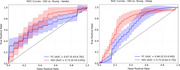 Figure 1
 Figure 2
Peer Reviews
No public reviews on file for this paper yet. If you reviewed it on a platform where reviews are public (OpenReview, ICLR, NeurIPS, ICML), you can paste yours below so the community can read it here.
Videos
No videos yet. Explain this paper in a talk, walkthrough, or lecture? Add one.
Taxonomy
TopicsFunctional Brain Connectivity Studies · EEG and Brain-Computer Interfaces · Sleep and Wakefulness Research