Lower resting‐state phasic locus coeruleus activity is associated with cortical tau accumulation and cognitive decline in preclinical Alzheimer's disease
Prokopis C. Prokopiou, Aaron P. Schultz, Kathryn V Papp, David H Salat, Dorene M. Rentz, Reisa A. Sperling, Keith A. Johnson, Heidi I.L. Jacobs

TL;DR
Lower activity in the brain's locus coeruleus is linked to more tau buildup and faster cognitive decline in early Alzheimer's disease.
Contribution
This study links phasic locus coeruleus activity to cortical tau accumulation and cognitive decline in preclinical Alzheimer's using novel BOLD modeling.
Findings
Lower phasic LC activity is associated with greater entorhinal tau deposition and faster tau accumulation in the medial temporal lobe.
Reduced LC activity correlates with steeper cognitive decline, especially in memory-related tests.
The impact of LC activity on cognition is stronger at higher levels of inferior-temporal tau.
Abstract
The brainstem noradrenergic locus coeruleus (LC) is among the earliest regions to accumulate Alzheimer's disease (AD)‐related hyperphosphorylated tau. Lower novelty‐related LC activity in older cognitively healthy individuals has been related to greater entorhinal (EC) tau deposition and steeper memory decline. Furthermore, rat models accumulating LC pretangle human tau receiving novelty‐like, phasic optogenetic activation of the LC exhibited resilience against tau's downstream effects on cognition. Using novel modeling approaches to identify phasic‐like activity from BOLD data, we associated in‐vivo phasic‐like, spontaneous LC activity with cortical tau accumulation and cognitive decline in asymptomatic older adults. Ninety‐two participants (56 Female, mean age at baseline=75±9.0 years; Table 1) from the Harvard Aging Brain Study underwent FTP(tau)‐PET and 3T resting‐state BOLD‐fMRI…
Genes, proteins, chemicals, diseases, species, mutations and cell lines named across the full text — each resolved to its canonical identifier and authoritative record.
Click any figure to enlarge with its caption.
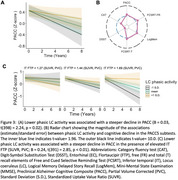 Figure 1
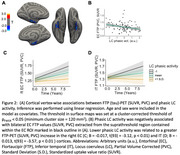 Figure 2
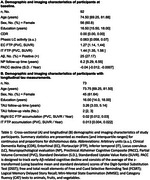 Figure 3
Peer Reviews
No public reviews on file for this paper yet. If you reviewed it on a platform where reviews are public (OpenReview, ICLR, NeurIPS, ICML), you can paste yours below so the community can read it here.
Videos
No videos yet. Explain this paper in a talk, walkthrough, or lecture? Add one.
Taxonomy
TopicsFunctional Brain Connectivity Studies · Alzheimer's disease research and treatments · Dementia and Cognitive Impairment Research