Sex Differences in the Association Between Cardiovascular Factors and White Matter Hyperintensities in a Latin American Cohort
Florencia Altschuler, Veronica Canziani, Agustin Ibanez, Vicente Medel, Cecilia Gonzalez Campo

TL;DR
This study finds that cardiovascular risk factors are more strongly linked to brain changes in Latin American women compared to men, which may explain why women are more vulnerable to dementia.
Contribution
The study reveals sex-specific associations between cardiovascular risk factors and white matter hyperintensities in a Latin American cohort.
Findings
Cardiovascular risk factors like blood pressure and smoking show stronger associations with white matter hyperintensities in women.
Regression models indicate significant sex-specific links between risk factors and brain changes in different dementia groups.
Latin American women exhibit a higher vulnerability to cerebrovascular contributions to neurodegeneration.
Abstract
Dementia incidence and progression differ between men and women, with women showing increased vulnerability. Sex differences in cerebrovascular pathology may contribute to variations in neurodegenerative disease progression. White matter hyperintensities (WMH), a marker of small vessel disease, are influenced by cardiovascular factors such as blood pressure (BP), heart rate (HR), body mass index (BMI), diabetes, and smoking. This study examines whether these factors have stronger associations with WMH in women compared to men across diagnostic groups: cognitively normal (CN), Alzheimer's disease (AD), and frontotemporal dementia (FTD). We analyzed data from ReDLat, a consortium spanning across seven Latin American and Caribbean (LAC) countries, with 1,052 participants (66.7% women, mean age 66 years, SD = 10.5). The cohort included 510 CN, 392 AD, and 150 FTD patients. WMHs were…
Genes, proteins, chemicals, diseases, species, mutations and cell lines named across the full text — each resolved to its canonical identifier and authoritative record.
Click any figure to enlarge with its caption.
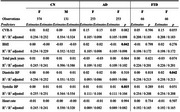 Figure 1
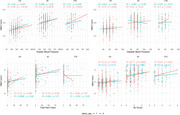 Figure 2
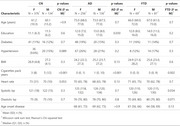 Figure 3
Peer Reviews
No public reviews on file for this paper yet. If you reviewed it on a platform where reviews are public (OpenReview, ICLR, NeurIPS, ICML), you can paste yours below so the community can read it here.
Videos
No videos yet. Explain this paper in a talk, walkthrough, or lecture? Add one.
Taxonomy
TopicsDementia and Cognitive Impairment Research · Neurological Disease Mechanisms and Treatments · Menopause: Health Impacts and Treatments