Lifestyle and health signatures of brain pathological and cognitive aging
Niklas Behrenbruch, Svenja Schwarck, Beate Schumann‐Werner, Eóin N. Molloy, Anne Hochkeppler, Anna‐Therese Büchel, Jose Bernal Moyano, Enise I Incesoy, Berta Garcia‐Garcia, Niklas Vockert, Barbara Morgado, Larissa Fischer, Patrick Müller, Gusalija Behnisch

TL;DR
The study explores how lifestyle and health factors influence brain aging and cognitive decline, finding that an active lifestyle may help maintain cognitive resilience.
Contribution
The novel brain aging index incorporates AD pathology and shows partial mediation of lifestyle factors on cognitive aging.
Findings
An active lifestyle is significantly associated with better brain and cognitive aging indices.
APOE e4 carriers show higher brain aging but not cognitive aging.
Mental leisure activities may support cognitive resilience independent of brain pathology.
Abstract
While aging almost inevitably leads to some degree of cognitive decline, the interindividual heterogeneity in the trajectories of decline raises the question of the extent to which resistance against pathology and cognitive resilience are involved. Using a multimodal approach including neuroimaging, fitness assessment, questionnaire data, and Alzheimer's disease (AD) genetic risk and plasma biomarkers (Figure 1), we aimed to characterize latent structures of lifestyle, mental and bodily health, estimate indices of brain (pathological) and cognitive aging, and relate lifestyle/health profiles and AD genetic risk to these indices. We analyzed a subsample of 211 cognitively normal older adults aged ≥ 60 years from an ongoing study (CRC1436) (age=71.0±7.4years, 46% female). Using principal component analysis, we derived seven principal components (PCs) that capture latent structures of…
Genes, proteins, chemicals, diseases, species, mutations and cell lines named across the full text — each resolved to its canonical identifier and authoritative record.
Click any figure to enlarge with its caption.
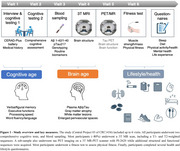 Figure 1
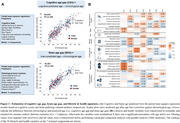 Figure 2
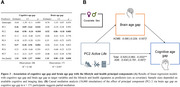 Figure 3
Peer Reviews
No public reviews on file for this paper yet. If you reviewed it on a platform where reviews are public (OpenReview, ICLR, NeurIPS, ICML), you can paste yours below so the community can read it here.
Videos
No videos yet. Explain this paper in a talk, walkthrough, or lecture? Add one.
Taxonomy
TopicsDementia and Cognitive Impairment Research · Functional Brain Connectivity Studies · Traumatic Brain Injury Research