Evaluating associations between vascular and cardiometabolic‐based risk composites with aging and Alzheimer's disease related neuroimaging biomarkers in a heterogeneous community‐based cohort
Kathryn H Alphin, Melissa M. Rundle, Chinedu T Udeh‐Momoh, Da Ma, Timothy M. Hughes, Trey R. Bateman, Suzanne Craft, Marc D. Rudolph

TL;DR
This study explores how vascular and cardiometabolic risk scores relate to brain health markers in older adults, finding that these scores are linked to signs of aging and Alzheimer's disease.
Contribution
The study provides new insights into how different risk composites relate to neuroimaging biomarkers in a diverse aging population.
Findings
All risk scores were negatively associated with total brain volume and positively correlated with white matter hyperintensities.
The Framingham Risk Score showed the strongest associations with neuroimaging measures of brain health.
Risk scores were not associated with cortical thickness or amyloid deposition.
Abstract
Research examining how vascular and cardiometabolic‐based risk composites like the Cardiovascular risk factors, Aging, and Incidence of Dementia Risk Score (CAIDE), Cardiometabolic Index (CMI), and Framingham Risk Score (FRS) are associated with AD‐related neuroimaging biomarkers in diverse cohorts is limited. We thus compared CAIDE, CMI, and FRS composites to neuroimaging‐based neurodegenerative markers in a heterogeneous community‐based cohort. Adults 55 and older were recruited into the Clinical Core of the Wake Forest Alzheimer's Disease Research Center (WFADRC) between 2016 and 2024 and underwent standard evaluation in accordance with the National Alzheimer's Coordinating Center (NACC) protocols (Table 1). Demographics, vital measurements, and lifestyle information were collected to calculate CAIDE, CMI, and FRS. Baseline neuroimaging measures of total brain and hippocampal volume…
Genes, proteins, chemicals, diseases, species, mutations and cell lines named across the full text — each resolved to its canonical identifier and authoritative record.
Click any figure to enlarge with its caption.
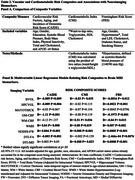 Figure 1
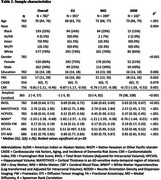 Figure 2
Peer Reviews
No public reviews on file for this paper yet. If you reviewed it on a platform where reviews are public (OpenReview, ICLR, NeurIPS, ICML), you can paste yours below so the community can read it here.
Videos
No videos yet. Explain this paper in a talk, walkthrough, or lecture? Add one.
Taxonomy
TopicsDementia and Cognitive Impairment Research · Neurological Disease Mechanisms and Treatments · Alzheimer's disease research and treatments