The Top 100 Most Cited Articles on Epilepsy Surgery: A Bibliometric Analysis of the Literature
Jacob Gould, Saarang Patel, Bipin Chaurasia

TL;DR
This study identifies the 100 most cited epilepsy surgery papers, showing trends in research focus and geographic contributions over time.
Contribution
A bibliometric analysis of the top 100 cited epilepsy surgery articles, revealing key themes and influential institutions.
Findings
Most top-cited articles were published between 1992 and 2001.
Temporal lobe epilepsy and resective surgery were the dominant research themes.
The U.S. led in contributions, with UCLA, Cleveland Clinic, and Mayo Clinic being the most productive institutions.
Abstract
Epilepsy surgery has undergone significant evolution over the past century, driven by advances in neuroimaging, neurophysiology, and surgical technique. As the volume of published research continues to expand, identifying the most influential studies is essential to understanding the development and current landscape of this field. A comprehensive search of the Scopus database was performed in March 2022 using a detailed Boolean strategy to identify publications related to epilepsy surgery. Articles were ranked by citation count, and the 100 most cited were analyzed for bibliometric parameters including citation frequency, impact factor, year of publication, geographic origin, journal distribution, authorship, and thematic focus. Data was compiled and analyzed using Microsoft Excel (Microsoft Corporation, Redmond, Washington, United States). The top 100 most cited articles accrued a…
Genes, proteins, chemicals, diseases, species, mutations and cell lines named across the full text — each resolved to its canonical identifier and authoritative record.
Click any figure to enlarge with its caption.
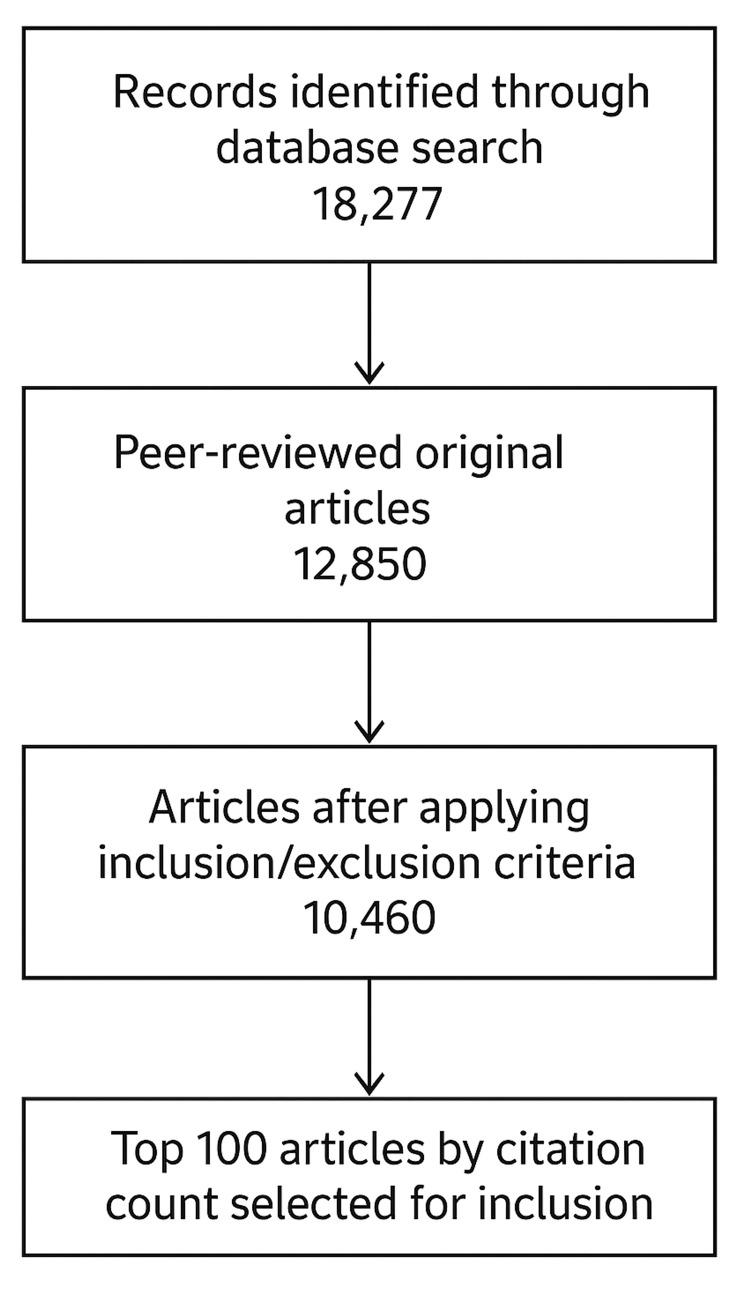 Figure 1
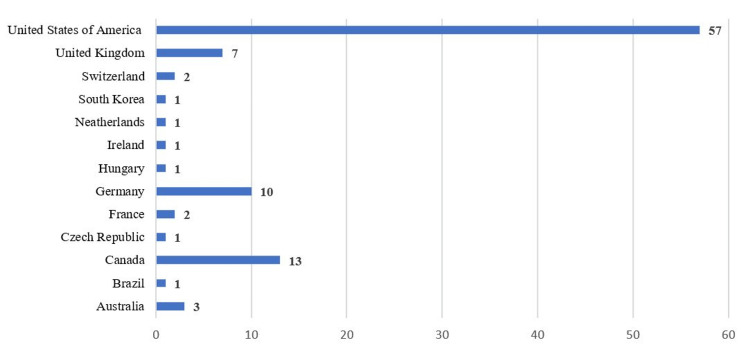 Figure 2
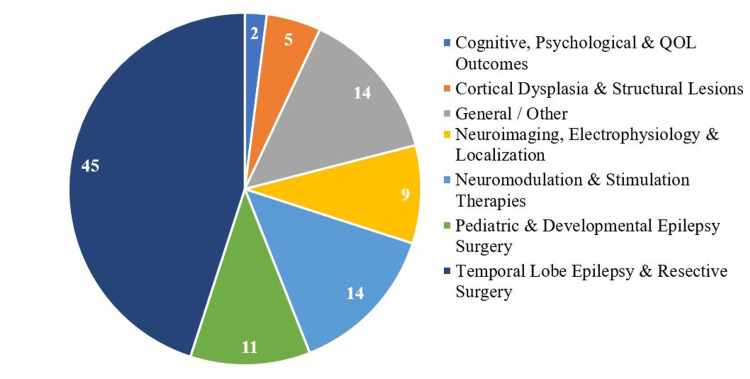 Figure 3
| Concept | Key words search | Boolean logic |
| Epilepsy surgery | epilepsy surgery | OR |
| Epilepsy + Surgical procedures | epilepsy AND ( "resect*" OR "lesionectomy" OR "corpus callosotomy" OR "hemispherectomy" OR "hemispherotomy" OR "lobectomy" OR "cortical excision" OR "multiple subpial transection*" OR "posterior quadrant disconnection" OR "posterior quadrantectomy" OR "temporal parietal occipital disconnection" OR "temporal-parietal-occipital disconnection" OR "tempoparietooccipital disconnection" OR "radiosurgery" OR "gamma knife" ) | OR |
| Neuromodulation | deep brain stimulation OR "vagal nerve stimulation" OR "vagus nerve stimulation" OR "responsive neurostimulation" | OR |
| Full combined strategy | TITLE-ABS-KEY ( "epilepsy surgery" OR ( "epilepsy" AND ( "resect*" OR "lesionectomy" OR "corpus callosotomy" OR "hemispherectomy" OR "hemispherotomy" OR "lobectomy" OR "cortical excision" OR "multiple subpial transection*" OR "posterior quadrant disconnection" OR "posterior quadrantectomy" OR "temporal parietal occipital disconnection" OR "temporal-parietal-occipital disconnection" OR "tempoparietooccipital disconnection" OR "radiosurgery" OR "gamma knife" OR "deep brain stimulation" OR "vagal nerve stimulation" OR "vagus nerve stimulation" OR "responsive neurostimulation" ) ) ) | |
| Number of Citations | Article Title |
| 2237 | A randomized, controlled trial of surgery for temporal-lobe epilepsy [ |
| 962 | Electrical stimulation of the anterior nucleus of thalamus for treatment of refractory epilepsy [ |
| 791 | Vagus nerve stimulation therapy for partial-onset seizures: A randomized active-control trial [ |
| 737 | Current concepts: Surgery for seizures [ |
| 648 | Characteristics of medial temporal lobe epilepsy: I. Results of history and physical examination [ |
| 617 | Early surgical therapy for drug-resistant temporal lobe epilepsy: A randomized trial [ |
| 506 | Long-term treatment with vagus nerve stimulation in patients with refractory epilepsy [ |
| 487 | A randomized controlled trial of chronic vagus nerve stimulation for treatment of medically intractable seizures [ |
| 469 | Vagus Nerve Stimulation for Treatment of Partial Seizures: 1. A Controlled Study of Effect on Seizures [ |
| 456 | Preoperative MRI predicts outcome of temporal lobectomy: An actuarial analysis [ |
Peer Reviews
No public reviews on file for this paper yet. If you reviewed it on a platform where reviews are public (OpenReview, ICLR, NeurIPS, ICML), you can paste yours below so the community can read it here.
Videos
No videos yet. Explain this paper in a talk, walkthrough, or lecture? Add one.
Taxonomy
TopicsEpilepsy research and treatment · Neurological disorders and treatments · Cerebrospinal fluid and hydrocephalus
Introduction and background
Epilepsy is one of the most prevalent chronic neurological disorders, which affects over 50 million individuals worldwide [1]. For patients with drug-resistant epilepsy, surgical intervention remains the most effective treatment option to achieve seizure control and improve quality of life [2,3]. Since the earliest resective procedures performed in the early 20th century, epilepsy surgery has evolved into a multidisciplinary field encompassing advances in neuroimaging, neurophysiology, neuronavigation, and minimally invasive techniques [4]. Over the past several decades, substantial research efforts have contributed to defining surgical indications, refining operative strategies, and improving postoperative outcomes.
The exponential growth of scientific output in epilepsy surgery has generated a vast and heterogeneous body of literature. Identifying the most influential contributions within this field is essential for understanding its development and guiding future research priorities. Bibliometric analysis provides a quantitative approach to assessing the academic influence and impact of scientific publications. Through citation-based metrics and publication trends, bibliometrics can help elucidate the evolution of research themes, collaboration networks, and institutional contributions for epilepsy surgery research. Furthermore, such analyses can assist clinicians and investigators in recognizing seminal works that have shaped current practice, while also highlighting underrepresented areas warranting further investigation [5].
The objective of this study was to identify and characterize the 100 most cited articles on epilepsy surgery. By conducting a comprehensive bibliometric review, we aimed to delineate the most impactful contributions to the field, analyze temporal and geographic publication trends, and provide insights into the progression of research and innovation in the surgical management of epilepsy.
Review
Methods
In March 2022, the Scopus database was searched for all published articles related to epilepsy surgery. Scopus was selected for its broad coverage of biomedical and surgical journals compared with other databases. The search did not have time restrictions, and all original and review articles were included. To ensure comprehensive capture of the epilepsy surgery literature, a detailed Boolean search strategy was applied using the query outlined in Table 1.
These keywords were searched in the title, abstract, author, and keywords fields to ensure comprehensive inclusion of literature related to epilepsy surgery.
Only English-language articles focusing on the surgical management of epilepsy were included. Articles were screened for relevance by title, by abstract, and, as necessary, by full text. Publications not directly related to epilepsy surgery, such as those dealing exclusively with medical management or basic neuroscience without surgical correlation, were excluded. To minimize bias, two reviewers (SP and JG) independently conducted the search and screening. Both reviewers generated separate lists of the 100 most-cited articles, and discrepancies were resolved through discussion. When more than two articles had identical citation counts, they were assigned equal ranks with subsequent adjustments to the ranking order. The following variables were extracted for each article: (i) title, (ii) year of publication, (iii) authors, (iv) institution of first author, (v) country, (vi) journal, (vii) impact factor in 2019, (viii) total number of citations, (ix) average citations per year, (x) type of epilepsy, and (xi) type of surgery/intervention.
All data were compiled using Microsoft Excel (Microsoft Corporation, Redmond, Washington, United States) for descriptive analysis. Thematic categorization was performed manually.
Results
The initial database search yielded 18,277 records. Limiting results to peer-reviewed original research articles reduced the dataset to 12,850 articles. After applying predefined inclusion and exclusion criteria, 10,460 articles remained eligible for evaluation. From this pool, the top 100 most-cited articles were selected for full analysis based on citation count [6-105]. These results are summarized in Figure 1.
Search strategy
Collectively, the top 100 articles accumulated 29,843 citations with a mean of 298 citations per article and a median of 226.5 citations per article (range: 182-2237). The articles had an average 2019 impact factor of 10.77. The publication years for the top-cited papers demonstrate a clear surge in high-impact epilepsy surgery research beginning in the 1990s and peaking in the subsequent decade. The majority of these publications were produced between 1992 and 2001, with the greatest number of highly cited papers published during 1993. The most cited article was “A randomized, controlled trial of surgery for temporal-lobe epilepsy” by Wiebe et al., published in the New England Journal of Medicine in 2001 [6]. The top 10 cited papers are summarized in Table 2, with a complete list of the top 100 most cited papers provided in the Appendices.
The 100 most cited articles were published across 29 journals. The journals with the highest number of publications were Neurology (n = 17), Epilepsia (n = 16), and Annals of Neurology (n = 13). Geographically, the majority of publications had first authors that originated from the United States (n = 57), Canada (n = 13), Germany (n = 10), and the United Kingdom (n = 7). The geographic breakdown is shown in Figure 2. First authors represented 64 different institutions, and the University of California, Los Angeles (UCLA) (n = 9), the Cleveland Clinic Foundation (n = 7), Mayo Clinic (n = 6), and McGill University (n = 6) were the most represented institutions in the dataset.
The 100 most cited articles distributed according to country of the first author
The bibliometric analysis highlighted the contributions of a few highly prolific authors. The most frequently featured authors, each with a sustained impact over multiple decades, included Jerome Engel Jr. (n = 5), Hans Lüders (n = 5), and Gary Mathern (n = 5).
The analysis of surgical procedures within the top-cited literature reflected the historical and clinical dominance of resective surgery for temporal lobe epilepsy (TLE). Procedures focused on the temporal lobe, including temporal lobectomy and selective amygdalohippocampectomy, were the most frequently studied. Neuromodulation therapies also represented a significant segment of the highly-cited work with vagus nerve stimulation as the subject of eight papers (primarily originating from early randomized controlled trials in the 1990s). More advanced neuromodulation therapies, such as deep-brain stimulation (DBS) and responsive cortical stimulation, accounted for two papers. Finally, resective procedures for pediatric epilepsy, such as hemispherectomy, were highly discussed.
Thematically, the most frequent topics among the top-cited papers centered around five key themes: (i) TLE and resective surgery outcomes, (ii) neuromodulation and stimulation-based therapies, (iii) pediatric and developmental epilepsy surgery, (iv) neuroimaging, electrophysiology, and localization techniques, and (v) cognitive, psychological, and quality of life outcomes. Fourteen papers did not fit within the primary thematic categories and were classified as “general/other”. These articles encompassed a range of topics, including historical overviews of epilepsy surgery, global access and healthcare disparities, cost-effectiveness and outcome prediction, and broad discussions of surgical principles, methodology, and ethical considerations. Figure 3 illustrates the distribution of research themes.
The top 100 most cited articles distributed according to thematic representationQOL: quality of life
Discussion
This bibliometric analysis identifies and characterizes the 100 most cited articles in epilepsy surgery and offers insight into the historical trajectory and thematic evolution of this field. To our knowledge, this is the first bibliometric analysis focused exclusively on the most cited publications in epilepsy surgery. Previous bibliometric studies have examined the broader epilepsy literature, but few have delineated the specific impact of surgical research within this field [106]. The majority of highly cited studies originated from North America and were published between the 1990s and early 2000s, which corresponds to a period marked by major advances in neuroimaging, electrophysiological mapping, and microsurgical techniques [107]. This surge in impactful research reflects the maturation of epilepsy surgery as a scientific discipline and its transition from an experimental intervention to an evidence-based therapy.
Resective procedures for TLE dominated the most influential literature, reflecting the clinical centrality of mesial temporal sclerosis as a surgically remediable cause of epilepsy [108]. Landmark randomized trials, most notably that of Wiebe et al. (2001), firmly established the superiority of surgery over continued medical therapy in drug-resistant TLE [6]. Subsequent high-impact studies built on this foundation to refine patient selection, surgical approach, and long-term outcome assessment. The prominence of these works underscores how large, homogeneous patient populations and reproducible outcomes positioned TLE surgery as the cornerstone of modern epilepsy surgery research [6-105].
While temporal resections dominated early work, the emergence of neuromodulatory therapies, including vagus nerve stimulation (VNS), DBS, and responsive neurostimulation, introduced a new era of surgical innovation. These modalities expanded treatment to patients with multifocal or eloquent-region epilepsies who were previously poor surgical candidates [6-105]. Highly cited early VNS and DBS trials highlight the pivotal role of technological innovation in broadening surgical indications and fostering collaboration across disciplines. More recent literature increasingly emphasizes minimally invasive procedures such as laser interstitial thermal therapy and focuses on patient-centered outcomes, including cognition, psychosocial function, and quality of life [109,110]. This shift reflects a broader redefinition of surgical success from seizure control alone toward comprehensive well-being.
Geographically, North American centers, particularly UCLA, the Cleveland Clinic, Mayo Clinic, and McGill University, contributed disproportionately to the most cited work, illustrating the early concentration of epilepsy surgery expertise in a few specialized institutions [6-105]. However, the growing international representation in more recent years signals the potential global dissemination of epilepsy surgery programs and research, which may be aided by standardized protocols and consensus guidelines from organizations such as the International League Against Epilepsy (ILAE) [111]. Moving forward, the field is likely to continue evolving toward less invasive and technology-driven interventions.
Limitations
This study has several limitations inherent to bibliometric analyses. Citation counts may not fully capture the current clinical relevance or quality of individual studies, as they can be influenced by publication age, journal visibility, and self-citation practices. Restricting inclusion to the Scopus database and English-language articles may have excluded influential work published elsewhere. Finally, citation-based influence reflects academic impact rather than direct patient or societal benefit and should therefore be interpreted as one dimension of scholarly importance.
Conclusions
This bibliometric review highlights the landmark studies that have defined the evolution of epilepsy surgery from early temporal lobectomy series to contemporary neuromodulation and imaging-guided techniques. The analysis underscores the dominance of temporal lobe surgery research and the rise of minimally invasive and stimulation-based interventions. Continued global collaboration and innovation will be essential to advance surgical care and improve outcomes for patients with drug-resistant epilepsy.
The reference list from the paper itself. Each links out to its DOI / PubMed record.
- 1Editorial: epidemiology of epilepsy and seizures Front Epidemiol Chen Z Brodie MJ Ding D Kwan P 1273163320233845594210.3389/fepid.2023.1273163 PMC 10911047 · doi ↗ · pubmed ↗
- 2Practical Neurology: Surgical management of intractable epilepsy Practical Neurology September Kang J 2018 https://practicalneurology.com/diseases-diagnoses/epilepsy-seizures/surgical-management-of-intractable-epilepsy/30178/
- 3Drug-resistant epilepsy and surgery Curr Neuropharmacol Sheng J Liu S Qin H Li B Zhang X 17281620182847456510.2174/1570159 X 15666170504123316 PMC 5771378 · doi ↗ · pubmed ↗
- 4The evolution of epilepsy surgery Neurol India Polkey CE 05165201710.4103/neuroindia.NI_1028_1628281495 · doi ↗ · pubmed ↗
- 5Bibliometrics: methods for studying academic publishing Perspect Med Educ Ninkov A Frank JR Maggio LA 1731761120223491402710.1007/s 40037-021-00695-4PMC 9240160 · doi ↗ · pubmed ↗
- 6A randomized, controlled trial of surgery for temporal-lobe epilepsy N Engl J Med Wiebe S Blume WT Girvin JP Eliasziw M 3113183452001 https://doi.org/10.1056/nejm 2001080234505011148468710.1056/NEJM 200108023450501 · doi ↗ · pubmed ↗
- 7Electrical stimulation of the anterior nucleus of thalamus for treatment of refractory epilepsy Epilepsia Fisher R Salanova V Witt T 899908512010 https://doi.org/10.1111/j.1528-1167.2010.02536.x 2033146110.1111/j.1528-1167.2010.02536.x · doi ↗ · pubmed ↗
- 8Vagus nerve stimulation therapy for partial-onset seizures: a randomized active-control trial Neurology Handforth A De Giorgio CM Schachter SC 4855511998967477710.1212/wnl.51.1.48 · doi ↗ · pubmed ↗