Synapse Protein Signatures in Cerebrospinal Fluid and Plasma Predict Cognitive Maintenance vs Decline in Alzheimer's Disease
Tony Wyss‐Coray, Hamilton Se‐Hwee Oh

TL;DR
A new biomarker based on synapse proteins in cerebrospinal fluid and blood can predict cognitive decline in Alzheimer's disease more accurately than existing markers.
Contribution
Identifies a novel synapse protein ratio (YWHAG:NPTX2) in CSF and plasma as a strong predictor of cognitive outcomes in Alzheimer's disease.
Findings
The CSF YWHAG:NPTX2 ratio explains significant variance in cognitive impairment beyond existing AD biomarkers.
Plasma proteomic signatures partly mirror the CSF YWHAG:NPTX2 findings, offering a non-invasive alternative.
APOE4 carriers and autosomal dominant-AD mutation carriers show faster increases in YWHAG:NPTX2 with aging.
Abstract
Rates of cognitive decline in Alzheimer's disease (AD) are extremely heterogeneous, with symptom onset occurring between ages 40‐100 years and conversion from mild cognitive impairment (MCI) to AD dementia occurring in 2‐20 years. Biomarkers for amyloid‐beta (Aβ) and tau proteins, the hallmark AD pathologies, have improved diagnosis and drug development but explain only 20‐40% of the variance in AD‐related cognitive impairment (CI). To discover additional biomarkers of CI in AD, we perform cerebrospinal fluid (CSF) proteomics on 3,397 individuals from six major prospective AD case‐control cohorts. Synapse proteins emerge as the strongest correlates of CI, independent of Aβ and tau. Using machine learning, we derive the CSF YWHAG:NPTX2 synapse protein ratio, which explains 27% of the variance in CI beyond CSF PTau181:Aβ42, 10% beyond tau PET, and 28% beyond CSF NfL, GAP43, and Ng in…
Genes, proteins, chemicals, diseases, species, mutations and cell lines named across the full text — each resolved to its canonical identifier and authoritative record.
Click any figure to enlarge with its caption.
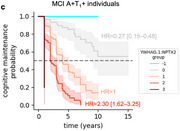 Figure 1
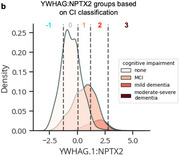 Figure 2
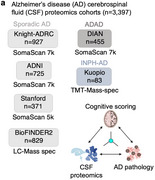 Figure 3
Peer Reviews
No public reviews on file for this paper yet. If you reviewed it on a platform where reviews are public (OpenReview, ICLR, NeurIPS, ICML), you can paste yours below so the community can read it here.
Videos
No videos yet. Explain this paper in a talk, walkthrough, or lecture? Add one.
Taxonomy
TopicsDementia and Cognitive Impairment Research · Alzheimer's disease research and treatments · 14-3-3 protein interactions