Texture analysis as a biomarker for Alzheimer's disease
Y Mukish M Yelanchezian, Catherine A Morgan, Reece P Roberts, Tracy R Melzer, Ian J Kirk, Kiri L Brickell, Nicholas J Cutfield, Campbell J Le Heron, John C Dalrymple‐Alford, Tim J Anderson, Lynette J Tippett

TL;DR
This study explores whether texture analysis of MRI scans can detect early signs of Alzheimer's disease, but finds that volume measurements perform slightly better than texture features in predicting dementia progression.
Contribution
The study evaluates texture analysis as a potential early biomarker for Alzheimer's disease using hippocampal MRI data and machine learning.
Findings
Texture features and hippocampal volume showed significant group differences across AD risk categories.
Volume-based classifiers outperformed texture-based classifiers in predicting dementia conversion.
Texture analysis did not yet demonstrate clear utility as an early biomarker for Alzheimer's risk.
Abstract
In Alzheimer's disease (AD), conventional magnetic resonance imaging (MRI) biomarkers have focused on macroscopic neurodegeneration via atrophy assessment, but measurable volume changes tend to occur later in the disease process. Recent studies suggest that texture analysis (TA) may capture microstructural changes associated with earlier AD pathology, potentially serving as a more sensitive biomarker for early identification of individuals at higher risk of progressing to dementia. TA is a mathematical method that quantifies spatial variation in grayscale values with rougher tissue texture represented by greater grayscale variation. Haralick features are a commonly used set of TA features that measure image heterogeneity, randomness, and smoothness. This study investigated whether Texture Analysis could distinguish between groups at‐risk of AD and classify convertors to dementia from…
Genes, proteins, chemicals, diseases, species, mutations and cell lines named across the full text — each resolved to its canonical identifier and authoritative record.
Click any figure to enlarge with its caption.
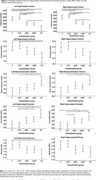 Figure 1
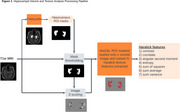 Figure 2
Peer Reviews
No public reviews on file for this paper yet. If you reviewed it on a platform where reviews are public (OpenReview, ICLR, NeurIPS, ICML), you can paste yours below so the community can read it here.
Videos
No videos yet. Explain this paper in a talk, walkthrough, or lecture? Add one.
Taxonomy
TopicsDementia and Cognitive Impairment Research · Radiomics and Machine Learning in Medical Imaging · Advanced Neuroimaging Techniques and Applications