Functional connectivity network identifiability across a multi‐year follow‐up in the Korean Brain Aging Study for the Early Diagnosis and Prediction of AD
Evgeny J. Chumin, Enrico Amico, Sahith Peddireddy, Dahyun Yi, Min Soo Byun, Jun‐Young Lee, Yu Kyeong Kim, Koung Mi Kang, Chul‐Ho Sohn, Shannon L Risacher, Yu‐Chien Wu, Olaf Sporns, Kwangsik Nho, Andrew J. Saykin, Dong Young Lee

TL;DR
This study examines how brain functional connectivity patterns change over time in Alzheimer's disease using MRI scans from a Korean aging study.
Contribution
The study extends the understanding of functional connectivity identifiability in Alzheimer's disease to a four-year follow-up period.
Findings
Identifiability of functional connectivity decreased in Alzheimer's and MCI groups compared to cognitively normal participants.
Most cognitively normal participants maintained high identifiability over four years, while Alzheimer's/MCI groups showed more variability.
The study shows that FC patterns can be matched across visits in many participants, even with a four-year gap.
Abstract
Resting state functional magnetic resonance imaging (rsfMRI) is a promising potential biomarker for diagnostic and prognostic assessment in Alzheimer's disease (AD) as it provides spatial and temporal information on brain functional connectivity (FC). The protracted course of AD necessitates a better understanding of the longitudinal utility of FC. Therefore, we utilized FC identifiability (ability to match scans at different visits from the same patient) to investigate whether participants with varying diagnostic AD severity displayed differential identifiability over two‐ and four‐year follow‐ups. KBASE rsfMRI data from 70 younger and 284 older cognitively normal (yCN, mean age: 38±9.8yo and oCN, 69±8yo), 147 mild cognitive impairment (MCI, 73.5±6.9yo), and 87 AD dementia (72.5±7.8yo) participants at baseline, underwent standard preprocessing and nuisance regression to generate…
Genes, proteins, chemicals, diseases, species, mutations and cell lines named across the full text — each resolved to its canonical identifier and authoritative record.
Click any figure to enlarge with its caption.
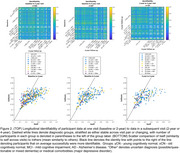 Figure 1
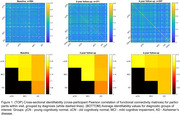 Figure 2
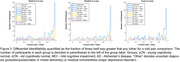 Figure 3
Peer Reviews
No public reviews on file for this paper yet. If you reviewed it on a platform where reviews are public (OpenReview, ICLR, NeurIPS, ICML), you can paste yours below so the community can read it here.
Videos
No videos yet. Explain this paper in a talk, walkthrough, or lecture? Add one.
Taxonomy
TopicsFunctional Brain Connectivity Studies · Dementia and Cognitive Impairment Research · Mental Health Research Topics