Predicting longitudinal accumulation of tau pathology in pre‐clinical population using machine learning: Data from the A4 and LEARN Studies
Melika Saadati, Elizabeth Nemeti, Saima Rathore

TL;DR
This study uses machine learning to predict how tau pathology progresses in people at risk for Alzheimer's before symptoms appear, using PET imaging and genetic data.
Contribution
A novel machine learning approach to forecast individual tau accumulation rates in preclinical Alzheimer's using Flortaucipir-PET and clinical-genetic data.
Findings
XGBoost models achieved strong predictive performance for MUBADA SUVR (R2=0.66) and moderate for Early Tau SUVR (R2=0.42).
Amyloid status and age were significant predictors of tau pathology progression in preclinical Alzheimer's.
Integration of Flortaucipir-PET with clinical and genetic data improves prediction of individual tau accumulation trajectories.
Abstract
The preclinical stages of Alzheimer's disease (AD) represent a critical window, where pathophysiological changes like amyloid and tau accumulation begin years before clinical symptoms emerge. Accurately predicting the longitudinal trajectory of AD during these stages is essential for early intervention, enabling timely therapeutic strategies to slow or prevent progression and improve patient outcomes. Leveraging longitudinal data from the A4 and LEARN studies, we aim to evaluate the effectiveness of Flortaucipir‐PET imaging, along with clinical and genomic information, in forecasting the rate of change in tau pathology through machine learning models. Participants (N = 360) were characterized using clinical (age, amyloid status, sex), genetic (APOE‐ε4), and imaging biomarkers (regional Flortaucipir‐PET standardized uptake volume ratio [SUVR] in MUBADA and Early Tau regions) (Table 1).…
Genes, proteins, chemicals, diseases, species, mutations and cell lines named across the full text — each resolved to its canonical identifier and authoritative record.
Click any figure to enlarge with its caption.
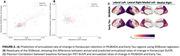 Figure 1
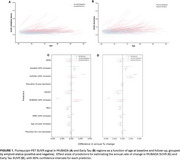 Figure 2
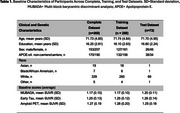 Figure 3
Peer Reviews
No public reviews on file for this paper yet. If you reviewed it on a platform where reviews are public (OpenReview, ICLR, NeurIPS, ICML), you can paste yours below so the community can read it here.
Videos
No videos yet. Explain this paper in a talk, walkthrough, or lecture? Add one.
Taxonomy
TopicsDementia and Cognitive Impairment Research · Alzheimer's disease research and treatments · Machine Learning in Healthcare