Multimodal predictors of cross‐sectional and longitudinal memory in a cognitively unimpaired aging cohort
Alexandra N. Trelle, Jintao Sheng, Tammy T. Tran, Ted N. Wilson, Isha Sai, America Romero, Jennifer Park, Lucah Medina Guerra, Gayle K. Deutsch, Anthony D. Wagner, Elizabeth C. Mormino

TL;DR
This study explores how brain structure, function, and molecular markers relate to memory performance in older adults, aiming to better predict cognitive decline.
Contribution
The study combines multimodal predictors to improve understanding and prediction of memory changes in aging.
Findings
Functional measures like neural selectivity and cortical reinstatement are significantly associated with cross-sectional memory performance.
Longitudinal memory decline is linked to higher CSF pTau181 levels and smaller hippocampus volume.
Combining structural, functional, and molecular markers may enhance prediction of cognitive decline.
Abstract
Episodic memory function in aging varies considerably both across individuals and within individuals over time. Identifying factors that explain variance in memory is important for improving prediction of risk for cognitive decline in older adults. Here we examine associations of structural, functional, and molecular factors with cross‐sectional and longitudinal memory function in a normal aging cohort. Participants were enrolled in the Stanford Aging and Memory Study (SAMS; N = 212; mean age: 69.5 ± 5.8 years, 57% female) and cognitively unimpaired at baseline. As part of an ongoing longitudinal extension of SAMS, a subset of participants (N = 79) have returned for longitudinal cognitive assessment (mean follow‐up: 7.08 ± 1.14 years). Memory was assessed using a composite score comprised of delayed recall subtests from Logical Memory, Hopkins Verbal Learning Test and the Brief Visual…
Genes, proteins, chemicals, diseases, species, mutations and cell lines named across the full text — each resolved to its canonical identifier and authoritative record.
Click any figure to enlarge with its caption.
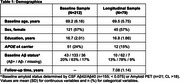 Figure 1
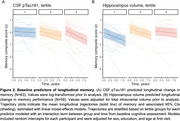 Figure 2
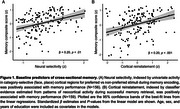 Figure 3
Peer Reviews
No public reviews on file for this paper yet. If you reviewed it on a platform where reviews are public (OpenReview, ICLR, NeurIPS, ICML), you can paste yours below so the community can read it here.
Videos
No videos yet. Explain this paper in a talk, walkthrough, or lecture? Add one.
Taxonomy
TopicsDementia and Cognitive Impairment Research · Cognitive Functions and Memory · Memory Processes and Influences