Ventricular remodeling and astrocyte activation drive early protein aggregation in Alzheimer's disease
Seyyed Ali Hosseini, Etienne Aumont, Nesrine Rahmouni, Joseph Therriault, Lydia Trudel, Brandon J Hall, Stijn Servaes, Yi‐Ting Wang, Arthur C. Macedo, Jaime Fernandez Arias, Gleb Bezgin, Kely Monica Quispialaya Socualaya, Tevy Chan, Yansheng Zheng, Serge Gauthier

TL;DR
The study finds that ventricular remodeling and astrocyte activation may lead to early protein buildup in Alzheimer's disease, affecting cerebrospinal fluid clearance.
Contribution
This study identifies astrocyte activation and ventricular changes as independent contributors to early amyloid-β and tau aggregation in Alzheimer's.
Findings
Ventricular radioactivity reductions and increased volumes indicate choroid plexus dysfunction in Alzheimer's pathology.
Amyloid-β accumulation is significantly linked to ventricular volume and astrocyte activation biomarkers.
Elevated GFAP and enlarged ventricles are associated with faster cognitive decline, independent of amyloid and tau loads.
Abstract
Pro‐inflammatory astrocyte activation, choroid plexus dysfunction, and ventricular enlargement may collectively impair cerebrospinal fluid (CSF) clearance, a process which removes metabolic waste, including amyloid‐β and tau. Dysregulated clearance mechanisms may contribute to Alzheimer's disease pathogenesis (AD) by facilitating protein aggregation. This study investigated whether ventricular remodeling and astrocyte activation drive amyloid‐β and tau accumulation in AD. We analyzed multimodal neuroimaging and fluid biomarker data from 500 participants from the Translational Biomarkers in Aging and Dementia (TRIAD) cohort, 383 of whom had longitudinal imaging data (2‐4 years follow‐up). Structural MRI and PET scans with [18F]AZD4694 (amyloid‐β), and [18F]MK6240 (tau) tracers were utilized. Choroid plexus and ventricular volumes were segmented using FreeSurfer and adjusted for…
Genes, proteins, chemicals, diseases, species, mutations and cell lines named across the full text — each resolved to its canonical identifier and authoritative record.
Click any figure to enlarge with its caption.
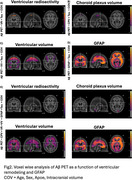 Figure 1
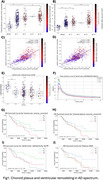 Figure 2
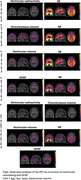 Figure 3
Peer Reviews
No public reviews on file for this paper yet. If you reviewed it on a platform where reviews are public (OpenReview, ICLR, NeurIPS, ICML), you can paste yours below so the community can read it here.
Videos
No videos yet. Explain this paper in a talk, walkthrough, or lecture? Add one.
Taxonomy
TopicsCerebrospinal fluid and hydrocephalus · Alzheimer's disease research and treatments · Dementia and Cognitive Impairment Research