Addressing AI Bias in MRI‐Based Dementia Classification Among Hispanic Individuals
Ngoc‐Huynh Ho, Sokratis Charisis, Sachintha Ransara Brandigampala, Di Wang, Susan R. Heckbert, David M Martinez, Timothy M. Hughes, Nicolas Honnorat, Derek B. Archer, Timothy J. Hohman, Sudha Seshadri, Christos Davatzikos, Mohamad Habes

TL;DR
This study shows that AI tools for dementia diagnosis using MRI scans work less well for Hispanic individuals compared to non-Hispanic Whites and suggests ways to reduce this bias.
Contribution
The study evaluates bias mitigation techniques like Kernel Mean Matching and correlation removal to improve fairness in dementia classification for different ethnic groups.
Findings
Kernel Mean Matching reduced accuracy disparities between non-Hispanic White and Hispanic populations by up to 6%.
Correlation removal slightly improved model accuracy and reduced disparities to 4%.
SHAP maps revealed population-specific brain regions important for dementia prediction, such as the hippocampus in non-Hispanic Whites and the occipital lobe in Hispanic participants.
Abstract
MRI based dementia classification using diagnostic tools trained predominantly on non‐Hispanic White (NHW) participants often fail to generalize to other groups such as Hispanic, leading to biased outcomes. This study investigates disparities in dementia classification between NHW and Hispanic populations and evaluates bias mitigation techniques to improve diagnostic fairness. MRI‐based features without harmonization were extracted using MUSE for 2,541 NHW and 249 Hispanic participants from the National Alzheimer's Coordinating Center for classifying normally cognitive and demented patients, with dementia prevalences of 35.97% and 45.78%, respectively. XGBoost classifiers were trained and assessed using balanced accuracy (BA) and fairness metrics, including false positive rate (FPR) and false negative rate (FNR) disparities. Bias mitigation techniques such as correlation removal (CR)…
Genes, proteins, chemicals, diseases, species, mutations and cell lines named across the full text — each resolved to its canonical identifier and authoritative record.
Click any figure to enlarge with its caption.
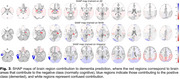 Figure 1
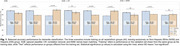 Figure 2
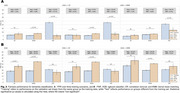 Figure 3
Peer Reviews
No public reviews on file for this paper yet. If you reviewed it on a platform where reviews are public (OpenReview, ICLR, NeurIPS, ICML), you can paste yours below so the community can read it here.
Videos
No videos yet. Explain this paper in a talk, walkthrough, or lecture? Add one.
Taxonomy
TopicsDementia and Cognitive Impairment Research · Machine Learning in Healthcare · Artificial Intelligence in Healthcare and Education