Endoscopic ultrasound-guided antegrade transpapillary multi-hole self-expandable metal stent with fine-gauge stent delivery system
Takeshi Ogura, Jun Matsuno, Takafumi Kanadani, Junichi Nakamura, Hiroki Nishikawa

Abstract
Genes, proteins, chemicals, diseases, species, mutations and cell lines named across the full text — each resolved to its canonical identifier and authoritative record.
Click any figure to enlarge with its caption.
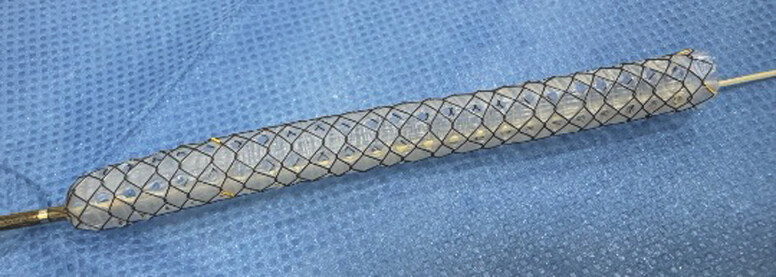 Fig. 1
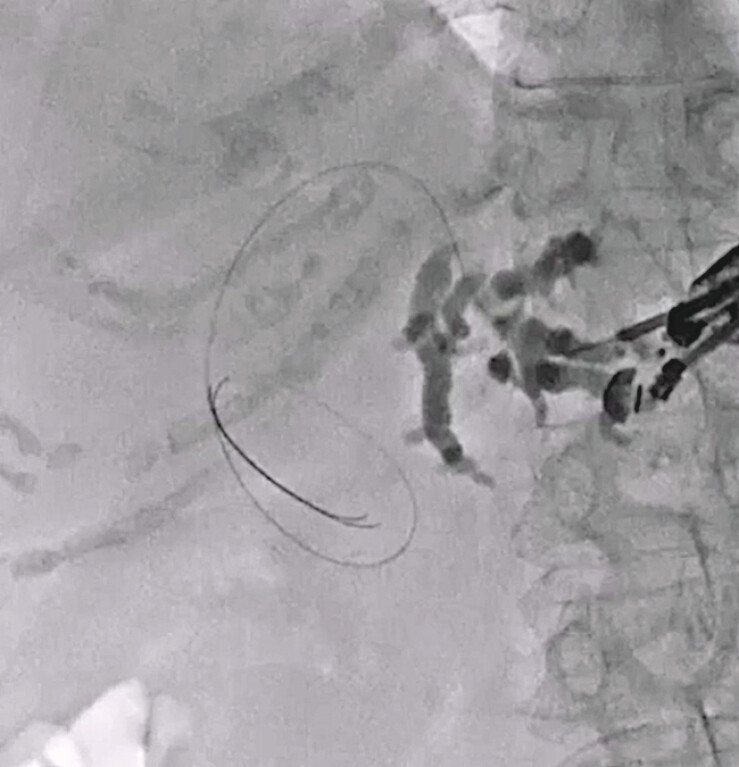 Fig. 2
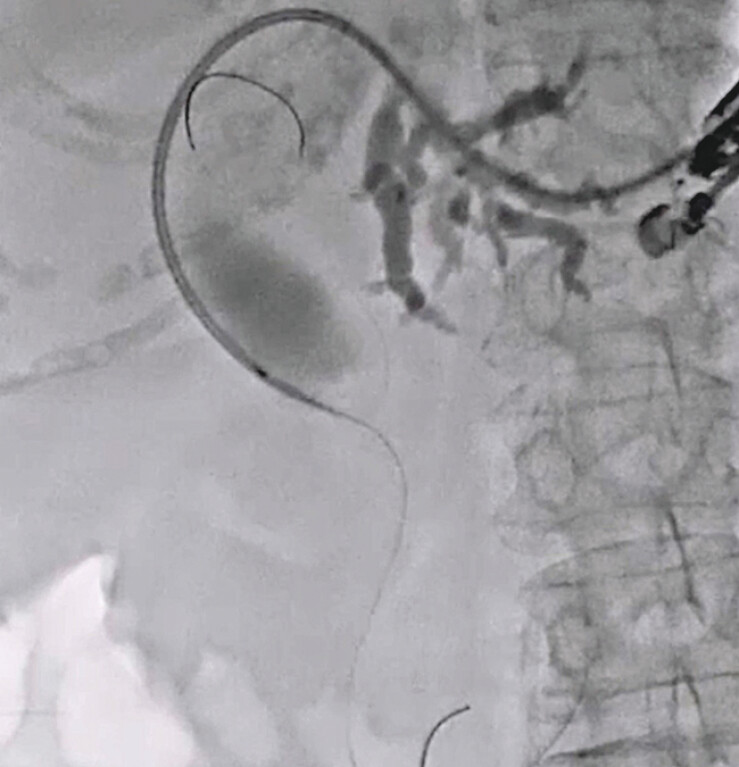 Fig. 3
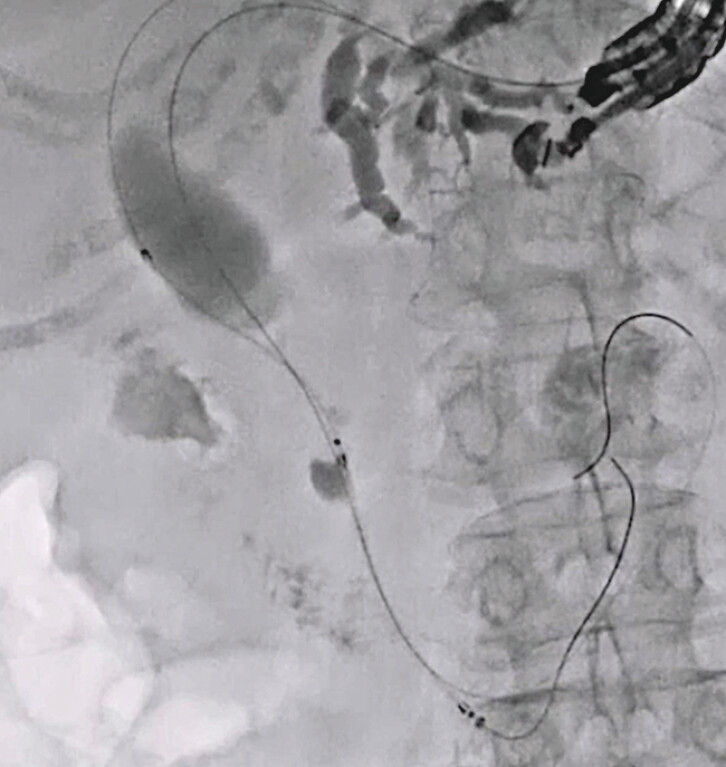 Fig. 4
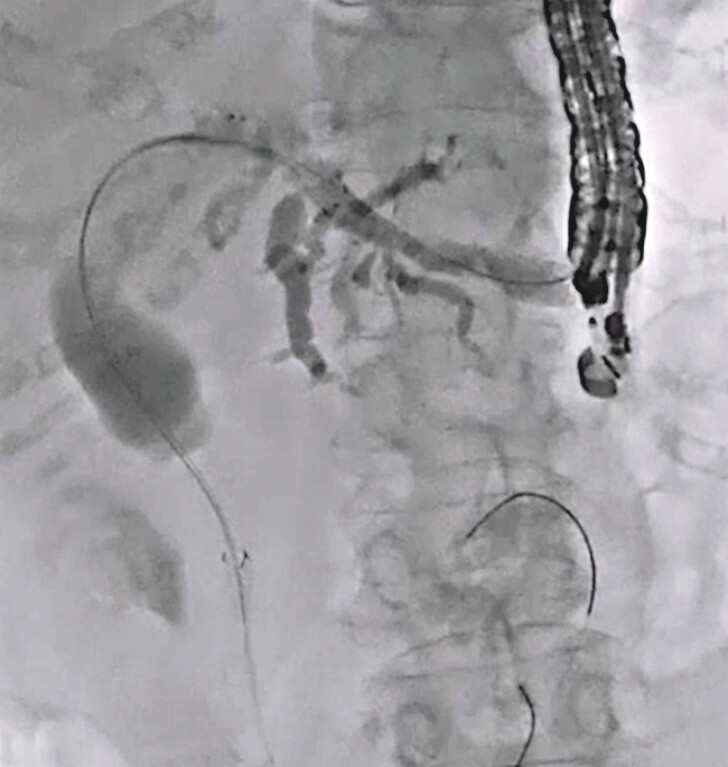 Fig. 5
Peer Reviews
No public reviews on file for this paper yet. If you reviewed it on a platform where reviews are public (OpenReview, ICLR, NeurIPS, ICML), you can paste yours below so the community can read it here.
Videos
No videos yet. Explain this paper in a talk, walkthrough, or lecture? Add one.
Taxonomy
TopicsGallbladder and Bile Duct Disorders · Esophageal and GI Pathology · Medical Device Sterilization and Disinfection
Endoscopic ultrasound-guided antegrade stenting (EUS-AS) can be performed for patients in whom endoscopic retrograde cholangiopancreatography (ERCP) is unsuccessful 1 2 3 . Although EUS-AS has several benefits, including reducing bile leakage from the access route, there are also several concerns. First, stent delivery should be advanced into the biliary tract across the stricture site. Second, if EUS-AS is performed across the papilla, acute pancreatitis should be considered because endoscopic sphincterotomy cannot be performed. Third, to prevent stent dislocation or migration, endoscopic revision may be challenging; therefore, an uncovered metal stent is normally selected, but has limited stent patency. A multi-hole self-expandable metal stent with a fine-gauge stent delivery system (MHCSEMS; HANAROSTENT Biliary Multi-hole Benefit; M.I. Tech Co., Ltd, Pyeongtaek, South Korea) has been developed to overcome these concerns ( Fig. 1 ). The stent is designed to prevent stent migration, through small tissue ingrowths that form in the multiple, small (1.8-mm) side holes along the covering membrane. The side holes also help prevent obstruction of the pancreatic duct. In addition, because the stent delivery system is only 5.9 Fr, it can be advanced easily and smoothly. We describe herein technical tips for EUS-AS using the MHCSEMS.
A multi-hole self-expandable metal stent with a 5.9-Fr stent delivery system (MHCSEMS; HANAROSTENT Biliary Multi-hole Benefit; M.I. Tech Co., Ltd, Pyeongtaek, South Korea).
The dilated intrahepatic bile duct was punctured using a 19G needle, and a 0.025-inch guidewire was inserted. A double lumen dilator was then inserted ( Fig. 2 ). Cholangiography identified lower bile duct obstruction as a complication. After performing the double guidewire technique, we attempted to advance the guidewire into the intestine across the papilla ( Fig. 3 ). The MHCSEMS stent delivery was then inserted easily ( Fig. 4 ). After successful EUS-AS, EUS-guided hepaticogastrostomy was performed without any adverse events ( Fig. 5 ; Video 1 ). No acute pancreatitis or stent dislocation was observed during follow-up.
A guidewire is deployed under endoscopic ultrasound guidance.
A double lumen dilator is inserted into the biliary tract.
A stent delivery system is inserted across the papilla.
Endoscopic ultrasound-guided hepaticogastrostomy is performed.
Antegrade transpapillary multi-hole self-expandable metal stent with fine-gauge stent delivery system is performed.Video 1
In conclusion, EUS-AS using the MHCSEMS with a fine-gauge stent delivery system appears to be a suitable insertion technique that prevents pancreatic duct obstruction and stent dislocation.
Endoscopy_UCTN_Code_TTT_1AS_2AH
The reference list from the paper itself. Each links out to its DOI / PubMed record.
- 1Ishiwatari H Ogura T Hijioka SEUS-guided hepaticogastrostomy versus EUS-guided hepaticogastrostomy with antegrade stent placement in patients with unresectable malignant distal biliary obstruction: a propensity score-matched case-control study Gastrointest Endosc 2024100667538382887 10.1016/j.gie.2024.02.012 · doi ↗ · pubmed ↗
- 2Ogura T Kitano M Takenaka M Multicenter prospective evaluation study of endoscopic ultrasound-guided hepaticogastrostomy combined with antegrade stenting (with video)Dig Endosc 20183025225929055054 10.1111/den.12976 · doi ↗ · pubmed ↗
- 3Ogura T Masuda D Imoto AEUS-guided hepaticogastrostomy combined with fine-gauge antegrade stenting: a pilot study Endoscopy 20144641642124573771 10.1055/s-0034-1365020 · doi ↗ · pubmed ↗