Transcolonic endoscopic appendectomy using a novel integrated snare-knife device: a case report
Tingxuan Huang, Fenglin Chen, Xin-Yang Liu, Xiaoxiong Guo, Ping-Hong Zhou

Abstract
Genes, proteins, chemicals, diseases, species, mutations and cell lines named across the full text — each resolved to its canonical identifier and authoritative record.
Click any figure to enlarge with its caption.
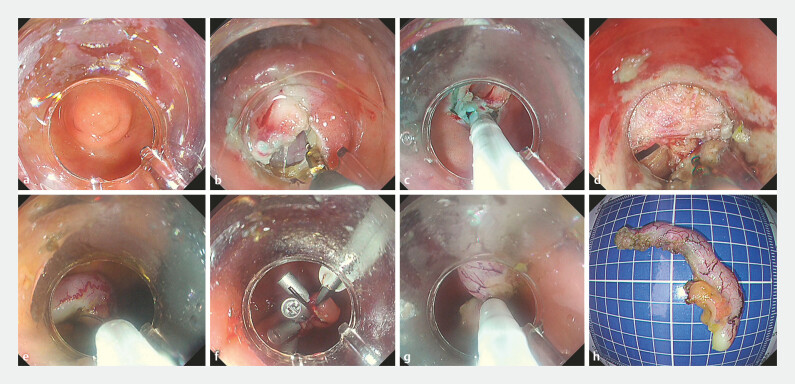 Fig. 1
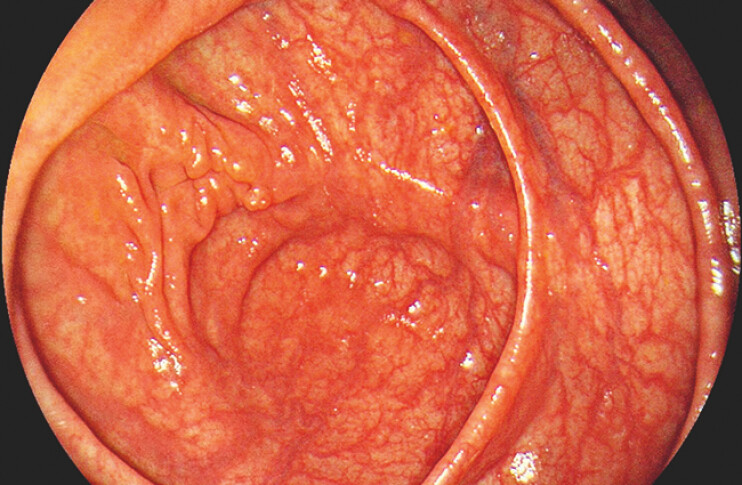 Fig. 2
- —Natural Science Foundation of Fujian Province10.13039/501100003392
Peer Reviews
No public reviews on file for this paper yet. If you reviewed it on a platform where reviews are public (OpenReview, ICLR, NeurIPS, ICML), you can paste yours below so the community can read it here.
Videos
No videos yet. Explain this paper in a talk, walkthrough, or lecture? Add one.
Taxonomy
TopicsMinimally Invasive Surgical Techniques · Appendicitis Diagnosis and Management · Abdominal Surgery and Complications
A 57-year-old woman presented with an incidental 5 mm protrusion at the appendiceal orifice, identified during a routine examination. The asymptomatic patient had no notable medical history. Under non-intubated anesthesia with the patient positioned in the left lateral decubitus position, the procedure was initiated with a submucosal injection utilizing the integrated needle mode. Furthermore, a circumferential incision was created followed by full-thickness dissection with intermittent electrocoagulation. Meanwhile, the minimal purulent material was encountered during peritoneal entry. The appendiceal mesentery was systematically divided utilizing the knife function, followed by complete resection of the appendix and specimen retrieval with the integrated snare. Post-resection, the enterotomy was closed utilizing a glove-derived rubber band traction system combined with endoscopic suturing. Additionally, a drainage catheter was deployed under direct visualization ( Fig. 1 ). Within 30 minutes, appendiceal resection was completed and the total procedural duration was only 60 minutes ( Video 1 ).
Transcolonic endoscopic appendectomy using the snare probe throughout the procedure. a Protruding lesions adjacent to the appendix. b Mucosal incision. c Submucosal injection. d Coagulation for hemostasis. e Conversion to the snare for appendiceal resection. f Application of the traction clip for wound closure. g Appendix removed by snare mode. h The resected specimen.
Transcolonic endoscopic appendectomy using a novel integrated snare-knife device.Video 1
Histopathological analysis confirmed chronic inflammation of the appendix with associated abscess formation. The patient experienced no postoperative discomfort. A follow-up colonoscopy performed 4 months later demonstrated good healing of the surgical incision ( Fig. 2 ).
Colonoscopy images at a 4-month postoperative follow-up.
This represents the first documented utilization of a multifunctional snare probe combining the electrosurgical knife, snare, and injection needle capabilities in NOTES appendectomy 1 2 3 .
Endoscopy_UCTN_Code_TTT_1AT_2AZ
The reference list from the paper itself. Each links out to its DOI / PubMed record.
- 1Fuchs KH Meining Avon Renteln D Euro-NOTES Status Paper: from the concept to clinical practice Surg Endosc 2013271456146710.1007/s 00464-013-2870-223543284 · doi ↗ · pubmed ↗
- 2Liu BR Song JT Liu ZH Endoscopic transcecal appendectomy: the first human case report Gastrointest Endosc 20188731131210.1016/j.gie.2017.07.01528720471 · doi ↗ · pubmed ↗
- 3Wang L Li XQ Qu YF Feasibility of a novel unassisted single-channel transcolonic endoscopic appendectomy for the treatment of appendiceal lesions (with video)Surg Endosc 2024386146615510.1007/s 00464-024-11013-439174707 · doi ↗ · pubmed ↗