Associations of 18F‐flortaucipir tau PET with quantitative tau histopathology in the medial temporal lobe
Jeffrey S Phillips, Amanda E Denning, Lisa M Levorse, Christopher A Brown, Laura E.M. Wisse, Sanaz Arezoumandan, Sandhitsu R. Das, Eddie B. Lee, Ricardo Insausti, John L. Robinson, Ranjit Ittyerah, Sílvia Porta, Corey T. McMillan, Daniel T Ohm, David J. Irwin, Ilya M. Nasrallah

TL;DR
This study shows that 18F-flortaucipir PET imaging correlates with tau tangles in early Alzheimer's disease brain regions, supporting its use for tracking tau pathology.
Contribution
The study provides direct evidence linking PET imaging with tau tangles in early Braak stages, addressing concerns about its sensitivity and specificity.
Findings
18F-flortaucipir PET SUVRs correlated strongly with tau tangles in the entorhinal cortex and hippocampus.
PET imaging was not associated with TDP-43 pathology, indicating specificity for tau.
Most intermediate-high AD cases showed PET positivity above the established cutoff.
Abstract
18F‐Flortaucipir is widely used for positron emission tomography (PET) imaging of Alzheimer's disease (AD)‐type tau, but its sensitivity in early Braak stages has been questioned, and hippocampal uptake is at least partially confounded by off‐target binding. We investigated associations between antemortem PET uptake and digitally‐quantified tau and TDP‐43 neuropathology. Participants (n = 14, Figure 1) included 5 people with no/low AD neuropathologic change (ADNC) at autopsy, 2 intermediate, and 7 high. Clinical diagnoses included normal cognition (n = 2), AD (n = 5), dementia with Lewy bodies (n = 2), Parkinson's disease dementia (n = 1), corticobasal syndrome (n = 2), and posterior cortical atrophy (n = 2). We used the Automated Segmentation of Hippocampal Subfields T1 MRI pipeline to segment anterior and posterior hippocampus, Brodmann's areas (BA) 35 (transentorhinal cortex) & 36,…
Genes, proteins, chemicals, diseases, species, mutations and cell lines named across the full text — each resolved to its canonical identifier and authoritative record.
Click any figure to enlarge with its caption.
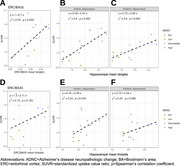 Figure 1
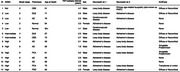 Figure 2
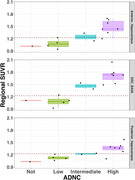 Figure 3
Peer Reviews
No public reviews on file for this paper yet. If you reviewed it on a platform where reviews are public (OpenReview, ICLR, NeurIPS, ICML), you can paste yours below so the community can read it here.
Videos
No videos yet. Explain this paper in a talk, walkthrough, or lecture? Add one.
Taxonomy
TopicsDementia and Cognitive Impairment Research · Alzheimer's disease research and treatments · Epilepsy research and treatment