Glial interaction with Parkinsonian disorders biomarkers: alpha‐synuclein, dopaminergic dysfunction and clinical stages
Lara Angi Souza, Daniel Teixeira dos Santos, Eduardo R. Zimmer, Wyllians Vendramini Borelli, Artur Francisco Schumacher‐Schuh

TL;DR
This study explores how glial markers like YKL-40 and GFAP relate to Parkinson's disease biomarkers and clinical stages, suggesting YKL-40 may be an early indicator.
Contribution
The study identifies YKL-40 as a potential early biomarker of Parkinson's disease pathology and GFAP as linked to dopamine dysfunction in affected individuals.
Findings
CSF YKL-40 levels were significantly associated with both alpha-synuclein and dopaminergic dysfunction biomarkers.
CSF GFAP levels showed a significant interaction with dopamine dysfunction and clinical stage in alpha-synuclein positive individuals.
CSF YKL-40 was also associated with the Hoehn & Yahr clinical staging of Parkinson's disease.
Abstract
The neuronal α‐Synuclein disease (NSD) has been recently proposed to identify biological anchors of Parkinson's disease, comprehending neuronal alpha‐synuclein (S) and dopaminergic neuronal dysfunction (D). However, interactions with glial cells are still poorly understood in the context of α‐syn pathology. In this study, we investigated the relationship between glial markers and PD pathophysiology, specifically to identify which glial markers have stronger association. The Parkinson's Progression Markers Initiative (PPMI) database was used to retrieve cerebrospinal fluid (CSF) glial biomarkers measures. Biological anchor S was assessed by Amprion‐αS‐SAA (Figure 1a‐d) and D as assessed with DaTscan visual interpretation and Putamen's lowest SBR value. CSF GFAP, STREM2, YKL40 and S100 were measured using Roche NeuroTool Kit. Clinical and cognitive variables collected included sex, years…
Genes, proteins, chemicals, diseases, species, mutations and cell lines named across the full text — each resolved to its canonical identifier and authoritative record.
Click any figure to enlarge with its caption.
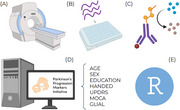 Figure 1
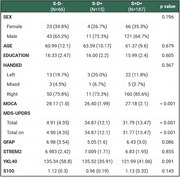 Figure 2
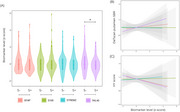 Figure 3
Peer Reviews
No public reviews on file for this paper yet. If you reviewed it on a platform where reviews are public (OpenReview, ICLR, NeurIPS, ICML), you can paste yours below so the community can read it here.
Videos
No videos yet. Explain this paper in a talk, walkthrough, or lecture? Add one.
Taxonomy
TopicsParkinson's Disease Mechanisms and Treatments · Neurological disorders and treatments · Transcranial Magnetic Stimulation Studies