Comparison of NULISAseq and SIMOA methods in plasma biomarker analysis in two memory clinic and research cohorts
Marco Bucci, Marina Bluma, Mariola Zapater‐Fajari, Irina Savitcheva, Konstantinos Chiotis, Nenad Bogdanovic, Guglielmo Di Molfetta, Ilaria Pola, Kübra Tan, Wiebke Traichel, Andrea Benedet, Nicholas Ashton, Kaj Blennow, Henrik Zetterberg, Agneta K Nordberg

TL;DR
This study compares two plasma biomarker analysis methods, NULISAseq and SIMOA, in Alzheimer's disease diagnosis, finding that NULISAseq shows more distinct group differences.
Contribution
The study provides a direct comparison of newly commercialized NULISAseq with established SIMOA methods in Alzheimer's biomarker analysis.
Findings
NULISAseq and SIMOA showed strong agreement for most biomarkers (Spearman's rho >= 0.8).
NULISAseq produced more distinct group differences in pTau217 and GFAP levels between MCI Aβ+ and MCI Aβ-.
pTau231 and pTau181 showed more pronounced differences with NULISAseq in the AD spectrum.
Abstract
The diagnostic work‐up of Alzheimer's disease (AD) requires reliable and accurate diagnostic biomarkers to aid clinicians in making the correct diagnosis. Plasma biomarker analysis methods are emerging as cost‐effective and possibly reliable tools. The NULISAseq (Alamarbio) CNS panel has recently been commercialized and has not yet been extensively tested with previously used assays. We aimed to compare a selection of biomarkers assayed with NULISAseq against more established SIMOA methods in a memory clinic and a research cohort from Karolinska. A total of 176 subjects from a memory clinic cohort and a research cohort were included in this study. The clinical cohort from the Karolinska Hospital Memory Clinic included 126 patients (70W/56M, mean age 65±8 years, range 42‐86), who, after extensive investigations (including Amyloid‐PET imaging), were assigned to the following diagnostic…
Genes, proteins, chemicals, diseases, species, mutations and cell lines named across the full text — each resolved to its canonical identifier and authoritative record.
Click any figure to enlarge with its caption.
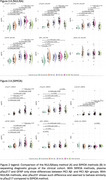 Figure 1
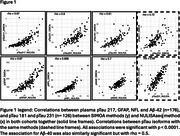 Figure 2
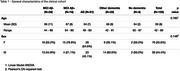 Figure 3
Peer Reviews
No public reviews on file for this paper yet. If you reviewed it on a platform where reviews are public (OpenReview, ICLR, NeurIPS, ICML), you can paste yours below so the community can read it here.
Videos
No videos yet. Explain this paper in a talk, walkthrough, or lecture? Add one.
Taxonomy
TopicsDementia and Cognitive Impairment Research · Alzheimer's disease research and treatments · S100 Proteins and Annexins