Midlife to Late‐Life Changes in Plasma Biomarkers of Alzheimer's Disease Pathology and Neurodegeneration and Associations with 5‐Year Cognitive Change in Late‐Life: The Atherosclerosis Risk in Communities (ARIC) Study
Priya Palta, James Russell Pike, Yifei Lu, Keenan A. Walker, Kevin J. Sullivan, Gwen Gwen Windham, Bharat Thyagarajan, Michelle M Mielke, Pamela L. Lutsey, Timothy M. Hughes, David S. Knopman, A. Richey Sharrett, Rebecca F. Gottesman, Thomas H. Mosley, Josef Coresh

TL;DR
This study examines how plasma biomarkers for Alzheimer's disease change from midlife to late-life and how these changes relate to cognitive decline over five years.
Contribution
The study reveals distinct associations between midlife and late-life biomarker levels and cognitive decline across different domains.
Findings
Higher midlife NfL and GFAP were linked to faster late-life declines in global cognition and language.
Lower late-life Aβ42:Aβ40 and higher p-Tau181, NfL, and GFAP were associated with faster cognitive decline in memory and language.
Changes in p-Tau181, NfL, and GFAP from midlife to late-life correlated with declines in global cognition and language.
Abstract
Plasma biomarkers of Alzheimer's disease (AD) pathology and neurodegeneration provide a non‐invasive method to assess brain pathology associated with dementia and cognitive decline. However, it remains unclear whether these biomarkers are differentially associated with changes in specific cognitive domains or how they relate to subsequent cognitive change in participants with or without cognitive impairment. Plasma biomarkers were assayed in a subset of ARIC participants using Quanterix SiMoA technology on stored specimens collected in midlife (visit 3: 1993‐95, mean age: 59) and late‐life (visit 5: 2011‐13, mean age: 77). Biomarkers included amyloid‐β 42 to amyloid‐β 40 (Aβ42:Aβ40) ratio, phosphorylated tau at threonine 181 (p‐Tau181), neurofilament light (NfL), and glial fibrillary acidic protein (GFAP). Factor scores for global cognition and cognitive domains (memory, language,…
Genes, proteins, chemicals, diseases, species, mutations and cell lines named across the full text — each resolved to its canonical identifier and authoritative record.
Click any figure to enlarge with its caption.
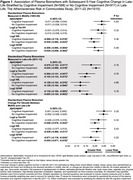 Figure 1
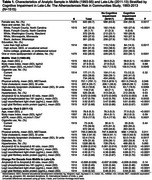 Figure 2
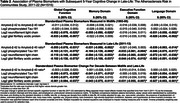 Figure 3
Peer Reviews
No public reviews on file for this paper yet. If you reviewed it on a platform where reviews are public (OpenReview, ICLR, NeurIPS, ICML), you can paste yours below so the community can read it here.
Videos
No videos yet. Explain this paper in a talk, walkthrough, or lecture? Add one.
Taxonomy
TopicsDementia and Cognitive Impairment Research · Alzheimer's disease research and treatments · Cancer-related cognitive impairment studies