Severe, Resistant Generalized Pustular Psoriasis-Associated Inflammatory Syndrome Successfully Treated With Adalimumab: A Case Report
Evangelos Bourousis, Marina Triantafyllia Kotzamani, Despoina N Maritsi

TL;DR
An 8-year-old girl with severe, treatment-resistant pustular psoriasis was successfully treated with adalimumab and methotrexate.
Contribution
This case demonstrates successful treatment of pediatric GPP with adalimumab and methotrexate after prior therapies failed.
Findings
Genetic testing confirmed mutations in IL36RN and CARD14 in the patient.
Adalimumab in combination with methotrexate led to sustained remission.
Biologic agents may be effective in managing severe pediatric GPP.
Abstract
Generalized pustular psoriasis (GPP) is a rare and severe variant of psoriasis, especially in pediatric patients, characterized by recurrent episodes of fever, malaise, and sterile pustules. We present the case of an eight-year-old girl with genetically confirmed GPP, carrying heterozygous mutations in IL36RN and CARD14, successfully treated with adalimumab in combination with methotrexate. Despite previous therapies, sustained remission was achieved only with this regimen. This case highlights the importance of genetic testing and the potential role of biologic agents in the management of pediatric GPP.
Genes, proteins, chemicals, diseases, species, mutations and cell lines named across the full text — each resolved to its canonical identifier and authoritative record.
Click any figure to enlarge with its caption.
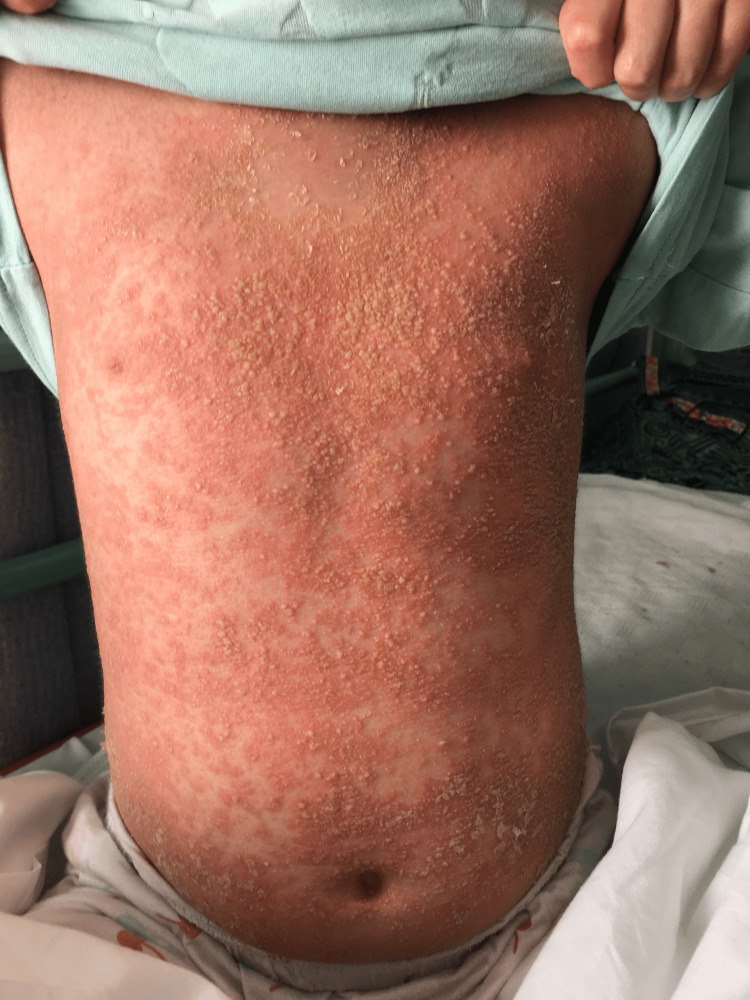 Figure 1
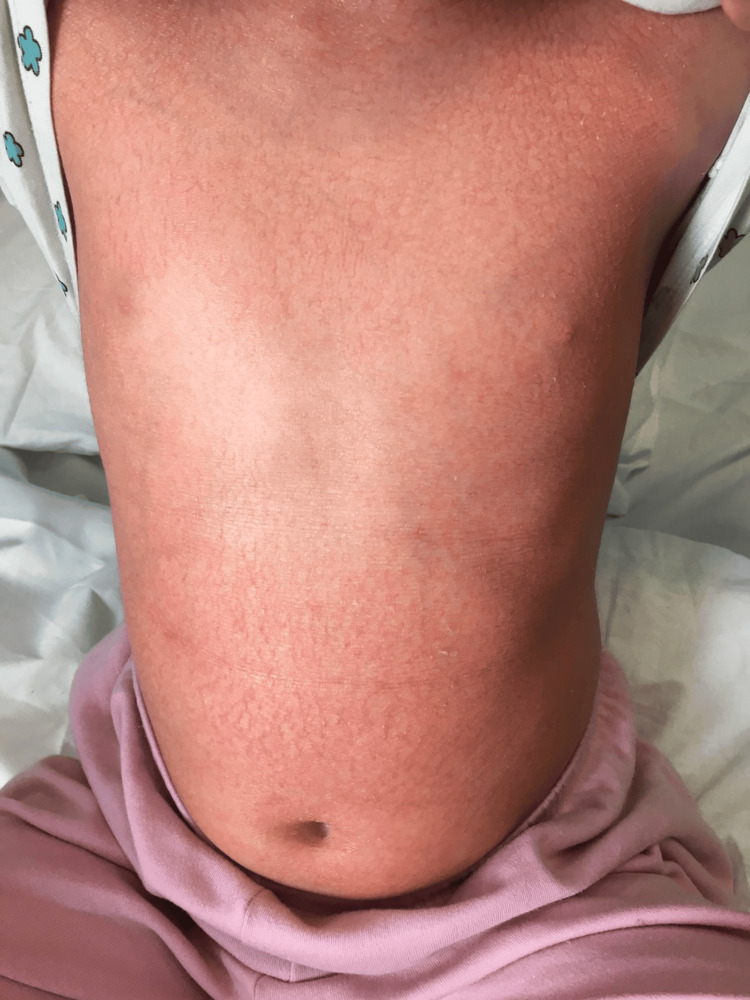 Figure 2
| Timepoint | WBC (/μL) | Hb (g/dL) | PLT (/μL) | CRP (mg/L) | ESR (mm/h) |
| Admission | 13,600 | 9.8 | 258,000 | 98 | 57 |
| After two weeks | 10,700 | 10 | 402,000 | 50 | 45 |
| Discharge | 9,400 | 10.1 | 601,000 | 1 | 20 |
Peer Reviews
No public reviews on file for this paper yet. If you reviewed it on a platform where reviews are public (OpenReview, ICLR, NeurIPS, ICML), you can paste yours below so the community can read it here.
Videos
No videos yet. Explain this paper in a talk, walkthrough, or lecture? Add one.
Taxonomy
TopicsPsoriasis: Treatment and Pathogenesis · Dermatology and Skin Diseases · Inflammasome and immune disorders
Introduction
Psoriasis is a chronic, immune-mediated inflammatory disease affecting approximately 2-3% of the global population [1]. Among its clinical variants, generalized pustular psoriasis (GPP) is one of the rarest and most severe, accounting for less than 1% of psoriasis cases [2]. GPP is characterized by recurrent flares of widespread sterile pustules on erythematous skin, often accompanied by systemic inflammation, including high fever, malaise, arthralgia, and laboratory evidence of systemic inflammation [3].
Childhood-onset GPP is particularly uncommon, with most cases presenting within the first year of life [4]. The disease may follow a relapsing course with potentially life-threatening complications such as sepsis, hepatic dysfunction, and electrolyte imbalance if untreated [5]. Early diagnosis is therefore crucial but remains challenging due to clinical overlap with severe infections and other pustular dermatoses.
Recent advances have identified a strong genetic component in GPP. Mutations in the IL36RN gene, first described in 2011 [6], lead to defective interleukin-36 (IL-36) receptor antagonism and uncontrolled pro-inflammatory signaling. Additional mutations such as CARD14, BTN3A3, AP1S3, and SERPINA1 have also been implicated [6]. These discoveries highlight GPP as a distinct autoinflammatory disease entity, rather than merely a variant of plaque psoriasis.
Traditional therapies, including systemic corticosteroids, cyclosporine, methotrexate, and retinoids, have shown variable efficacy and are often associated with significant adverse effects in children [7]. The introduction of biologic agents, particularly tumor necrosis factor-alpha (TNF-α) inhibitors and, more recently, IL-36 receptor antagonists, has provided promising new options, although high-quality pediatric data remain limited [8,9].
Here, we present the case of an eight-year-old girl with genetically confirmed GPP due to IL36RN and CARD14 mutations, who demonstrated dramatic and sustained clinical remission following treatment with adalimumab. This case emphasizes the diagnostic value of genetic testing and the potential role of biologics in pediatric GPP.
Case presentation
An eight-year-old Afghan girl, born from a non-consanguineous marriage, presented with recurrent episodes of high-grade fever, malaise, and widespread erythematous, scaly pustular eruptions. Symptoms had first appeared at six months of age and persisted intermittently, despite multiple systemic treatments. Prior to referral, the patient had received topical corticosteroids, oral retinoids, cyclosporine, and methotrexate, with only partial and short-lived responses.
Upon admission to our institution, she was febrile (39.5°C), alert but fatigued, and displayed a generalized pustular and scaly rash involving the face, trunk, and extremities. Clinical appearance at presentation is shown in Figure 1. Laboratory evaluation revealed leukocytosis, anemia, thrombocytosis, and markedly elevated inflammatory markers, including C-reactive protein (CRP) at 98 mg/L and erythrocyte sedimentation rate (ESR) at 57 mm/h.
Generalized erythematous and scaly pustular lesions involving the trunk and extremities before treatment with adalimumab.
Given the atypical presentation and chronic course, an extensive work-up was performed to exclude infectious or immunologic mimickers. Blood cultures, skin lesion cultures, urine cultures, Mantoux test, and T-SPOT.TB were negative. Ophthalmologic and cardiac evaluations were unremarkable. Skin biopsy confirmed the diagnosis of pustular psoriasis. Whole-exome sequencing revealed heterozygous mutations in the IL36RN (c.368C>T) and CARD14 genes.
Management was initiated with prednisolone and anakinra (IL-1 receptor antagonist), resulting in modest clinical improvement. However, the patient experienced a flare during hospitalization, with reappearance of pustular lesions and recrudescence of fever and CRP elevation. As a result, anakinra was discontinued, and treatment was escalated to adalimumab (0.8 mg/kg subcutaneously every two weeks) in combination with methotrexate (10 mg weekly). Prednisolone was tapered and discontinued.
Within days of initiating adalimumab, the patient became afebrile and demonstrated marked cutaneous improvement. By the end of the second week, the pustular rash had almost fully resolved, with only minimal residual scaling. Clinical response at two weeks is shown in Figure 2. The patient was discharged on day 35 of hospitalization and has since remained in sustained remission for 12 months without clinical flares. A summary of laboratory parameters at admission, at two weeks post-treatment, and at discharge is provided in Table 1.
Marked clinical improvement two weeks after initiation of adalimumab.
Discussion
GPP is a rare but potentially life-threatening condition. To date, multiple genetic mutations have been linked to GPP. In our patient, the presence of IL36RN and CARD14 mutations suggests a genetic predisposition contributing to disease severity. Laboratory results demonstrated significant improvement within two weeks of initiating adalimumab and methotrexate, with normalization of inflammatory markers and sustained remission for 12 months. The pathogenesis of GPP has been increasingly linked to genetic mutations such as IL36RN, first described in 2011 [4]. Additional variants, including CARD14, BTN3A3, and AP1S3, have also been implicated [5,6]. These mutations are believed to enhance IL-36-mediated inflammatory pathways, which may contribute to pustule formation in genetically susceptible individuals. Traditional therapies such as cyclosporine, methotrexate, and acitretin have limited effectiveness in pediatric GPP [3,5]. Biologic agents, including TNF-α inhibitors like adalimumab, have shown promising results [7,8]. Recently, IL-36 receptor antagonists such as spesolimab have been approved for use in adolescents [9], and imsidolimab is under phase III clinical trials [10]. Our case underlines the role of genetic testing, not only for diagnosis, but also for therapeutic decision-making. Genetic confirmation may assist in selecting targeted therapies, particularly in cases resistant to conventional immunosuppressants. While targeted immune therapies show clear promise, randomized controlled trials in pediatric populations remain scarce. This case report represents a single-patient observation and thus cannot establish causality. Furthermore, as methotrexate was co-administered with adalimumab, its contributory role to disease remission cannot be excluded.
Conclusions
We present a case of pediatric GPP with heterozygous IL36RN and CARD14 mutations, demonstrating a favorable and sustained response to the combination of adalimumab and methotrexate. This report highlights the potential role of early genetic evaluation in guiding treatment decisions, particularly in refractory cases. Further prospective studies are warranted to evaluate the safety, efficacy, and optimal sequencing of biologic therapies in genetically defined subgroups of pediatric GPP.
The reference list from the paper itself. Each links out to its DOI / PubMed record.
- 1The prevalence and disease characteristics of generalized pustular psoriasis Am J Clin Dermatol Zheng M Jullien D Eyerich K 5122320223506122410.1007/s 40257-021-00664-x PMC 8801400 · doi ↗ · pubmed ↗
- 2The update of treatment strategies in pediatrics with generalized pustular psoriasis in China Pediatr Investig Chen Y Xiang X Wang Z Miao C Xu Z 1911987202310.1002/ped 4.12395 PMC 1050940737736368 · doi ↗ · pubmed ↗
- 3Generalized pustular psoriasis in childhood Pediatr Dermatol de Oliveira ST Maragno L Arnone M Fonseca Takahashi MD Romiti R 3493542720102040311810.1111/j.1525-1470.2010.01084.x · doi ↗ · pubmed ↗
- 4Mutations in IL 36RN/IL 1F 5 are associated with the severe episodic inflammatory skin disease known as generalized pustular psoriasis Am J Hum Genet Onoufriadis A Simpson MA Pink AE 4324378920112183942310.1016/j.ajhg.2011.07.022PMC 3169817 · doi ↗ · pubmed ↗
- 5Generalized pustular psoriasis: a review on clinical characteristics, diagnosis, and treatment Dermatol Ther (Heidelb) Rivera-Díaz R Daudén E Carrascosa JM Cueva P Puig L 6736881320233663544510.1007/s 13555-022-00881-0PMC 9836924 · doi ↗ · pubmed ↗
- 6Genetics of generalized pustular psoriasis: current understanding and implications for future therapeutics Genes (Basel) Yang SF Lin MH Chou PC Hu SK Shih SY Yu HS Yu S 12971420233737247710.3390/genes 14061297 PMC 10297910 · doi ↗ · pubmed ↗
- 7Joint American Academy of Dermatology-National Psoriasis Foundation guidelines of care for the management and treatment of psoriasis in pediatric patients J Am Acad Dermatol Menter A Cordoro KM Davis DM 1612018220203170382110.1016/j.jaad.2019.08.049 · doi ↗ · pubmed ↗
- 8Use of biological therapies for the management of pustular psoriasis: a new era?Clin Cosmet Investig Dermatol Megna M Camela E Ruggiero A Battista T Martora F Cacciapuoti S Potestio L 1677169016202310.2147/CCID.S 407812 PMC 1031514737404368 · doi ↗ · pubmed ↗