Plasma p‐tau217 A+T+ status is associated with accelerated cognitive decline in the African Americans Fighting Alzheimer's in Midlife study
Gilda E. Ennis, Derek L. Norton, Rebecca E. Langhough, Diane Carol Gooding, Megan L. Zuelsdorff, Shenikqua Bouges, Sanjay Asthana, Sterling C Johnson, Henrik Zetterberg, Carey E. Gleason

TL;DR
Higher levels of a specific brain protein in African American adults are linked to faster cognitive decline, even after accounting for health conditions like heart and kidney disease.
Contribution
This study is the first to show that plasma p-tau217 A+T+ status is associated with cognitive decline in African Americans, independent of comorbidities.
Findings
A+T+ status was associated with greater decline in executive function and immediate recall.
The association remained significant after adjusting for cardiovascular disease and kidney function.
CVD predicted greater decline in log-transformed Trails B performance.
Abstract
Higher plasma p‐tau217 levels have been related to cognitive decline in predominantly European American and European adult samples. Some studies suggest cardiovascular disease (CVD) and kidney disease, comorbidities more common in African American (AA) adults, are associated with cognitive dysfunction and elevated p‐tau217; consequently, these comorbidities may confound associations between p‐tau217 and cognition. Using p‐tau217 thresholds for amyloid (A) and tau (T) positive status, we examined if AT status associated with cognitive decline in an AA sample and if significant associations persisted when adjusting for comorbidities also identified as significant predictors of worsening cognition. N = 199 African Americans Fighting Alzheimer's in Midlife (AA‐FAIM) study participants, without baseline dementia, had cognitive data and plasma (EDTA) p‐tau217 (AlzPath, Inc.) for analysis…
Genes, proteins, chemicals, diseases, species, mutations and cell lines named across the full text — each resolved to its canonical identifier and authoritative record.
Click any figure to enlarge with its caption.
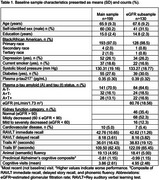 Figure 1
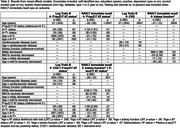 Figure 2
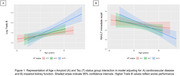 Figure 3
Peer Reviews
No public reviews on file for this paper yet. If you reviewed it on a platform where reviews are public (OpenReview, ICLR, NeurIPS, ICML), you can paste yours below so the community can read it here.
Videos
No videos yet. Explain this paper in a talk, walkthrough, or lecture? Add one.
Taxonomy
TopicsDementia and Cognitive Impairment Research · Alzheimer's disease research and treatments · Nutritional Studies and Diet