Baseline and long‐term longitudinal atrophy patterns of cognitively unimpaired individuals with elevated plasma ptau‐217
Cristina Sánchez, Linda Zhang, Jesús Silva‐Rodríguez, Elizabeth Valeriano‐Lorenzo, Francisco J. López‐González, Sonia Wagner, Teodoro del Ser, Pascual Sanchez‐Juan, Michel J. Grothe

TL;DR
This study shows that elevated levels of plasma p-tau217 in cognitively unimpaired older individuals are linked to early brain atrophy patterns typical of Alzheimer's disease.
Contribution
The study reveals that elevated plasma p-tau217 identifies early neurodegenerative changes in cognitively unimpaired individuals, extending beyond the medial temporal lobe.
Findings
At baseline, individuals with elevated plasma p-tau217 showed significant medial temporal lobe atrophy.
Longitudinal analysis revealed faster atrophy in medial temporal lobe and additional brain regions like the insula and cingulate cortex.
Plasma p-tau217 partially mediates cognitive decline through accelerated brain atrophy.
Abstract
Plasma p‐tau217 is an emerging biomarker for Alzheimer's disease (AD) and has been shown to be a strong predictor of cognitive decline even in cognitively unimpaired (CU) individuals. However, little is known about the association of elevated plasma p‐tau217 with long‐term neurodegenerative trajectories. This study aims to characterize cross‐sectional and longitudinal patterns of gray matter atrophy in CU individuals with elevated plasma p‐tau217 levels. 1030 CU older individuals (74.9±3.9 yrs; 65.1% female) from the Vallecas Project cohort at the CIEN Foundation (Madrid) were included in this study. All participants underwent blood sampling, clinical and neuropsychological evaluations, and 3T‐MRI scanning at baseline, and 863 individuals had annual longitudinal follow‐up assessments for up to ten years (average follow‐up: 5.4±2.6 yrs; for a total of 4646 MRI acquisitions). Baseline…
Genes, proteins, chemicals, diseases, species, mutations and cell lines named across the full text — each resolved to its canonical identifier and authoritative record.
Click any figure to enlarge with its caption.
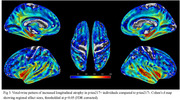 Figure 1
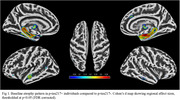 Figure 2
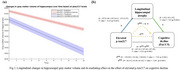 Figure 3
Peer Reviews
No public reviews on file for this paper yet. If you reviewed it on a platform where reviews are public (OpenReview, ICLR, NeurIPS, ICML), you can paste yours below so the community can read it here.
Videos
No videos yet. Explain this paper in a talk, walkthrough, or lecture? Add one.
Taxonomy
TopicsDementia and Cognitive Impairment Research · Alzheimer's disease research and treatments · Functional Brain Connectivity Studies