Early Detection of White Matter Integrity Changes in Down Syndrome: The Promise of PSMD as a Sensitive Biomarker
Alejandra O. Morcillo‐Nieto, José Enrique Arriola‐Infante, Maria Franquesa‐Mullerat, Sara E Zsadanyi, Lídia Vaqué‐Alcázar, Mateus Rozalem Aranha, Jose Allende Parra, Zili Zhao, Javier Arranz, Íñigo Rodríguez‐Baz, Lucía Maure‐Blesa, Laura Videla, Isabel Barroeta, Laura Del Hoyo

TL;DR
This study shows that PSMD can detect early white matter changes in people with Down syndrome before Alzheimer's symptoms appear.
Contribution
The study introduces PSMD as a novel biomarker for early detection of white matter damage in Down syndrome linked to Alzheimer's disease.
Findings
PSMD increases with age in Down syndrome more strongly than in healthy controls.
PSMD correlates with Alzheimer's biomarkers and SVD markers like microbleeds and white matter hyperintensities.
PSMD changes occur 10-15 years before AD symptoms in Down syndrome individuals.
Abstract
Down syndrome (DS) is a genetic condition associated with an ultra‐high risk of developing Alzheimer's disease (AD). While vascular risk factors (VRF) are less prevalent in DS, radiological hallmarks of small vessel disease (SVD) are commonly observed. The peak width of skeletonized mean diffusivity (PSMD) is a diffusion tensor imaging (DTI) marker designed to quantify the white matter (WM) damage secondary to cerebral SVD. Here, we aimed to characterize PSMD alterations along the AD continuum in DS and define associations with AD and SVD biomarkers. Cross‐sectional study using the Sant Pau Initiative on Neurodegeneration (SPIN) and Down Alzheimer Barcelona Neuroimaging Initiative (DABNI) cohorts. We included 70 euploid healthy controls (HC; median age [IQR]=54.37 [9.03] years, females=70%), and 140 individuals with DS (age=44.15 [17.33] years, females=47.14%), including 92…
Genes, proteins, chemicals, diseases, species, mutations and cell lines named across the full text — each resolved to its canonical identifier and authoritative record.
Click any figure to enlarge with its caption.
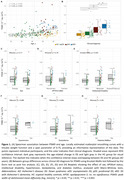 Figure 1
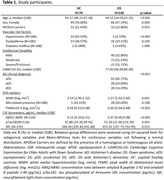 Figure 2
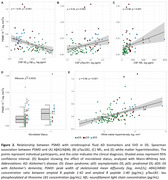 Figure 3
Peer Reviews
No public reviews on file for this paper yet. If you reviewed it on a platform where reviews are public (OpenReview, ICLR, NeurIPS, ICML), you can paste yours below so the community can read it here.
Videos
No videos yet. Explain this paper in a talk, walkthrough, or lecture? Add one.
Taxonomy
TopicsDown syndrome and intellectual disability research · Genetic Neurodegenerative Diseases · Dementia and Cognitive Impairment Research