Cross‐Sectional Analysis of Plasma GFAP Across Alzheimer's Disease Stages
John R. Hoffman, Kristen A. Russ, Alex J. Schwefel, Tatiana M. Foroud, Naazneen Khan, Yi Zhao, Jeffrey L. Dage

TL;DR
This study examines how plasma GFAP levels vary with Alzheimer's disease stages and factors like age, sex, and amyloid levels.
Contribution
The study identifies key factors influencing plasma GFAP levels and supports its potential as an early biomarker for Alzheimer's disease.
Findings
GFAP levels are significantly associated with age, sex, APOE genotype, and amyloid PET levels.
Plasma GFAP levels differ between males and females, highlighting the importance of sex in biomarker research.
GFAP levels correlate with hippocampal atrophy and cognitive status in Alzheimer's patients.
Abstract
Alzheimer's Disease (AD) is the leading cause of dementia worldwide, with Late‐Onset Alzheimer's Disease (LOAD) comprising over 90% of cases. Multiple biomarkers are being investigated for their association with pathologies associated with AD including glial acidic fibrillary protein (GFAP). GFAP levels have been observed to increase in plasma and cerebrospinal fluid of AD patients, particularly in response to amyloid‐β, before behavioral symptoms appear. This indicates GFAP's utility as an early‐AD biomarker. However, GFAP levels vary significantly between subjects due to various factors, such as demographics or medical comorbidities. To use plasma GFAP levels as an accurate biomarker in AD studies, it is essential to fully understand and identify all potential reasons for variation in its levels. The uniform data set (UDS), which contains longitudinal subject data from AD Centers…
Genes, proteins, chemicals, diseases, species, mutations and cell lines named across the full text — each resolved to its canonical identifier and authoritative record.
Click any figure to enlarge with its caption.
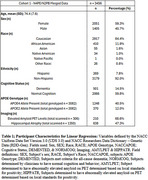 Figure 1
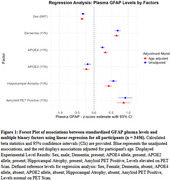 Figure 2
Peer Reviews
No public reviews on file for this paper yet. If you reviewed it on a platform where reviews are public (OpenReview, ICLR, NeurIPS, ICML), you can paste yours below so the community can read it here.
Videos
No videos yet. Explain this paper in a talk, walkthrough, or lecture? Add one.
Taxonomy
TopicsAlzheimer's disease research and treatments · Dementia and Cognitive Impairment Research · Neurological Disease Mechanisms and Treatments