Machine Learning Approach for Predicting Amyloid and Tau Positivity in Alzheimer's Disease Using Clinically Accessible Features
Daniel Arnold, Luiza Santos Machado, Nesrine Rahmouni, Joseph Therriault, Stijn Servaes, Jenna Stevenson, Arthur C. Macedo, Artur Francisco Schumacher‐Schuh, Christian Mattjie, Firoza Z Lussier, Mira Chamoun, Gleb Bezgin, Andrea L. Benedet, Tharick A Pascoal, Rodrigo C. Barros

TL;DR
This study uses machine learning to accurately predict Alzheimer's disease biomarkers using easily collected clinical data, which could help in screening for the disease.
Contribution
A novel machine learning model is developed to predict amyloid and tau positivity using clinically accessible features with high accuracy.
Findings
The model achieved mean AUCs of 0.89 and 0.83 for predicting amyloid and tau positivity in model building and validation cohorts.
Cognitive impairment was the most impactful feature for predicting biomarker positivity.
Higher age, lower MoCA scores, and female sex increased the probability of biomarker positivity.
Abstract
Prediction of Alzheimer's disease (AD) biomarkers can improve public health strategies, especially if achieved with easily collectable data in a single consultation. Machine learning (ML) offers versatile tools for clinical and research applications. This study investigated a ML model's ability to predict amyloid and tau positivity using easily obtainable features. Individuals with amyloid and tau status were selected from ADNI, TRIAD, and PPMI datasets (Model Building) and from the NACC dataset (Validation). Shared clinical features included age, sex, education, clinical diagnosis, MoCA scores, and BMI. Amyloid positivity was defined by amyloid‐PET (PIB‐PET, FBB‐PET, or AZD4694‐PET) or CSF AB42, and tau positivity by Tau‐PET (MK6240‐PET, AV1451‐PET) or CSF p‐tau181. For NACC, positivity derived from fields AMYLPET and TAUPETAD. Data processing is summarized in Figure 1. The Model…
Genes, proteins, chemicals, diseases, species, mutations and cell lines named across the full text — each resolved to its canonical identifier and authoritative record.
Click any figure to enlarge with its caption.
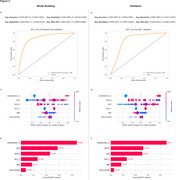 Figure 1
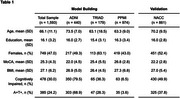 Figure 2
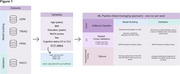 Figure 3
Peer Reviews
No public reviews on file for this paper yet. If you reviewed it on a platform where reviews are public (OpenReview, ICLR, NeurIPS, ICML), you can paste yours below so the community can read it here.
Videos
No videos yet. Explain this paper in a talk, walkthrough, or lecture? Add one.
Taxonomy
TopicsDementia and Cognitive Impairment Research · Alzheimer's disease research and treatments · Machine Learning in Healthcare