Real‐Life plasma GFAP Application using Chemiluminescent Microparticle Immunoassay in an expanded Cohort
Eduard Bargay Pizarro, Daniel Morell García, Susana Tarongi Sanchez, Ana García Martin, Marian Vives Crook, Margalida Sastre Mesquida, Lara Nuñez Santos, María Santés Bertó, Guillermo Amer Ferrer

TL;DR
This study confirms that plasma GFAP can help diagnose Alzheimer's disease in real-world clinics with high accuracy and potential for early detection.
Contribution
The study validates the clinical utility of plasma GFAP using a cost-effective immunoassay in a real-world memory clinic cohort.
Findings
pGFAP levels were significantly higher in Alzheimer's patients compared to non-AD groups.
The optimal pGFAP threshold achieved 77% sensitivity and 94% specificity for AD diagnosis.
pGFAP levels were marginally higher in AD dementia than in AD MCI, suggesting a link to disease severity.
Abstract
The AA 2024 revised diagnostic criteria for Alzheimer's disease (AD) included plasma glial fibrillary acidic protein (pGFAP) as a key blood biomarker of inflammation in AD. This underscores the need for real‐world validation and targeted studies to better understand its clinical utility and application. We previously validated pGFAP's diagnostic utility for AD using a low‐cost chemiluminescent microparticle immunoassay (CMIA; Alinity i, Abbott, US) (AAIC2024). Now, we aim to assess its practical application in a larger, real‐world memory clinic cohort. From February 2023 to May 2024, core AD CSF biomarkers were obtained as the diagnostic workup of 109 subjects. Mixed ratios Aß42/40 and/or p‐tau181/Aß42 were used for AD diagnosis. pGFAP was simultaneously determined using CMIA. Four patients were excluded due to confounding factors increasing pGFAP levels. Clinical and neuroimage…
Genes, proteins, chemicals, diseases, species, mutations and cell lines named across the full text — each resolved to its canonical identifier and authoritative record.
Click any figure to enlarge with its caption.
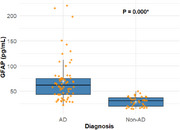 Figure 1
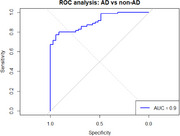 Figure 2
Peer Reviews
No public reviews on file for this paper yet. If you reviewed it on a platform where reviews are public (OpenReview, ICLR, NeurIPS, ICML), you can paste yours below so the community can read it here.
Videos
No videos yet. Explain this paper in a talk, walkthrough, or lecture? Add one.
Taxonomy
TopicsAlzheimer's disease research and treatments · Dementia and Cognitive Impairment Research · S100 Proteins and Annexins